
A name from near Siegen
The Kromfohrlander has a relatively recent documented history. Ilse Schleifenbaum developed the breed near Siegen in Germany's North Rhine-Westphalia region. The name draws on the local expression krom Fohr, referring to a crooked furrow, rather than a distant country or an ancient hunting occupation.
International recognition followed in 1955. The FCI history names the Wire Fox Terrier and Grand Griffon Vendeen in the breed's background. This is a companion-dog identity in its own right, not a general label for any terrier cross with a similar white-and-brown pattern.
Two textures within one breed
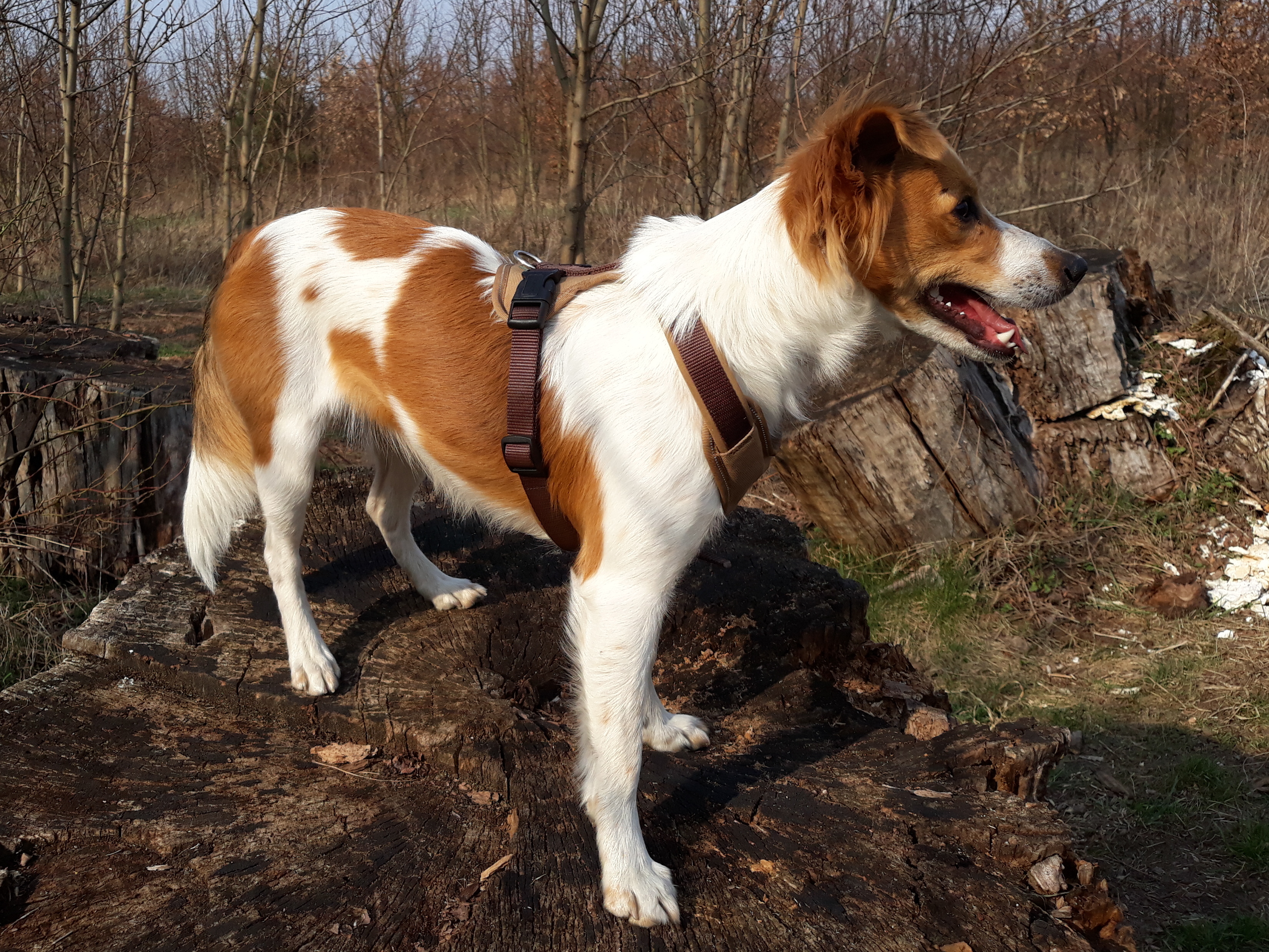
Rough-coated examples carry a beard, while smooth-coated dogs lack that furnishing. Both have a soft short undercoat. The smooth individual pictured here helps show why identifying a breed from a single long-haired example can be misleading; the standard deliberately allows more than one coat texture.
Companionship with room for reserve
The standard emphasises adaptability and liveliness while acknowledging caution around unfamiliar people. Low hunting inclination is a relative description, not a guarantee that a particular dog will ignore wildlife. Calm introductions and rewarding attention remain useful even for a dog bred primarily for companionship.
Maintenance that follows the individual coat
Look beneath collars and harnesses rather than judging maintenance solely by visible hair length. A rough-coated dog's beard and furnishings need different attention from the smooth example's face. Ask a groomer to explain a comfortable routine, and investigate persistent irritation rather than repeatedly brushing an uncomfortable area.
Plan comfortable care
Our gentle coat-care guide and first grooming appointment guide help you prepare questions about handling, maintenance and a suitable service. This breed profile is independent of named businesses.
Photograph and sources
The photograph illustrates one Kromfohrlander. See the linked credit for its creator, source and reusable licence. It does not establish the dog's health, age or temperament.
Read the FCI catalogue entry and FCI breed standard. General care and handling guidance is available from PDSA and Dogs Trust.