
An island connection with uncertain deeper origins
The Korean Jindo Dog is closely associated with Jindo island off the south-western coast of Korea. The FCI acknowledges that written records do not establish the breed's original beginnings. An island tradition is meaningful history, but precise ancient dates should not be presented as proven genealogy.
Jindo-kae and Jindo-kyon are alternative names mentioned in the standard. Hunting and guarding form the practical background to the breed's alert expression and purposeful movement. This profile follows FCI number 334 rather than treating every similar-looking Korean dog as the same registered breed.
The double coat and its colours
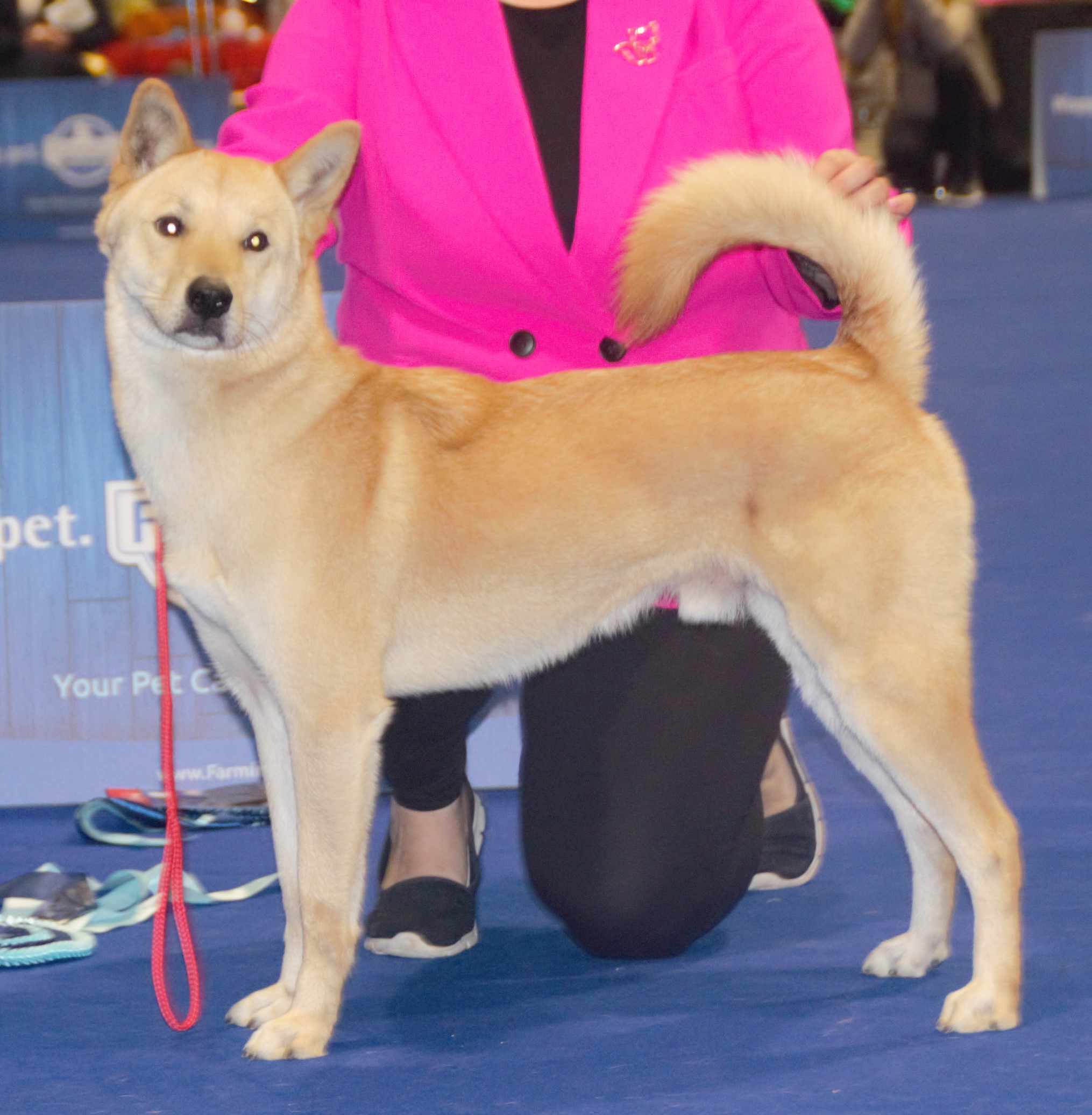
Firm outer hair lies over a soft insulating layer. Longer furnishings around the neck, rear and tail contribute to the familiar spitz outline, while shorter facial hair leaves the head clearly defined. Red fawn is only one accepted colour, so coat colour alone is insufficient for identification.
Loyalty does not remove the need for management
Breed descriptions often emphasise attachment to familiar people. The same standard also records hunting interest and possible difficulties with other animals. Introductions and secure exercise need an individual plan; neither a breed label nor an attractive photograph can demonstrate dependable recall or compatibility in a particular household.
Preparing for comfortable handling
Begin with predictable, rewarding contact around the shoulders and feet before expecting a full grooming session. Check beneath collars and in dense rear hair for retained debris. Explain the dog's experience with strangers to a groomer and allow the maintenance plan to follow comfort rather than a fixed cosmetic target.
Plan comfortable care
Our gentle coat-care guide and first grooming appointment guide help you prepare questions about handling, maintenance and a suitable service. This breed profile is independent of named businesses.
Photograph and sources
The photograph illustrates one Korean Jindo Dog. See the linked credit for its creator, source and reusable licence. It does not establish the dog's health, age or temperament.
Read the FCI catalogue entry and FCI breed standard. General care and handling guidance is available from PDSA and Dogs Trust.