
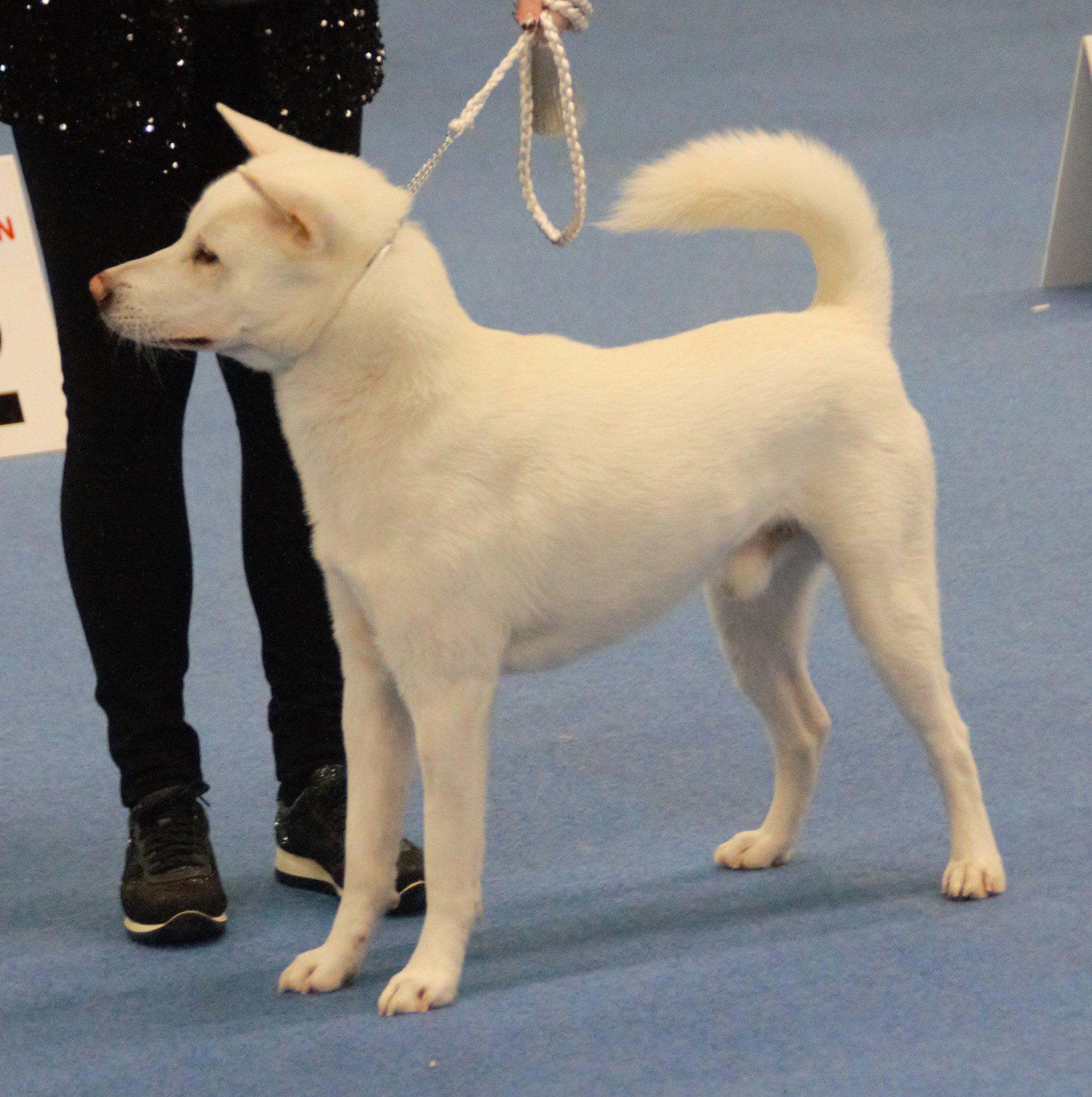
A hunting breed named for its home region
The Kishu developed in the mountainous districts associated with Wakayama and Mie in Japan. Its FCI history connects the breed with hunting wild boar and, earlier, deer. The regional name became the modern breed name, with natural-monument designation in 1934.
Historical selection favoured solid colours, helping explain the familiar white examples seen today. That history does not mean every current Kishu must be white. FCI number 318 has its own standard and should not be confused with other Japanese dogs sharing a dense jacket, erect ears and curled tail.
A double coat in more than white
Harsh straight outer hair covers soft dense undercoat, with longer hair around cheeks and tail. The current standard permits white, red and sesame. A white show dog is therefore one example, not proof that another permitted colour is a different breed or needs identical care.
Alertness with individual preferences
The standard describes endurance, faithfulness and alertness. These traits reflect the working background without establishing easy recall, sociability with every animal or confidence in a busy salon. Reward cooperation, provide secure exploration and learn how the particular dog responds to new handling.
Check below the tidy surface
Loose undercoat and trapped material can be missed behind ears and beneath equipment. Work gently through small areas and practise comfortable feet and body checks before appointments. A groomer can plan maintenance around the actual coat, with veterinary advice when pain or persistent irritation changes the routine.
Plan comfortable care
Our gentle coat-care guide and first grooming appointment guide help you prepare questions about handling, maintenance and a suitable service. This breed profile is independent of named businesses.
Photograph and sources
The photograph illustrates one Kishu Ken. See the linked credit for its creator, source and reusable licence. It does not establish the dog's health, age or temperament.
Read the FCI catalogue entry and FCI breed standard. General care and handling guidance is available from PDSA and Dogs Trust.