
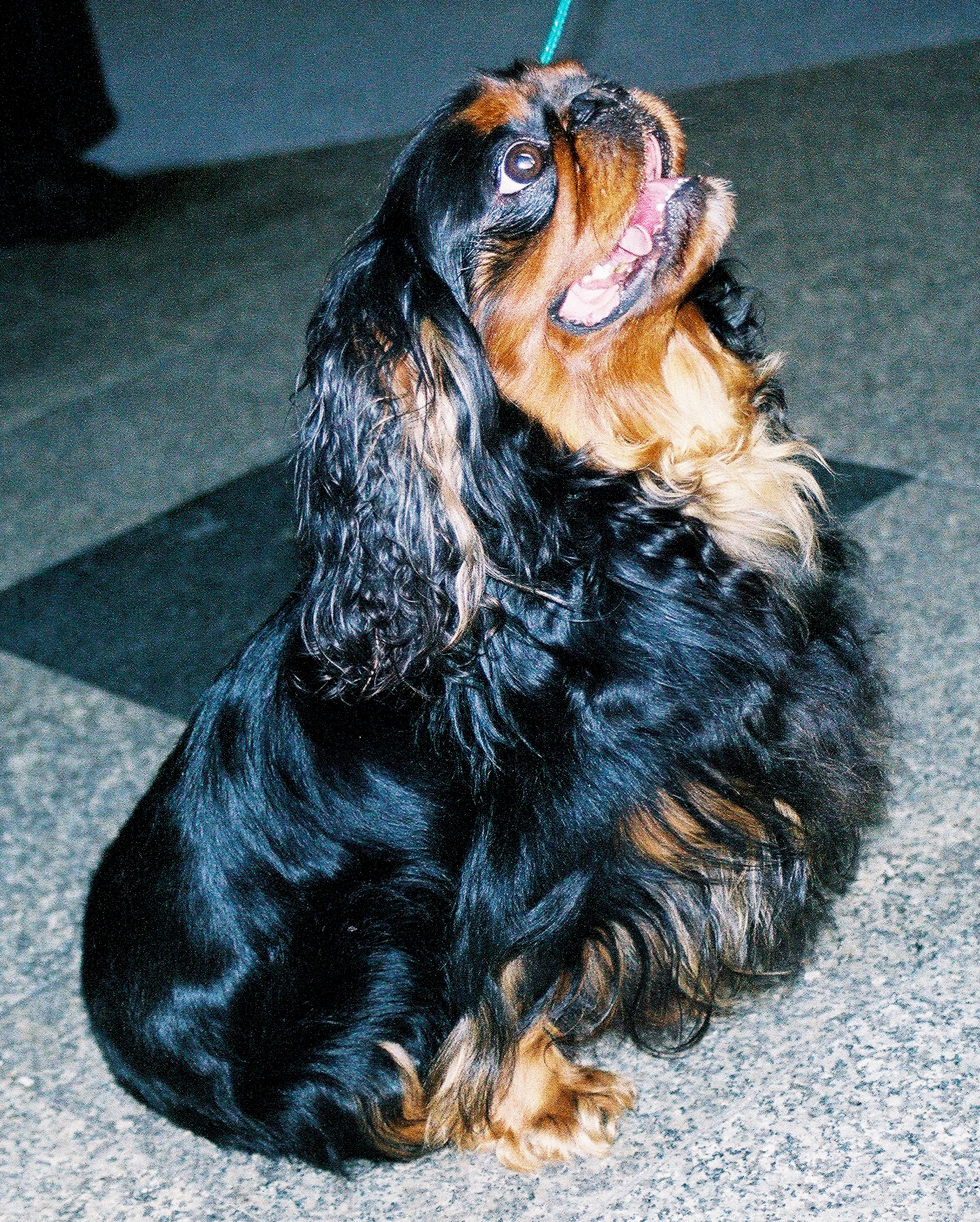
A toy spaniel with a royal name
The King Charles Spaniel belongs to the long European tradition of small companion spaniels. Its name recalls the dogs favoured by CharlesII, while the broader history includes selection for smaller companions and influence from eastern toy dogs in the development of the modern facial appearance.
This breed is also known in some countries as the English Toy Spaniel. It is FCI number 128, distinct from the Cavalier King Charles Spaniel. A shared royal association and some colour names should not cause the two modern breeds to be treated as the same entry.
Silky furnishings in four familiar patterns
A domed head and long silky ear hair are recognisable features. The jacket is straight or slightly wavy, with feathering on legs and tail. Black-and-tan, tricolour, Blenheim and ruby are permitted patterns, so a single portrait cannot show the whole range.
Gentleness still leaves room for reserve
The standard describes an affectionate, gentle companion but also some reserve. A small dog may have firm preferences about unfamiliar people, lifting or grooming. Introduce contact gradually, supervise interactions and reward comfortable participation rather than assuming a toy breed must welcome being handled.
Care around fringes and face
Check ear feathering, chest and feet gently before small tangles tighten. Ask a groomer about manageable maintenance and avoid pulling around the eyes. Persistent eye irritation, pain or breathing difficulty should be assessed by a vet rather than treated as part of a decorative appearance.
Plan comfortable care
Our gentle coat-care guide and first grooming appointment guide help you prepare questions about handling, maintenance and a suitable service. This breed profile is independent of named businesses.
Photograph and sources
The photograph illustrates one King Charles Spaniel. See the linked credit for its creator, source and reusable licence. It does not establish the dog's health, age or temperament.
Read the FCI catalogue entry and FCI breed standard. General care and handling guidance is available from PDSA and Dogs Trust.