
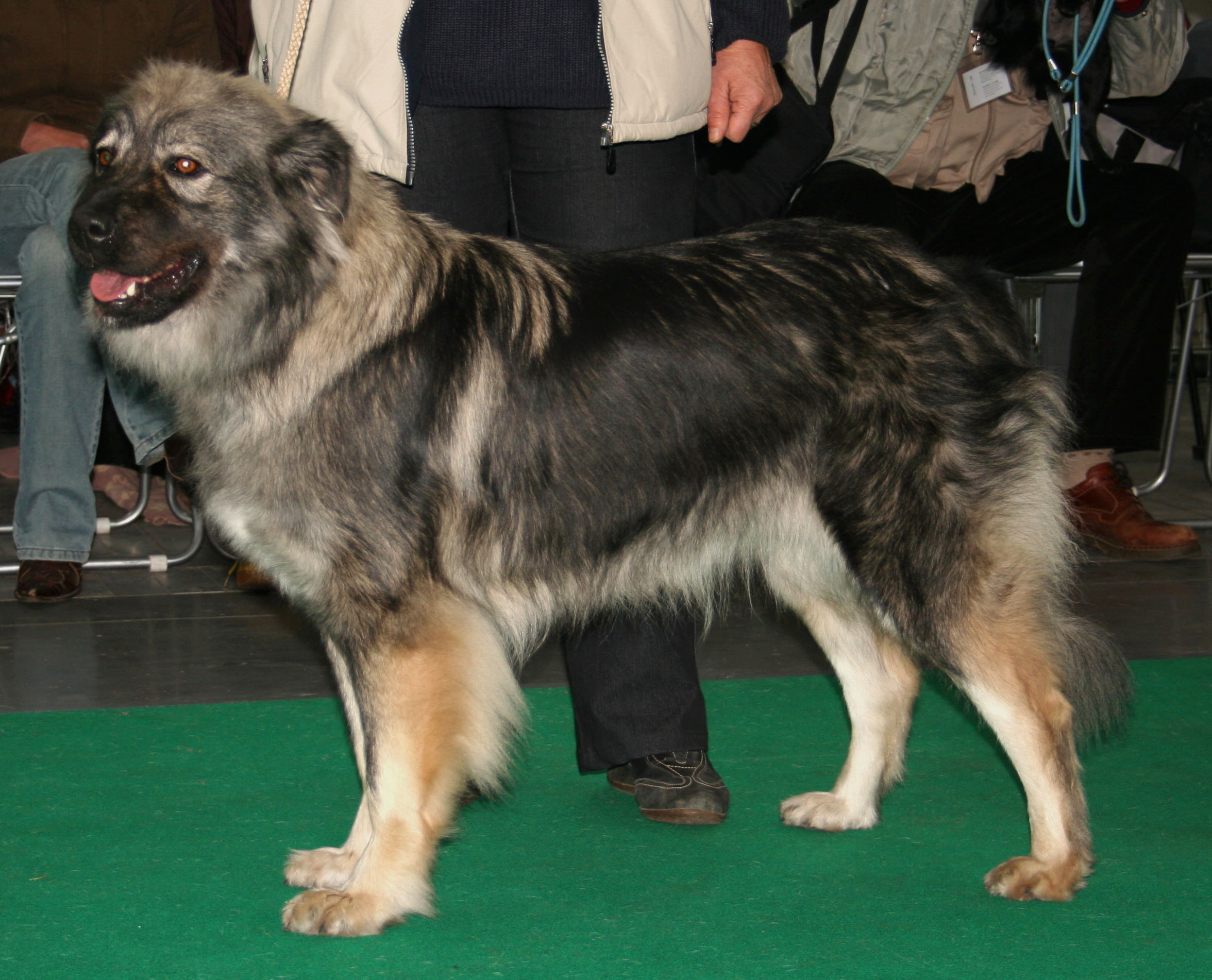
A Slovenian regional guardian
The Karst Shepherd Dog takes its name from the Karst region of Slovenia. The FCI history points to Valvasor's seventeenth-century writing as an early reference to local dogs. Broader accounts of migration and distant ancestry are historical explanations rather than a fully documented genetic route.
Recognition under the Illyrian Shepherd name came in 1939, followed by a revised standard in 1948. For a period that name covered dogs now recognised separately as the Karst Shepherd and Sarplaninac. Their identities were separated in 1968, an important distinction when comparing two superficially similar guardians.
Iron-grey hair and a dark mask
The coat is long and flat with a substantial underlayer. A neck ruff and rear furnishings enlarge the outline, while the dark face and gradual change to paler lower-body hair help describe the standard's iron-grey pattern. A photograph illustrates an individual, not proof of temperament or physical soundness.
Independence in everyday life
A guardian selected to make decisions around a flock may not wait for instructions in every unfamiliar situation. The standard's devotion and reserve need to be read together. Prepare introductions, boundaries and rewarding examination routines with the dog's responses in mind, and seek qualified behaviour help if concerns arise.
Looking beneath the long jacket
Pay attention to the ruff, behind the ears and where equipment presses against the body. Gentle maintenance should reach loose undercoat without pulling painfully. Explain the dog's handling history before an appointment so a groomer can plan a manageable session instead of attempting everything at once.
Plan comfortable care
Our gentle coat-care guide and first grooming appointment guide help you prepare questions about handling, maintenance and a suitable service. This breed profile is independent of named businesses.
Photograph and sources
The photograph illustrates one Karst Shepherd Dog. See the linked credit for its creator, source and reusable licence. It does not establish the dog's health, age or temperament.
Read the FCI catalogue entry and FCI breed standard. General care and handling guidance is available from PDSA and Dogs Trust.