
A Finnish breed from a wider Karelian working tradition
The Karelian Bear Dog's FCI history connects its foundation with dogs from the Ladoga, Olonets and Russian Karelian regions, while considering earlier Komi or Zyrian dogs part of the background. These accounts describe a regional working tradition rather than a complete pedigree for today's dogs.
Organised breeding began in 1936 with the aim of preserving a sturdy barking big-game dog. The first standard followed in 1945 and registrations in 1946. Finland is the recorded origin for the modern breed, FCI number48, despite that wider historical regional context.
A contrasting double coat
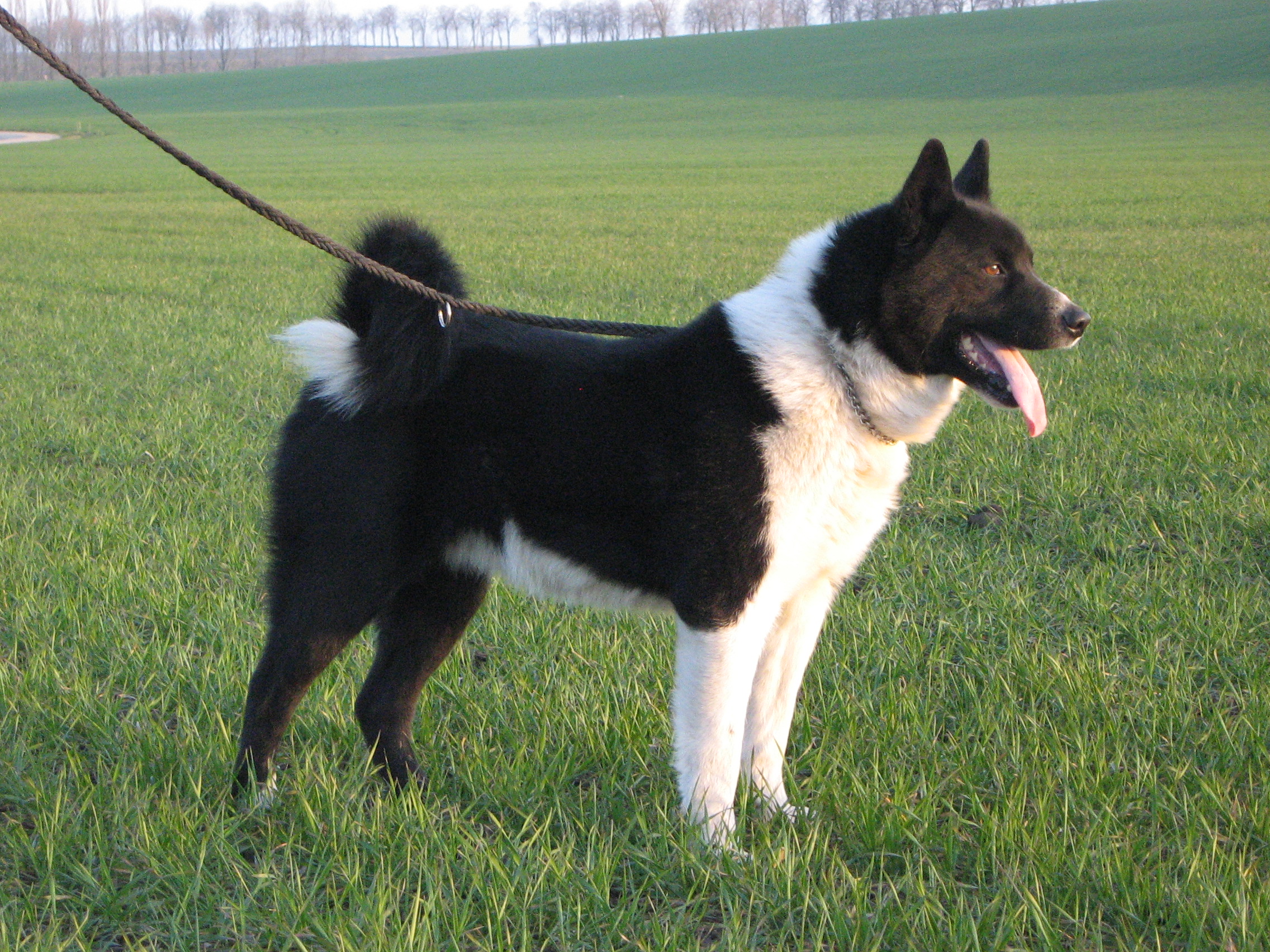
Harsh straight outer hair covers a soft dense undercoat, with longer sections around the neck and rear. Black, sometimes carrying brownish tones, contrasts with white markings on many dogs. Erect ears and a curled tail are shared by other spitz breeds, so those features alone cannot identify one.
Independence and persistence need thoughtful management
The standard describes a courageous hunter that works independently and marks game by barking. It also notes possible territorial behaviour towards other males and some reserve. Learn the individual dog's responses, arrange secure exploration and reward cooperation rather than treating a breed label as a complete assessment.
Care that respects confidence and comfort
Gently check feet, undercoat and equipment areas after outdoor activity. Build familiarity with standing and body checks in small steps before appointments. Tell the groomer about social preferences and previous handling; pain or persistent irritation needs appropriate veterinary advice.
Plan comfortable care
Our gentle coat-care guide and first grooming appointment guide help you prepare questions about handling, maintenance and a suitable service. This breed profile is independent of named businesses.
Photograph and sources
The photograph illustrates one Karelian Bear Dog. See the linked credit for its creator, source and reusable licence. It does not establish the dog's health, age or temperament.
Read the FCI catalogue entry and FCI breed standard. General care and handling guidance is available from PDSA and Dogs Trust.