
A breed linked to mountainous Yamanashi
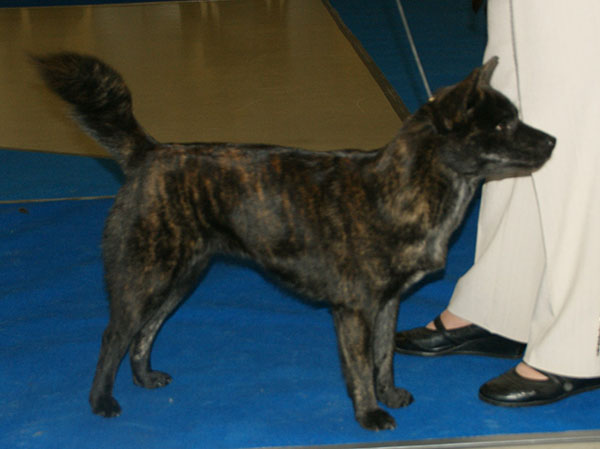
The Kai became established in the mountainous Kai district, now associated with Yamanashi Prefecture in Japan. Its FCI history describes a medium-sized hunting dog used particularly for wild boar and deer, with a distinctive brindled appearance.
The alternative name Kai tora-ken reflects that tiger-like striping. Natural-monument designation followed in 1934. The FCI records the breed as number 317; it should not be confused with other Japanese dogs simply because they also have erect ears, a dense coat or a curled tail.
Brindling that can become clearer with age
Black-brindle, red-brindle and brindle are the recognised coat descriptions. The standard notes that some puppies' initially solid-looking colour can develop a more visible pattern as they mature. Harsh outer hair covers soft dense undercoat, creating a jacket that needs care beneath the surface.
Alertness leaves many individual questions open
The standard's character description is brief: keen and very alert. It does not provide proof about every household interaction or grooming preference. Learn the actual dog's confidence, hunting interests and previous experiences, reward cooperation and use secure arrangements for outdoor investigation.
Comfortable checks in small steps
Gently check equipment areas, behind ears and rear furnishings for loose hair or trapped material. Practise feet and body handling before appointments, allowing the dog time to become familiar with each step. A groomer can help plan maintenance; persistent irritation or pain needs veterinary advice.
Plan comfortable care
Our gentle coat-care guide and first grooming appointment guide help you prepare questions about handling, maintenance and a suitable service. This breed profile is independent of named businesses.
Photograph and sources
The photograph illustrates one Kai Ken. See the linked credit for its creator, source and reusable licence. It does not establish the dog's health, age or temperament.
Read the FCI catalogue entry and FCI breed standard. General care and handling guidance is available from PDSA and Dogs Trust.