
A companion of Japanese port cities
The Japanese Terrier's historical account begins with smooth-haired Fox Terrier types brought to Nagasaki from the Netherlands in the seventeenth century. The FCI describes crosses with small pointing or local dogs and a later role as companions around port cities including Kobe and Yokohama.
Planned breeding developed around 1920, with a more settled type emerging around 1930. Those modern milestones matter more than treating every small smooth dog seen in an old port as a documented ancestor. Nihon Teria has its own FCI identity, separate from the Japanese Spitz and other Japanese companion breeds.
The contrast of head and body
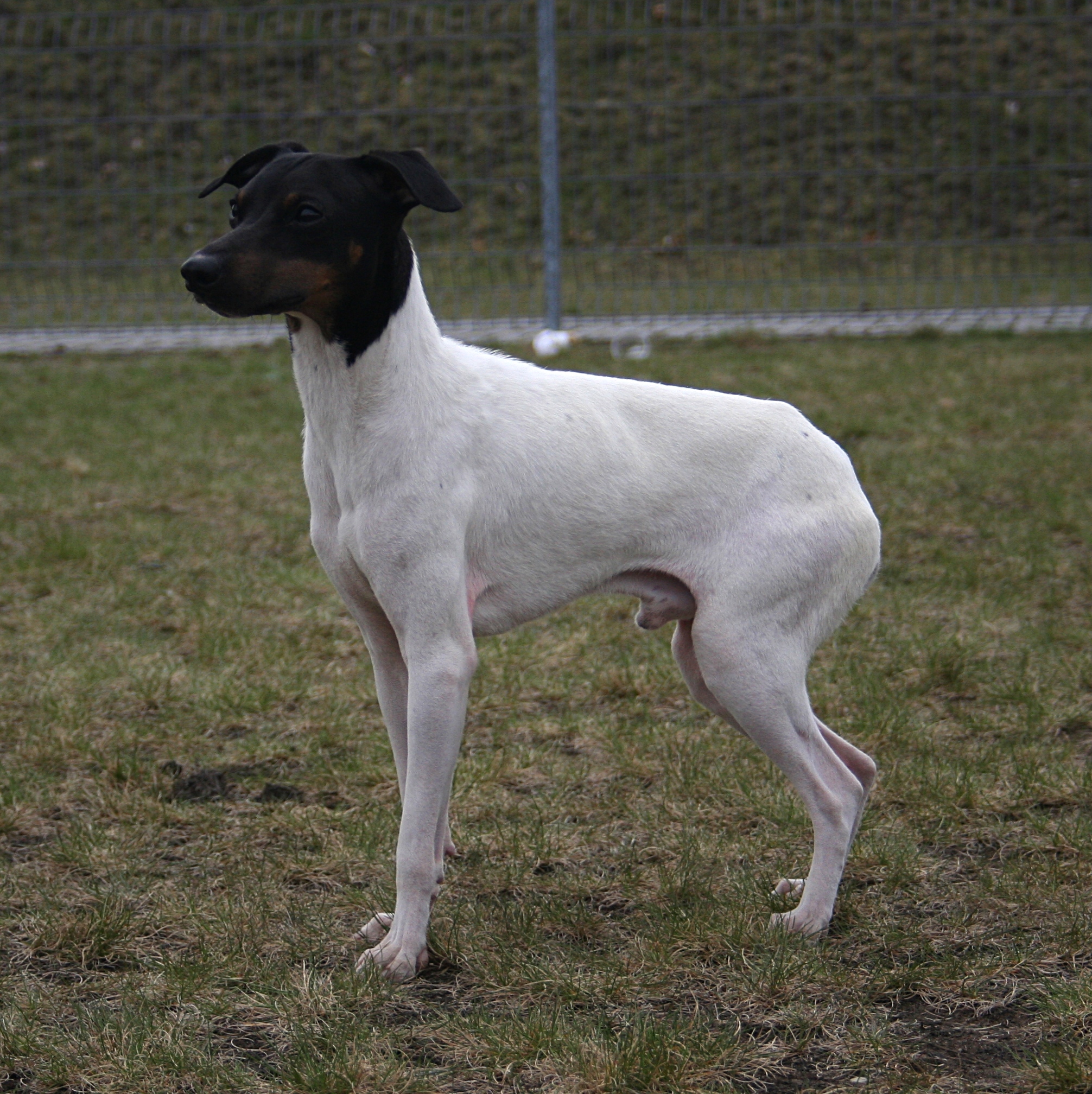
The jacket is close, dense and glossy, with a dark and tan-marked head contrasting against a largely white body. Short hair reveals a light, compact outline rather than creating a rounded fluffy silhouette. The photograph is useful for that appearance, but cannot establish the individual's temperament or health.
Liveliness in a small frame
The standard's swift and cheerful description is a reminder that small companions still need opportunities to investigate and learn. Rewarding attention and calm routines can help owners understand the individual. Neither the white coat nor a terrier label reliably predicts every response to unfamiliar animals.
Preparing for gentle examination
Short-coat maintenance can include checking feet and equipment contact areas while the dog is relaxed. Build comfort with touch gradually rather than assuming a small body is easy to restrain. Explain sensitive areas to a groomer and seek advice when irritation or pain changes the dog's reactions.
Plan comfortable care
Our gentle coat-care guide and first grooming appointment guide help you prepare questions about handling, maintenance and a suitable service. This breed profile is independent of named businesses.
Photograph and sources
The photograph illustrates one Japanese Terrier. See the linked credit for its creator, source and reusable licence. It does not establish the dog's health, age or temperament.
Read the FCI catalogue entry and FCI breed standard. General care and handling guidance is available from PDSA and Dogs Trust.