
A modern Japanese breed story
The Japanese Spitz developed from imported white spitz dogs during the twentieth century. The FCI history describes large white German Spitz arriving around 1920, followed by other imports from several countries. Dogs of the type appeared at a Tokyo show around 1921, providing a clearer modern record than an unsupported ancient-origin claim.
After the Second World War, the Japan Kennel Club established a unified standard in 1948. The modern breed is a distinct companion-spitz identity, even though white coats and erect ears create superficial similarities with other spitz breeds. This profile follows Nihon Supittsu, FCI number 262.
White hair in two layers
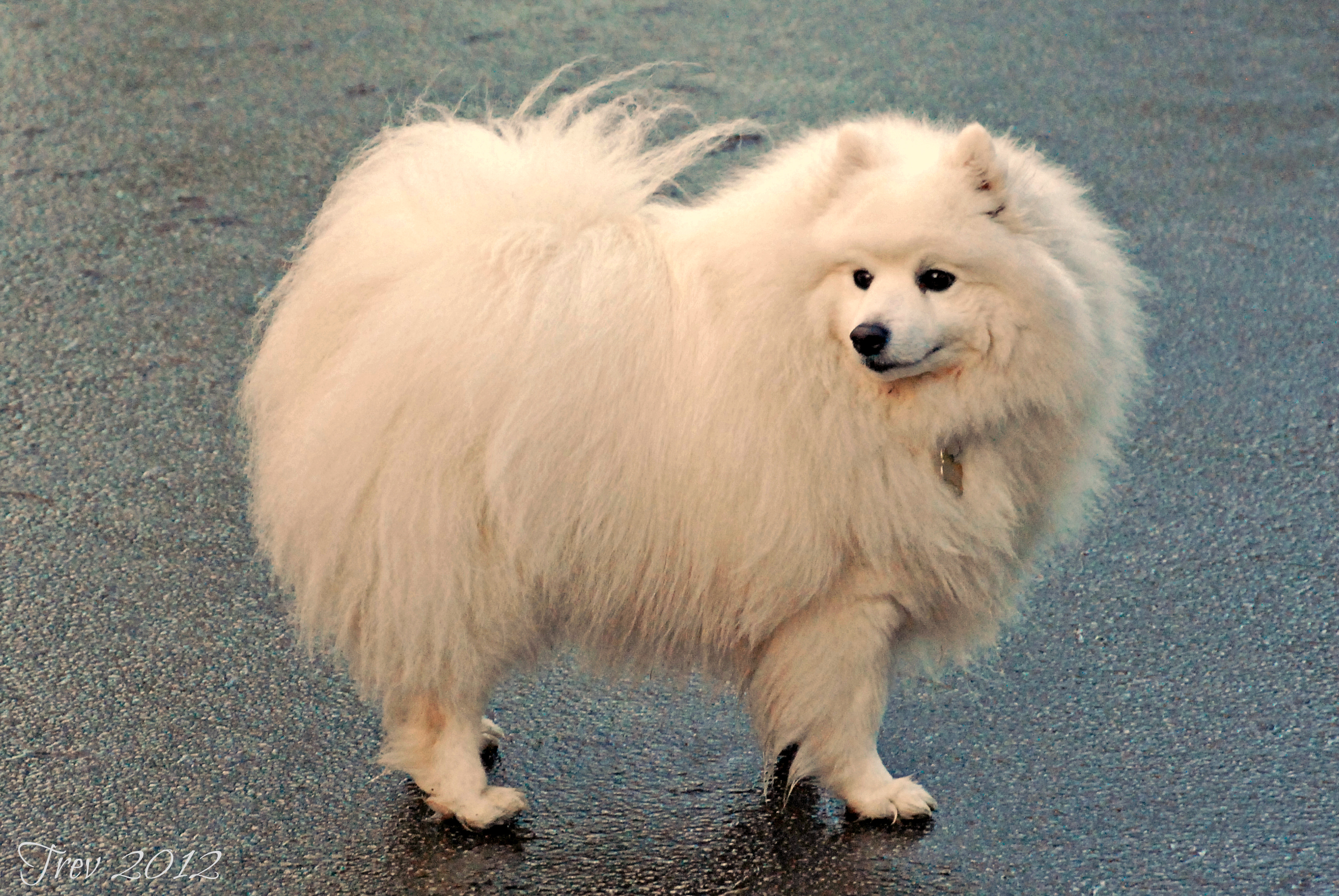
Straight outer hair stands off a soft dense underlayer, creating a full neck frill and a heavily furnished tail. Shorter facial and lower-leg hair keeps those areas more defined. The fluffy appearance is not evidence that the coat is silky throughout or that maintenance only needs to touch its surface.
Cheerfulness without a quietness guarantee
The standard emphasises intelligence and an alert, cheerful nature. Its dislike of excessive noise is a breeding ideal rather than a reliable prediction for every home. Reward calm responses and introduce new sounds, visitors and grooming tools at a pace the individual dog can manage.
Comfort beneath the full outline
Check behind ears, beneath equipment and around the rear before loose hair compacts. Gentle sessions should reach the underlayer without painful scraping. Ask a groomer to demonstrate useful tools and explain any sensitivities; persistent skin changes need assessment rather than repeated attempts to brush them away.
Plan comfortable care
Our gentle coat-care guide and first grooming appointment guide help you prepare questions about handling, maintenance and a suitable service. This breed profile is independent of named businesses.
Photograph and sources
The photograph illustrates one Japanese Spitz. See the linked credit for its creator, source and reusable licence. It does not establish the dog's health, age or temperament.
Read the FCI catalogue entry and FCI breed standard. General care and handling guidance is available from PDSA and Dogs Trust.