
A Japanese companion with a wider exchange story
The FCI records Japan as the Chin's origin while describing historical links with dogs arriving from Korea and China. Its account qualifies some early events as assumptions from old documents. Those traditions should therefore not be retold as a fully proven, uninterrupted pedigree stretching across many centuries.
The breed's more familiar role is as an indoor companion associated with Japanese court and household life. The FCI account also describes its later movement to Europe and America. That international story helps explain the name Japanese Chin without turning a regional development history into a claim about where most Chins live today.
Look beyond the appealing expression
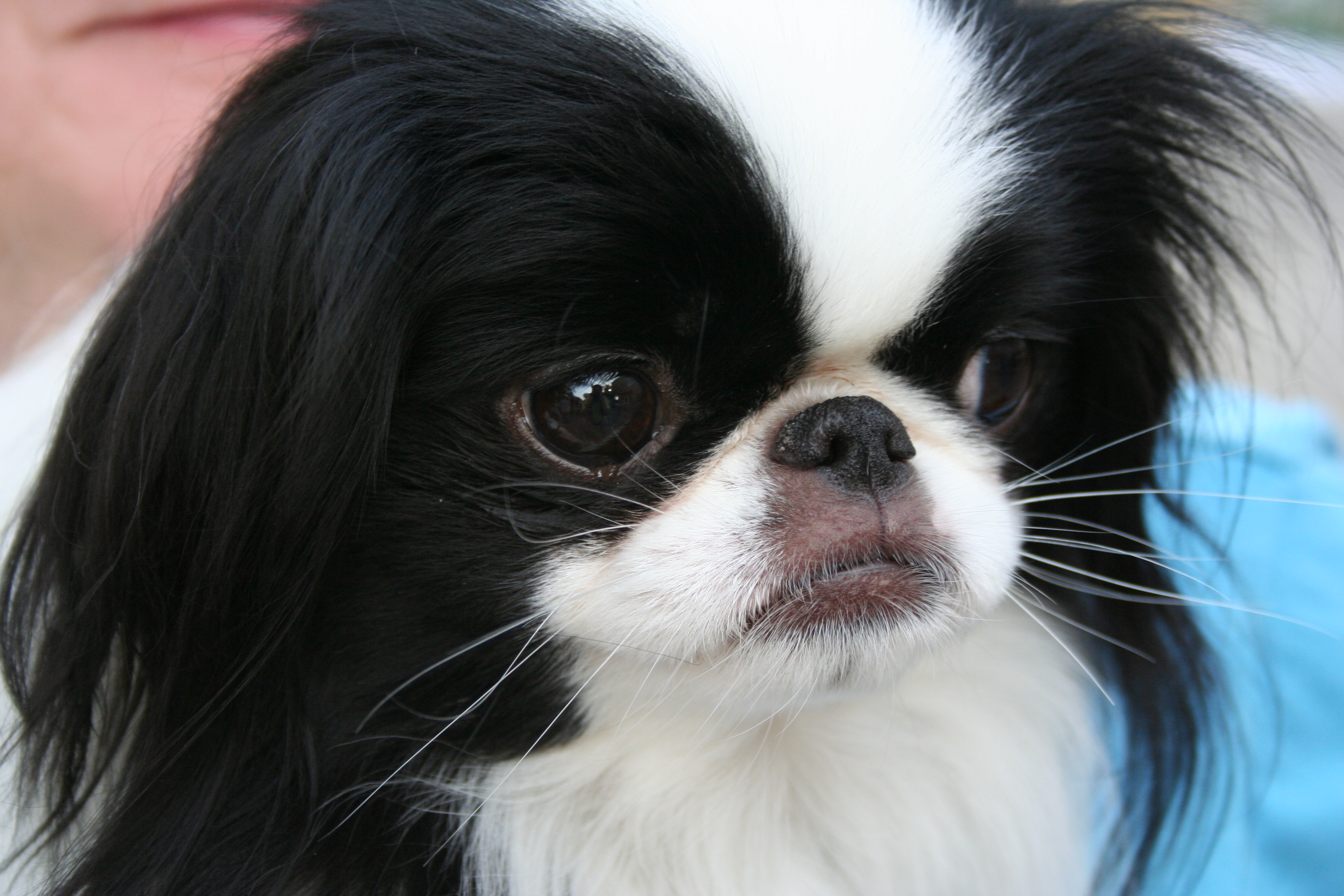
A broad, relatively short face and an abundant silky coat create a recognisable outline. A natural portrait can illustrate appearance but cannot show how comfortably a dog breathes, moves or rests. Ask about the actual individual and any veterinary advice already in place.
The standard's mild character description is a starting point for questions, not a promise of easy handling. Find out how the dog responds to touch, lifting and new environments. Patient preparation matters for a small companion just as it does for a much larger working dog.
Keep coat and comfort in the same plan
Ask a professional to assess furnishings, skin and any tangled areas before deciding what care is useful. Work in manageable stages and explain previous reactions to equipment. Breathing comfort and the dog's response to handling should guide the appointment rather than a desire to reproduce a show silhouette.
The licensed natural photograph is explicitly identified as a Japanese Chin and shows one black-and-white individual. PDSA's guidance on flat-faced dogs provides additional information about breathing concerns. This profile offers care questions and breed context rather than diagnosing a dog from its picture.
Plan comfortable care
Our gentle coat-care guide and first grooming appointment guide help you prepare questions about handling, maintenance and a suitable service. This breed profile is independent of named businesses.
Photograph and sources
The photograph illustrates one Japanese Chin. See the linked credit for its creator, source and reusable licence. It does not establish the dog's health, age or temperament.
Read the FCI catalogue entry and FCI breed standard. General care and handling guidance is available from PDSA and Dogs Trust.
Additional primary reading: PDSA: breathing problems in flat-faced dogs · Royal Kennel Club: respiratory function assessment.