
Named for a place
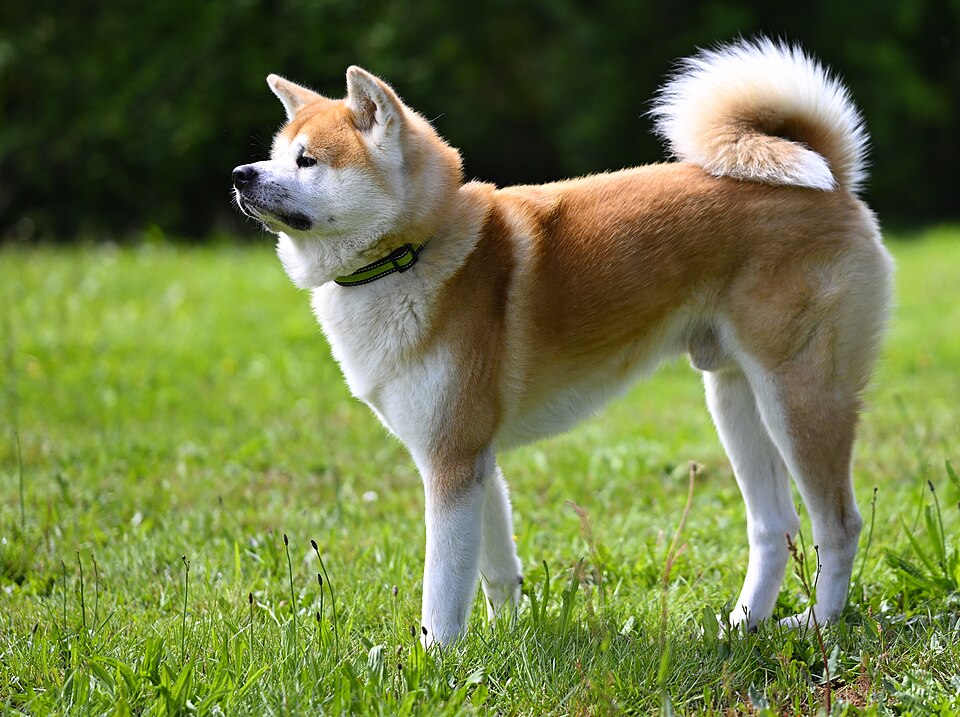
The Akita comes from Japan's Akita region, where its history is connected to large northern dogs. The Japanese Akita Inu has a distinctive spitz outline: upright ears, a curled tail and a dense coat. It should be distinguished from the American Akita, which the FCI lists as a separate breed. That distinction is useful when looking for a breed standard or a representative photograph.
A coat with two layers
Straighter outer hair sits over a dense undercoat. Loose hair may be particularly noticeable during heavier shedding, so patient brushing can help while giving an owner a chance to check skin and comfort. A wet double coat may take time to dry thoroughly. Simple, regular care is more useful than assuming the short-looking outline needs no attention.
Meet the individual
Breed histories sometimes invite bold claims about loyalty or reserve. They are only broad descriptions. One dog's responses are shaped by its experiences, learning, health and surroundings. Calm introductions to handling, with attention to what the dog communicates, matter for any coat routine. A breed page can point to questions worth asking; it cannot answer them for every Akita.