
A northern Swedish spitz recognised separately
The Jamthund is associated with northern Sweden and is also known as the Swedish Elkhound. Although the FCI describes an old regional type, separate recognition did not come until 1946 because it had previously been judged together with the smaller Norwegian Elkhound.
That modern recognition matters when comparing similar grey spitz dogs. The Jamthund has its own FCI number42 and standard, rather than being simply a large size option within the Norwegian breed. Its working history centres particularly on holding large game at bay with persistent barking.
Grey hair over a pale undercoat
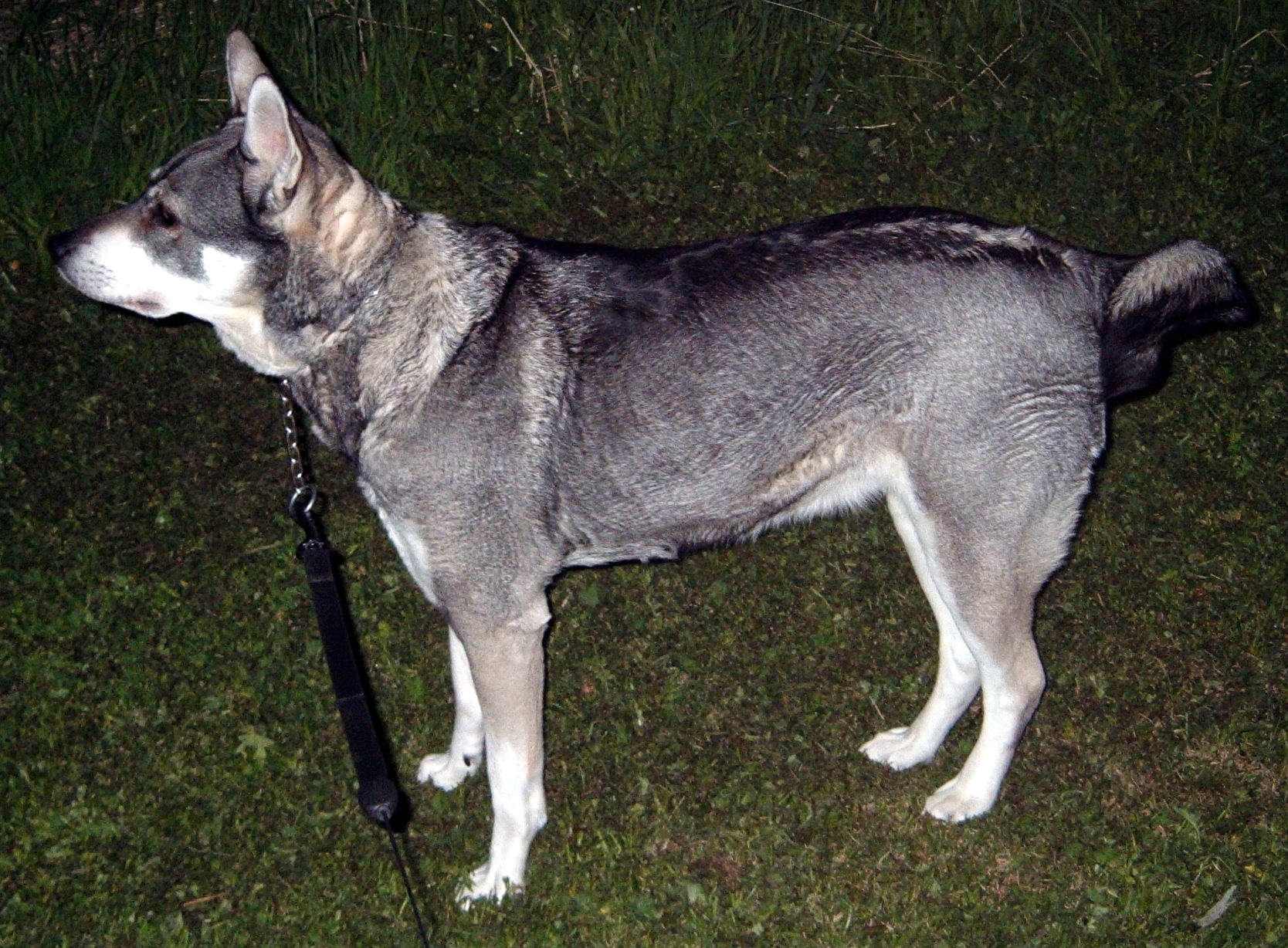
The coat combines a relatively close outer jacket with soft, pale undercoat. Lighter markings appear around the muzzle and underside, while neck, rear limbs and tail carry longer hair. The curled tail and grey colour are useful features, but they are shared with other Nordic dogs and cannot establish identity alone.
Energy and calm are not opposites
The standard's description combines courage and energy with calmness. Those qualities can coexist in a working dog, but they do not guarantee quietness or relaxed behaviour in every new setting. Learn the individual's scent interests, confidence and handling preferences, and reward calm cooperation.
Care through the dense layers
Check behind ears, beneath equipment and around rear furnishings gently to the skin. Work through loose coat in small sessions rather than dragging tools through packed hair. A groomer can plan a sustainable routine; pain, irritation or a sudden change in tolerance needs appropriate assessment.
Plan comfortable care
Our gentle coat-care guide and first grooming appointment guide help you prepare questions about handling, maintenance and a suitable service. This breed profile is independent of named businesses.
Photograph and sources
The photograph illustrates one Jamthund. See the linked credit for its creator, source and reusable licence. It does not establish the dog's health, age or temperament.
Read the FCI catalogue entry and FCI breed standard. General care and handling guidance is available from PDSA and Dogs Trust.