
The shorter Russell terrier identity
The Jack Russell Terrier's origins are connected with Reverend John Russell's nineteenth-century English working terriers. The aim was a dog able to accompany hounds and work underground, shaping an active, purposeful terrier rather than a decorative small companion.
Two related types developed with different height and body proportions. The taller, squarer dog is the Parson Russell Terrier, while the shorter, slightly longer-proportioned FCI number 345 is the Jack Russell Terrier. Everyday use of the Russell name can be broader than these separate registry identities.
Three textures under a white-dominant pattern
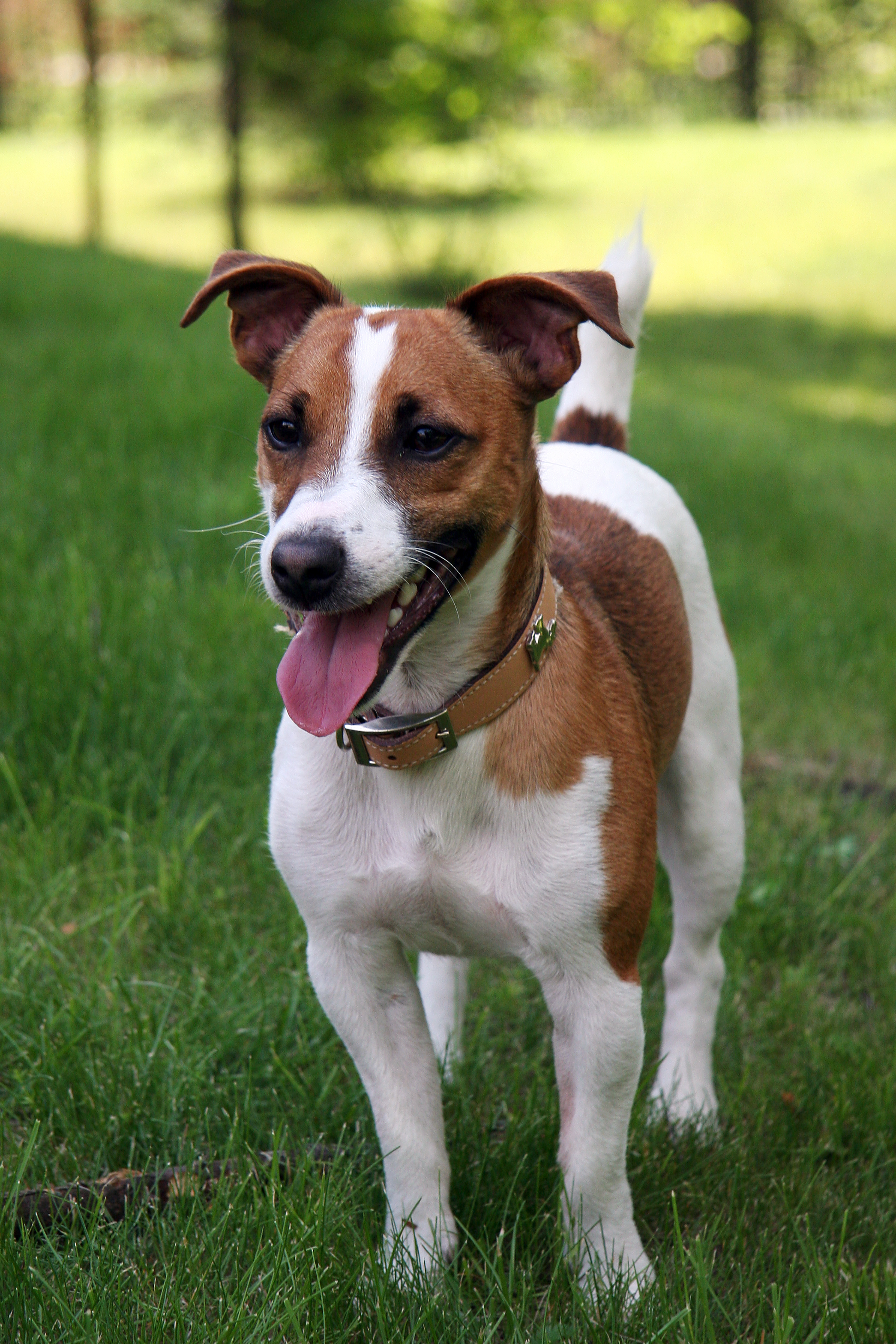
Smooth, broken and rough jackets are all recognised. White predominates, with black or tan markings in different combinations. The photograph shows one texture and pattern, not a grooming template for every Russell; stripping a rough jacket to imitate a smooth one is not the goal of care.
Small does not mean low-energy
The standard's lively, alert and bold description reflects the working background. Reward attention and opportunities to settle as well as providing secure exploration. A friendly ideal does not establish compatibility with every dog or small animal, and each individual's handling experience still matters.
Care matched to the actual coat
Introduce feet, body and mouth checks in short cooperative sessions. Ask a groomer which tools suit the texture present and how to maintain comfort between visits. Pain, persistent irritation or a sudden change in tolerance should be assessed rather than dismissed because the dog is a terrier.
Plan comfortable care
Our gentle coat-care guide and first grooming appointment guide help you prepare questions about handling, maintenance and a suitable service. This breed profile is independent of named businesses.
Photograph and sources
The photograph illustrates one Jack Russell Terrier. See the linked credit for its creator, source and reusable licence. It does not establish the dog's health, age or temperament.
Read the FCI catalogue entry and FCI breed standard. General care and handling guidance is available from PDSA and Dogs Trust.