
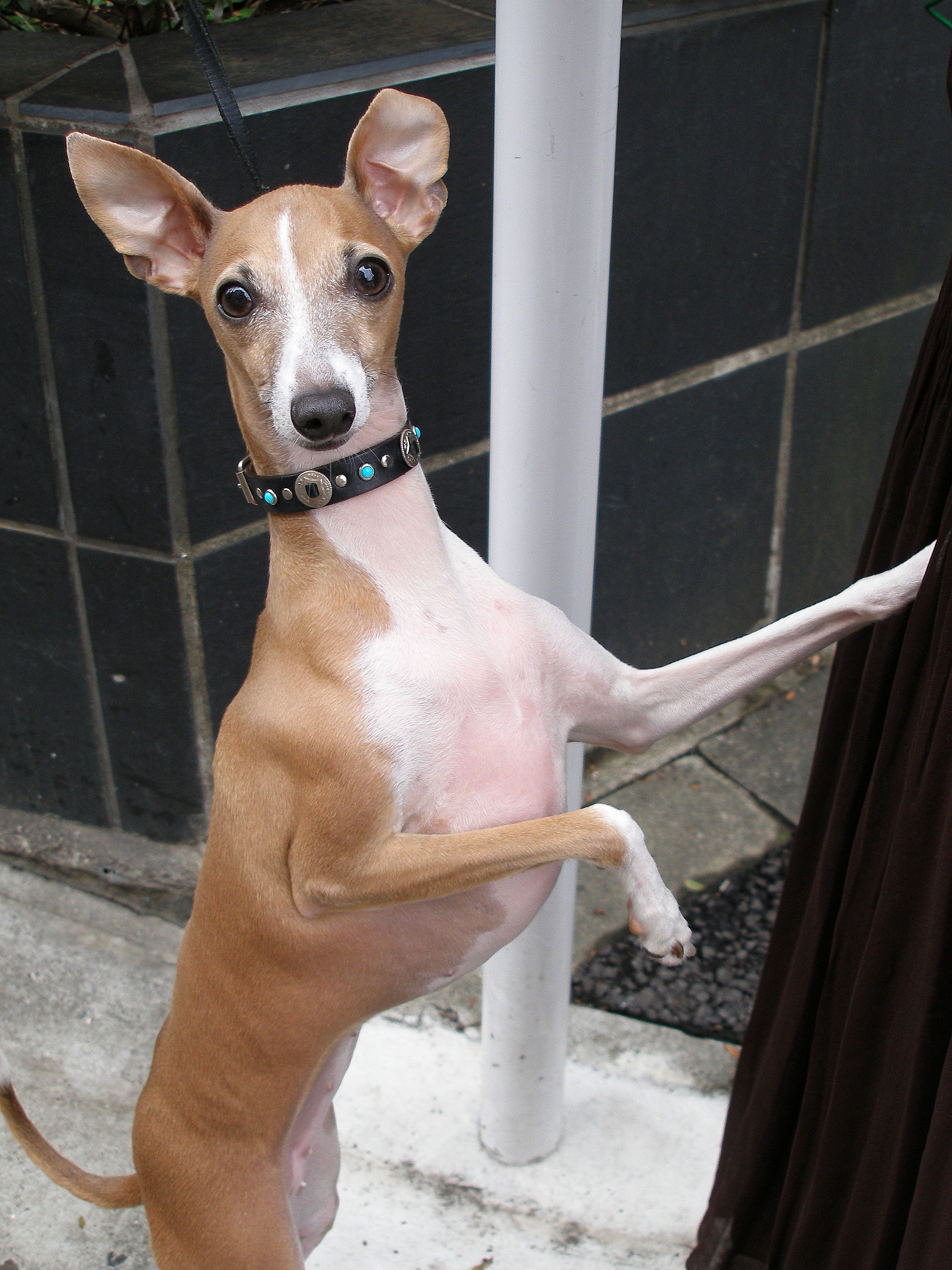
The little Italian sighthound
The Italian Greyhound is called Piccolo Levriero Italiano in its FCI entry. Small sighthound-like dogs appear in ancient Mediterranean art, while the standard particularly associates the breed's later development with Italian noble households during the Renaissance. Art provides cultural context without proving every proposed ancient pedigree link.
Its companion history does not make it a toy-shaped version of an unrelated dog. The lean outline, movement and interest in pursuit remain part of a sighthound identity. Modern recognition describes a distinct small breed rather than every undersized Greyhound or Whippet.
Fine hair rather than feathering
The jacket is very short, fine and silky, with no fringe on legs or tail. Solid black, grey and isabella shades are recognised, with limited permitted white. A clear photograph helps illustrate the outline, but cannot establish physical soundness or the maintenance needs of every individual.
Affection and alert movement
The standard describes a lively and affectionate companion. Those aims do not prove recall around moving animals or immediate confidence with unfamiliar people and handling. Reward cooperation and arrange secure activity that reflects the dog's actual experience rather than assuming small size removes practical hound considerations.
Care for a fine jacket
Gentle brushing can be combined with checks beneath equipment and around feet. Avoid scraping lean areas and provide stable footing during examination. Tell a groomer about sensitivities or difficulty standing, and investigate pain or skin changes rather than expecting a small dog simply to tolerate restraint.
Plan comfortable care
Our gentle coat-care guide and first grooming appointment guide help you prepare questions about handling, maintenance and a suitable service. This breed profile is independent of named businesses.
Photograph and sources
The photograph illustrates one Italian Greyhound. See the linked credit for its creator, source and reusable licence. It does not establish the dog's health, age or temperament.
Read the FCI catalogue entry and FCI breed standard. General care and handling guidance is available from PDSA and Dogs Trust.