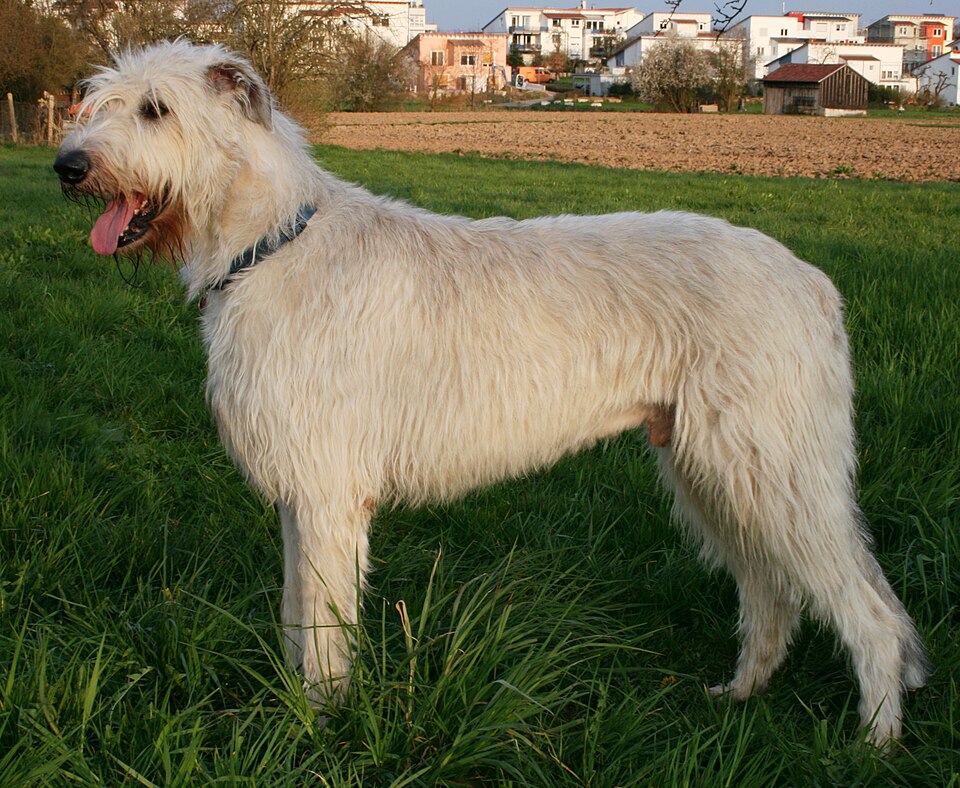
A tall figure in Ireland's dog history
The Irish Wolfhound's story is tied to Ireland and to hunting large game, including wolves, deer and wild boar. The FCI account records a written description from 391 AD and the formation of a breed club and standard in 1885. Ancient references should not be mistaken for proof that every detail of the modern breed has remained unchanged through the centuries.
Living with the individual dog
Its scale is part of everyday life, not just a striking photograph. Consider transport, floor space and comfortable access to grooming before welcoming one home. Let the individual dog's age, health and confidence guide activity and handling, and build calm cooperative routines that do not depend on physically overpowering it.
Character and behaviour
The standard describes a composed companion with a sporting heritage. Individual dogs vary, and a reputation for gentleness is no substitute for training and considerate introductions.
Breed descriptions are broad tendencies. An individual dog's behaviour also reflects experience, training and circumstances.
Care in daily life
Brush through gently, checking the beard and areas where debris catches. Ask an experienced groomer about suitable coat maintenance and safe handling for a very large dog. Short sessions and a secure surface can make routine care more manageable.
Care depends on the individual dog. If you notice a skin or health problem, speak to a vet.
Sources and review
These sources informed GroomNear's original summary. Place of origin does not describe where most dogs of this breed live today; reliable worldwide breed counts are not available for every breed.