
A water-dog tradition with uncertain deeper roots
Irish references to dogs pursuing waterfowl date to 1600 in the FCI's historical account. They establish a water-working tradition, but the precise ancestry of the modern Irish Water Spaniel remains unclear. Suggested routes through Persia and Spain are theories rather than a complete pedigree.
The modern breed gained show recognition during the second half of the nineteenth century, and the Irish Water Spaniel Club formed in 1890. Its separate FCI identity, number 124, distinguishes it from other curly-coated water dogs with different histories and coat patterns.
Curls contrasted with a smooth face and tail
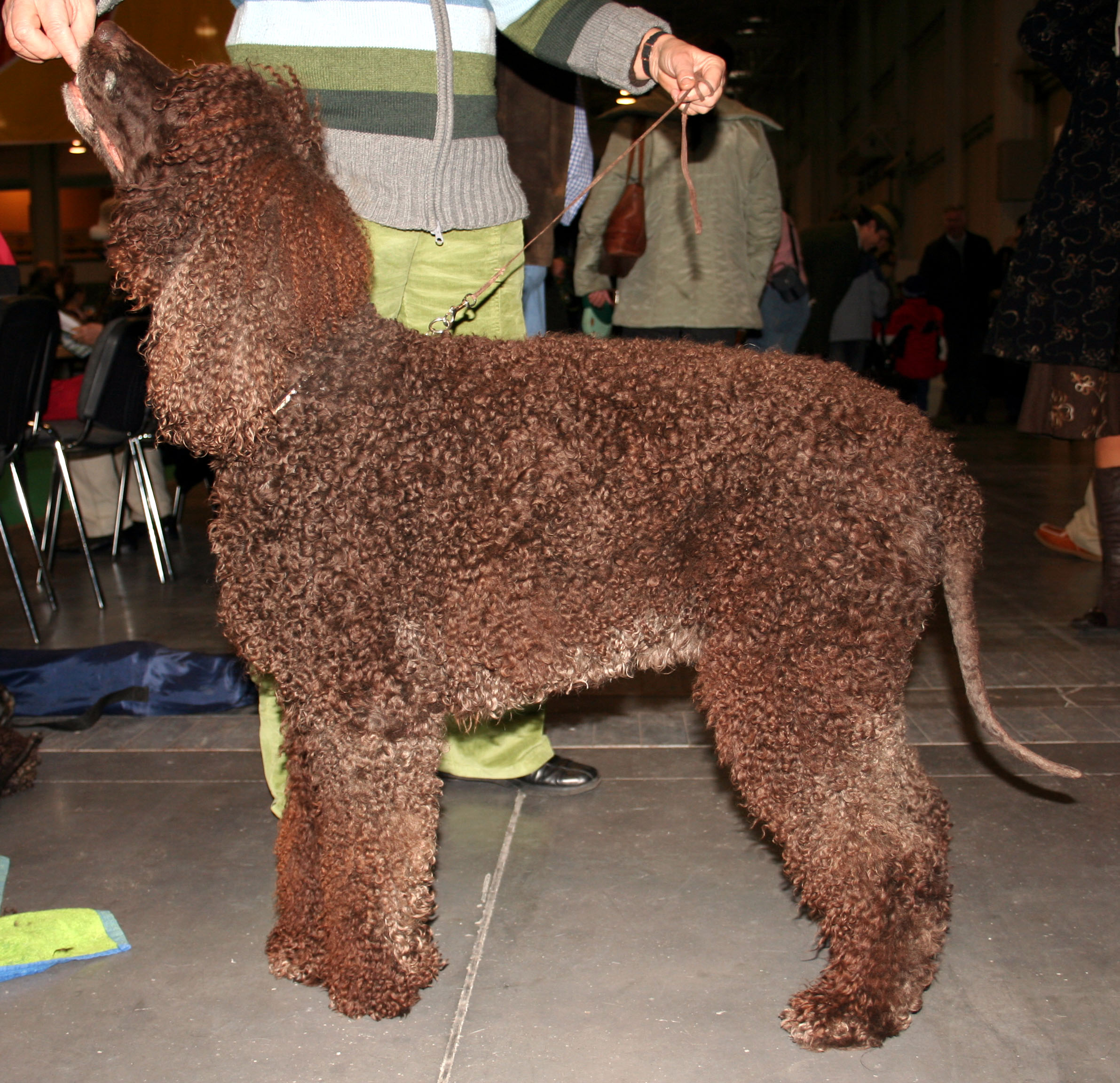
Dense crisp ringlets cover much of the rich liver-coloured jacket. The smoother face and distinctive tapering rat tail create an unmistakable contrast with the body curls. The tail's appearance is a breed characteristic, not an instruction for cosmetic alteration or a test of an individual's ancestry.
An active description with room for reserve
The standard combines intelligence, eagerness and loyalty with discernment around strangers. Those tendencies help explain the value of patient introductions and rewarding activity. They do not prove that every dog will enjoy swimming, a busy salon or prolonged unfamiliar handling.
Care after outdoor activity
Curls and furnishings can hold seeds, debris and tangles. Check gently in small areas after walks or water activity and ask a groomer about maintaining the actual texture comfortably. Persistent irritation, odour or painful knots calls for appropriate professional advice rather than stronger brushing.
Plan comfortable care
Our gentle coat-care guide and first grooming appointment guide help you prepare questions about handling, maintenance and a suitable service. This breed profile is independent of named businesses.
Photograph and sources
The photograph illustrates one Irish Water Spaniel. See the linked credit for its creator, source and reusable licence. It does not establish the dog's health, age or temperament.
Read the FCI catalogue entry and FCI breed standard. General care and handling guidance is available from PDSA and Dogs Trust.