
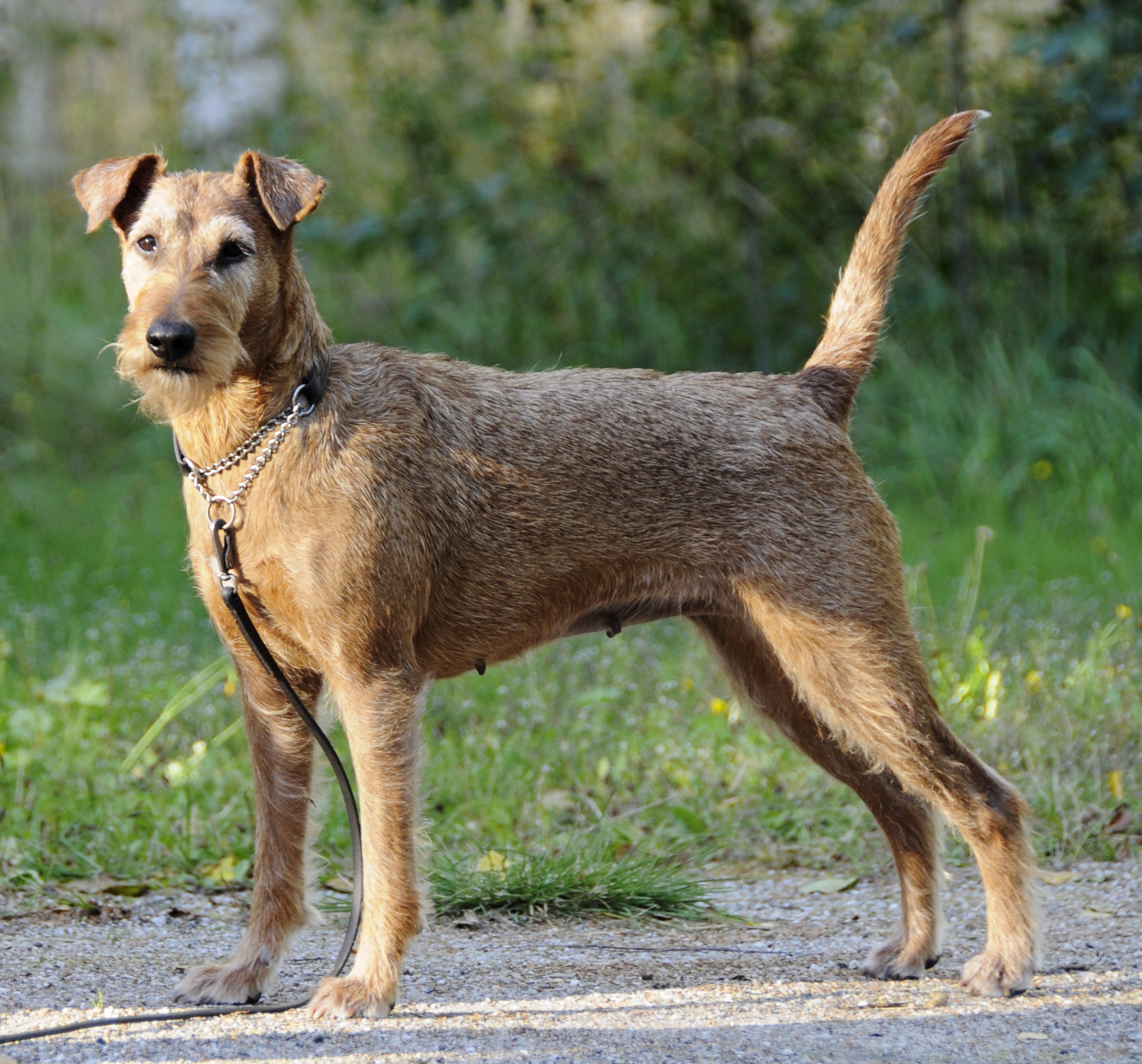
A red identity developed through selection
The Irish Terrier's early ancestry is incompletely documented. The FCI notes that black-and-tan and brindled dogs occurred before breeders increasingly selected for red colouring towards the end of the nineteenth century. The familiar red jacket therefore reflects deliberate modern selection, not proof that every earlier Irish terrier looked the same.
A breed club was established in Dublin in 1879. The history also records messenger work during the First World War. Those documented roles provide a clearer story than an unprovable claim that this is certainly the oldest of Ireland's terrier breeds.
Wiry hair and a visible outline
The coat is dense and wiry but lies relatively flat, with only a modest beard on the face. Red shades vary, and the standard does not call for long soft furnishings hiding the body. This is FCI number 139, distinct from the soft-coated Wheaten and Kerry Blue.
Courage does not replace social assessment
The standard's loyal and affectionate ideal sits alongside a bold terrier character. Those descriptions do not prove compatibility with every dog or animal. Reward calm choices, plan secure exploration and learn how the individual reacts to unfamiliar people, close contact and grooming equipment.
Maintain texture without losing comfort
Gently check the beard, feet and equipment areas and discuss a workable routine with a groomer. A wiry coat should not be an excuse for painful pulling or forcing the dog to stand through distress. Persistent irritation or a changed response to handling needs professional advice.
Plan comfortable care
Our gentle coat-care guide and first grooming appointment guide help you prepare questions about handling, maintenance and a suitable service. This breed profile is independent of named businesses.
Photograph and sources
The photograph illustrates one Irish Terrier. See the linked credit for its creator, source and reusable licence. It does not establish the dog's health, age or temperament.
Read the FCI catalogue entry and FCI breed standard. General care and handling guidance is available from PDSA and Dogs Trust.