
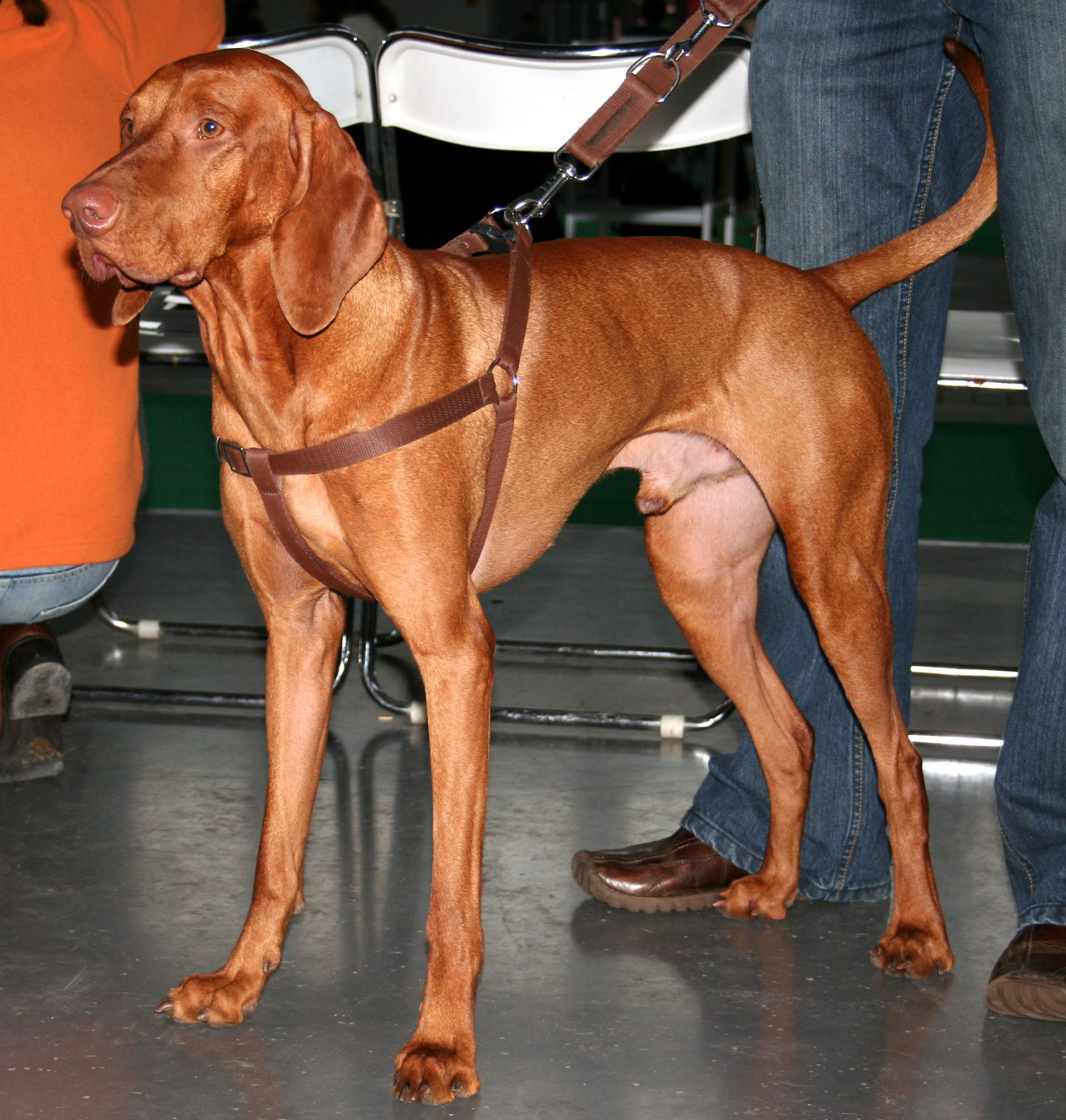
Hungary's short-haired pointing dog
The Hungarian Vizsla belongs to Hungary's gundog traditions, with older written and pictorial references discussed in the FCI history. Those accounts provide context for a regional hunting type rather than a complete pedigree from the earliest images to modern registered dogs.
The clearer modern programme began in 1920, and FCI recognition followed in 1936. The short-haired breed is separate from the Wirehaired Vizsla, despite shared national working interests and similar golden colouring. Comparing the actual coat and standard helps avoid assuming that one is merely a grooming variation of the other.
The close golden jacket
Short dense hair covers the body, becoming finer around the head and ears, without an undercoat. Russet-gold and dark sandy-gold shades create the familiar appearance. A lightly covered underside needs gentle handling, and a shiny coat does not establish skin comfort or physical health.
Cooperation deserves patient teaching
The standard emphasises a willingness to remain in contact with the handler and explicitly rejects rough treatment. Rewarding learning and secure exploration suit that aim better than force. Individual pursuit interests, confidence and experience still matter when planning introductions, recall practice and grooming.
Gentle checks after activity
Look at feet and places beneath equipment, using tools that do not scrape close hair or sensitive areas. Build examination gradually rather than waiting for an urgent need. Tell a groomer about discomfort or previous experiences and seek assessment for persistent irritation or painful movement.
Plan comfortable care
Our gentle coat-care guide and first grooming appointment guide help you prepare questions about handling, maintenance and a suitable service. This breed profile is independent of named businesses.
Photograph and sources
The photograph illustrates one Hungarian Vizsla. See the linked credit for its creator, source and reusable licence. It does not establish the dog's health, age or temperament.
Read the FCI catalogue entry and FCI breed standard. General care and handling guidance is available from PDSA and Dogs Trust.