
The Magyar Agar story
The Hungarian Greyhound is known in Hungarian as the Magyar Agar. The FCI connects its history with Hungarian hunting traditions and older accounts of dogs arriving alongside the Magyars. Archaeological and historical references can show a sighthound type without proving an unbroken pedigree for the modern registered breed.
During the nineteenth century, crosses with other sighthounds were used in efforts to modify speed. The resulting breed retains a distinct Hungarian identity and an emphasis on endurance. Such history should not be turned into a promised racing ranking or a claim that every individual can outperform another breed.
A short jacket with seasonal changes
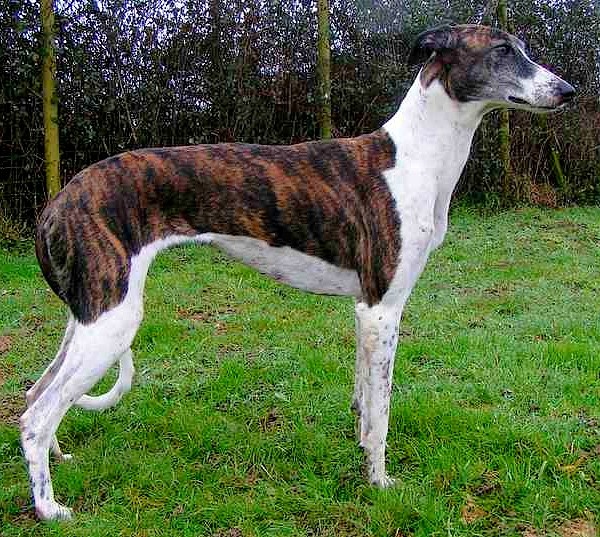
The dense, relatively coarse hair follows a strong lean outline rather than forming long feathering. A winter underlayer may appear, so coat needs can change with the individual and season. Brindle and white is one visible combination, but the standard allows a wider range of appearances.
Reserve alongside pursuit interests
The standard's intelligent and faithful ideal is paired with watchfulness and reserve. As with other sighthounds, planning secure opportunities to run and learn is more useful than assuming a quiet moment predicts every outdoor reaction. Introductions to animals and grooming equipment should follow observed behaviour.
Gentle care for a lean outline
Short hair does not remove the need to check skin, feet and places beneath equipment. Gentle handling and appropriate tools help avoid scraping sensitive areas. Explain previous experiences to a groomer and build cooperation gradually, especially where the dog dislikes standing or having its feet touched.
Plan comfortable care
Our gentle coat-care guide and first grooming appointment guide help you prepare questions about handling, maintenance and a suitable service. This breed profile is independent of named businesses.
Photograph and sources
The photograph illustrates one Hungarian Greyhound. See the linked credit for its creator, source and reusable licence. It does not establish the dog's health, age or temperament.
Read the FCI catalogue entry and FCI breed standard. General care and handling guidance is available from PDSA and Dogs Trust.