
A Cuban companion with a Mediterranean thread
The Havanese belongs to the bichon family of companion dogs. Its history connects Mediterranean dogs, sea travel and development in Cuba. The Royal Kennel Club describes Spanish or Italian traders carrying ancestors to the island; the FCI also places an early thread around Mediterranean coastal regions. Those accounts are useful context, but they do not establish a complete passenger list or one documented founding voyage.
The breed became associated with Cuban households, and later families taking dogs abroad helped establish breeding communities elsewhere, including the United States. These histories describe movement of particular lines; they do not establish how many dogs or breeding lines remain in Cuba today. The origin filter here follows the FCI catalogue's Cuba entry, while acknowledging the earlier Mediterranean background.
The international standard uses the name Bichon Havanais. Havanese is the familiar English name used on this page; the two labels refer to the same FCI standard 250. Neither the name nor the coat is a reason to confuse the breed with another small companion dog in a photograph.
Living with the individual dog
Breed descriptions often present an engaged, playful companion interested in its people. That is a useful invitation to ask about the individual: what do they enjoy, how do they settle, and how have they learned to cope with short separations or unfamiliar visitors? A small body does not make a dog a household ornament or remove the need for learning and rest.
Offer manageable activities and reward the everyday responses you want. Let brushing become a series of comfortable interactions rather than a long session imposed because the dog is easy to lift. Supervise contact with children and give the dog a safe, undisturbed resting place. A cheerful breed description is not a promise that every Havanese will welcome every touch.
Plan for the adult coat, not just the puppy photograph
A young Havanese can have a different-looking coat from an adult in full length. Ask about the coat in front of you and the time you can realistically give it. Regular, gentle work through the hair is more useful than allowing knots to accumulate and hoping a bath will solve them. A groomer can demonstrate how to reach the places where a harness, movement or longer hair causes friction.
The FCI standard describes natural presentation for the breed; that is a show standard, not an instruction to leave a pet uncomfortable. AKC notes that pet owners sometimes choose a shorter practical trim. Discuss the individual coat, your maintenance routine and keeping sight and movement comfortable, without treating a photograph or a fixed appointment interval as a universal care plan.
Read our gentle coat-care guide for help with home maintenance, and our first grooming appointment guide for questions to ask before a visit.
About the photograph and sources
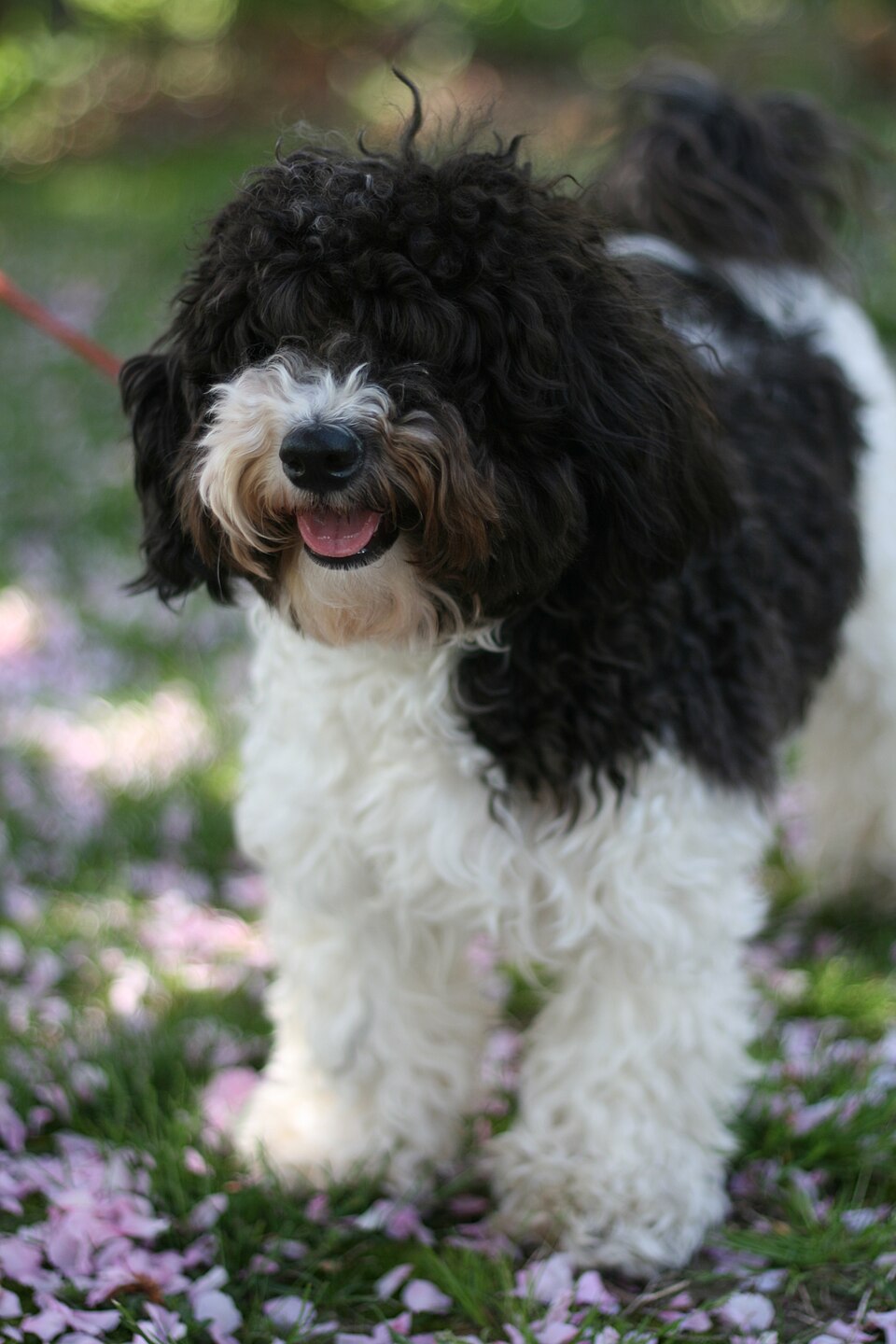
This outdoor photograph shows Lizzie, a young black-and-white Havanese among flowers. It is a natural puppy image rather than a full adult-coat demonstration. The hair around the face in this individual is not a recommendation to let a pet's vision become obstructed.
Further reading: Royal Kennel Club breed guide; American Kennel Club breed guide; PDSA grooming guidance; Dogs Trust handling guidance.