
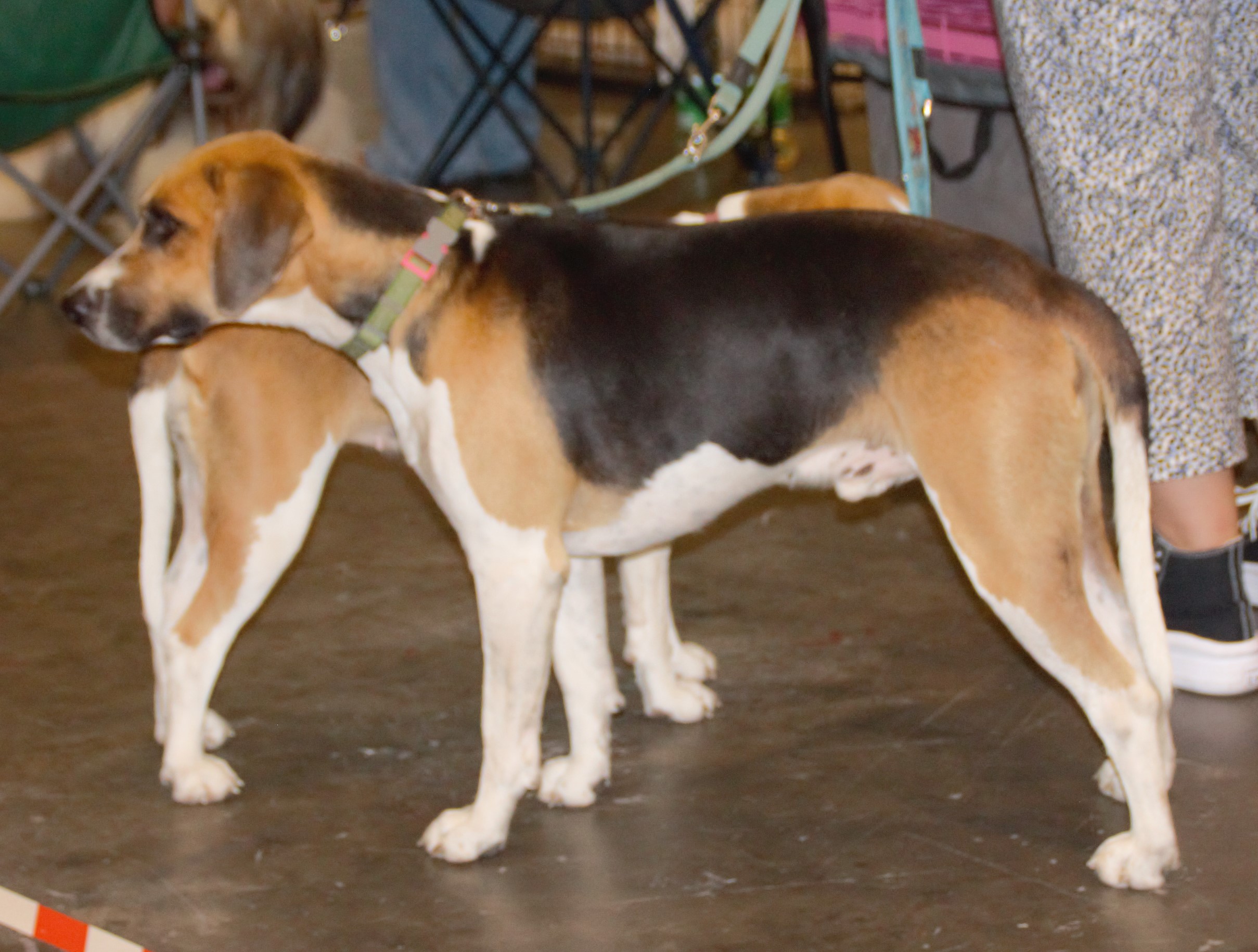
A hare hound with its own story
The Harrier's name reflects its association with hunting hare. The Royal Kennel Club traces the type to at least the thirteenth century and describes later Foxhound influence that helped produce a lighter, faster hound suitable for following on horseback as well as on foot.
Its familiar position between the smaller Beagle and taller Foxhound is useful orientation, not a claim that every Harrier is a recent cross between them. The breed has a separate FCI identity, number 295. Modern Royal Kennel Club recognition from January 2020 was an administrative milestone, not the beginning of its much older history.
Smooth coat and a purposeful outline
The coat is flat and smooth, with recognised hound colours and markings. A clear outline and free movement fit the breed's working background. Tricolour examples can resemble other hounds, making a name, source and individual record more reliable than colour alone for identification.
Friendliness alongside scent interest
The standard describes a lively, friendly character. A hound can fit that ideal and still become absorbed in a scent or need gradual introductions to new settings. Reward attention, provide secure exploration and assess the actual dog's experience rather than expecting recall or grooming confidence automatically.
Care that starts before the appointment
Gently check feet, external ears and collar areas after walks. Small rewarded standing and body-handling sessions can make professional care less surprising. Tell the groomer about previous routines and sensitivities, and consult a vet if pain or skin changes make ordinary checks difficult.
Plan comfortable care
Our gentle coat-care guide and first grooming appointment guide help you prepare questions about handling, maintenance and a suitable service. This breed profile is independent of named businesses.
Photograph and sources
The photograph illustrates one Harrier. See the linked credit for its creator, source and reusable licence. It does not establish the dog's health, age or temperament.
Read the FCI catalogue entry and FCI breed standard. General care and handling guidance is available from PDSA and Dogs Trust.
Additional primary reading: Royal Kennel Club: Harrier history · Royal Kennel Club: recognition from2020.