
From leash hounds to specialist tracking
The Hanoverian Scent Hound's history is tied to older leash-hound work and the changing demands of hunting after firearms became widespread. The FCI describes a shift towards locating wounded large game, making controlled scent tracking central to the breed's purpose.
Hanover's royal hunting establishment developed and preserved these methods. Since 1894, the Verein Hirschmann has maintained organised breeding with a strong focus on working ability. This explains the specialist identity of FCI number 213, rather than treating it as a generic brown hound.
A close deer-red coat
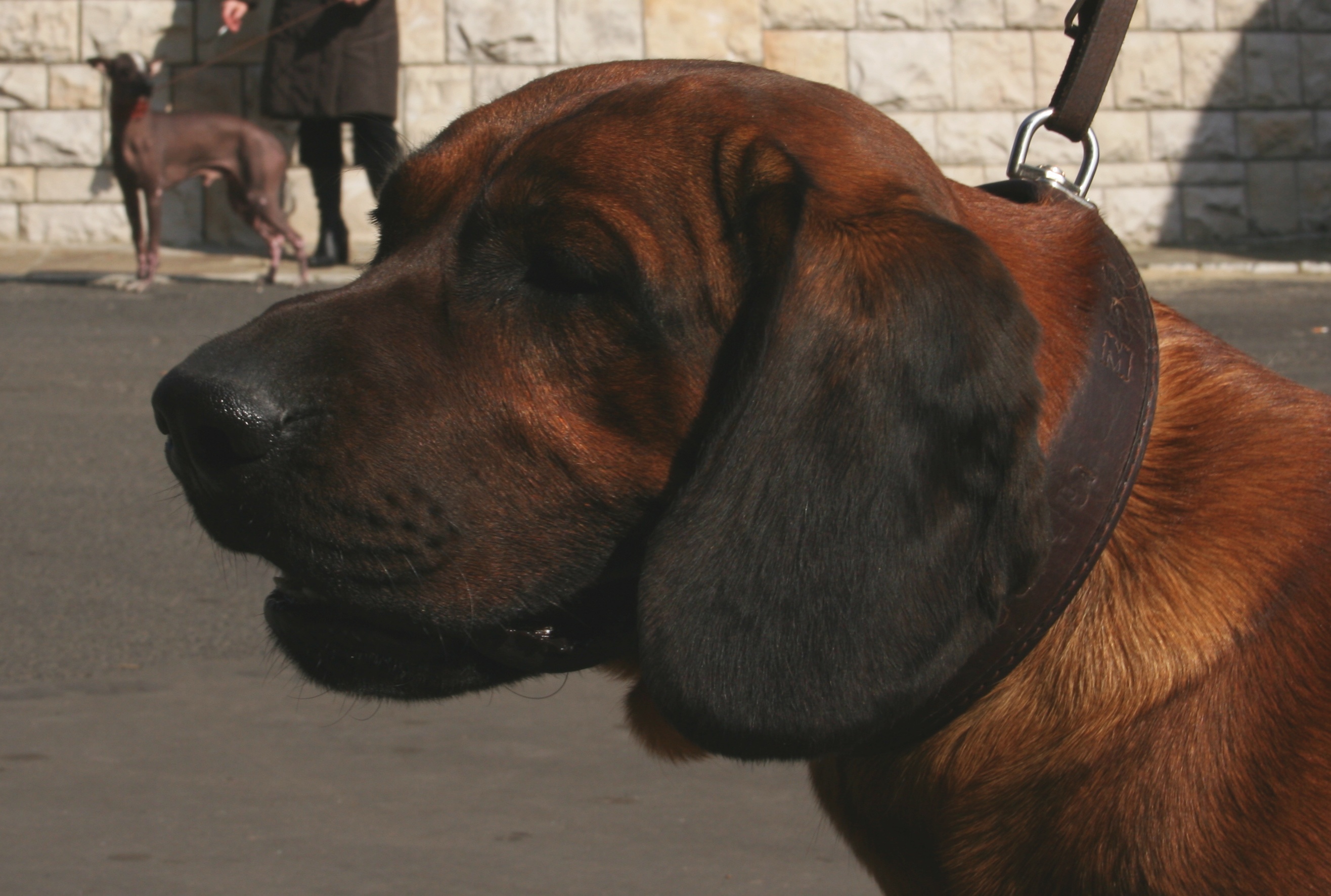
The jacket is short, thick and coarse, with somewhat longer hair around the rear thighs and underside of the tail. Colour ranges through deer-red shades, sometimes with brindling or a mask. A portrait can show the head clearly but cannot establish an individual's working ability, health or full conformation.
Concentration and sensitivity can coexist
The standard describes calm assurance and strong concentration alongside sensitivity to the handler and discernment with strangers. Those qualities make patient introductions and rewarding cooperation useful priorities. A focused working background does not establish immediate confidence in a salon or around every unfamiliar person.
Comfort supports cooperation
Check feet and equipment areas after outdoor work and introduce body handling in manageable steps. Explain previous sensitivities before an appointment so a groomer can allow space and breaks. Do not treat a strong tracking dog as obliged to tolerate pain; changes in comfort need appropriate professional advice.
Plan comfortable care
Our gentle coat-care guide and first grooming appointment guide help you prepare questions about handling, maintenance and a suitable service. This breed profile is independent of named businesses.
Photograph and sources
The photograph illustrates one Hanoverian Scent Hound. See the linked credit for its creator, source and reusable licence. It does not establish the dog's health, age or temperament.
Read the FCI catalogue entry and FCI breed standard. General care and handling guidance is available from PDSA and Dogs Trust.