
A regional hound preserved and rebuilt
The Griffon Nivernais takes its name from the Nivernais region of France. Its FCI history discusses older grey hounds and possible much earlier connections, but those origins are uncertain. They should not be mistaken for a documented genetic chain reaching back to antiquity.
The better-defined modern story concerns regional dogs preserved through periods of decline. Reconstruction in the late nineteenth and early twentieth centuries included Vendeen, Foxhound and Otterhound influence. A breed club followed in 1925, helping establish the identity recorded today as FCI number 17.
Dark-tipped hair rather than a painted grey
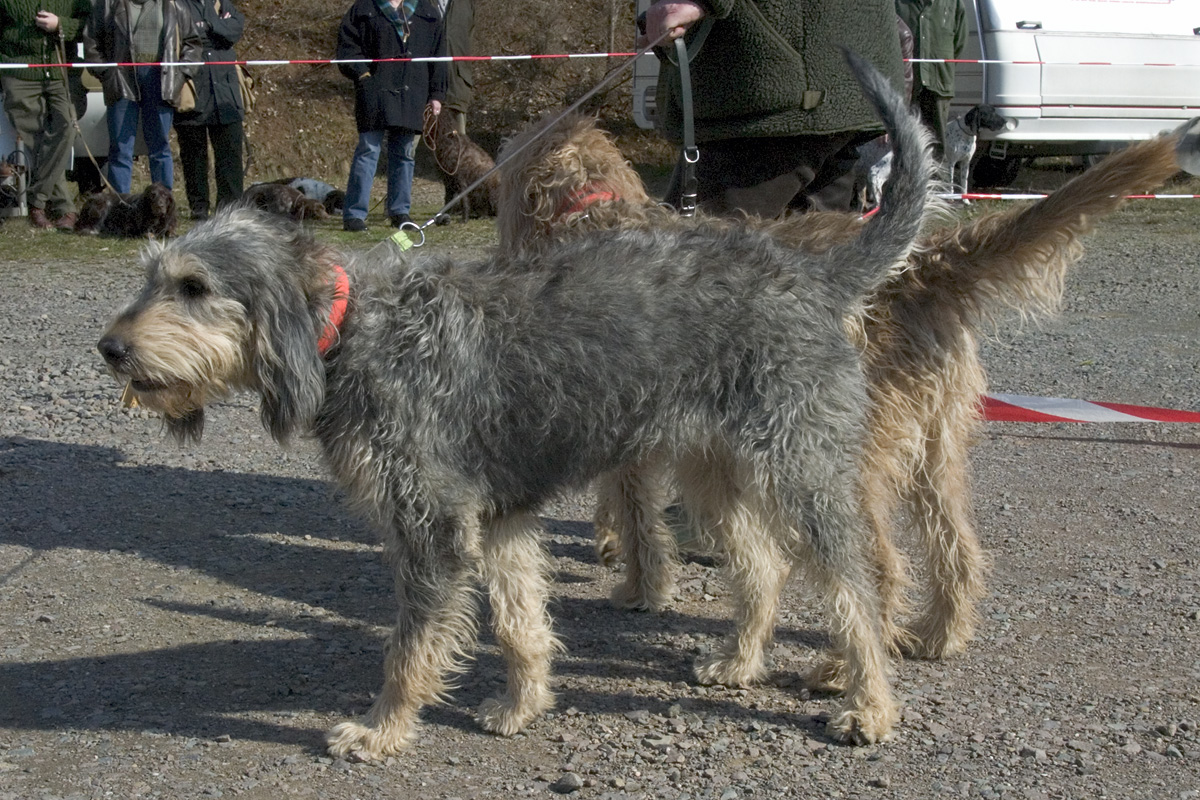
The rough jacket is long, shaggy and bushy without becoming woolly or curly. Dark hair tips over a lighter base create its characteristic overlaid shades. Scattered white hairs and tan details can change the overall impression, so photographs may show quite different-looking examples of the same breed.
Initiative belongs in the care plan
The standard describes a persistent worker capable of making decisions in difficult terrain, with independence sometimes becoming obstinacy. Rewarding cooperation and secure outdoor arrangements make practical sense. Working courage does not establish a particular dog's confidence with people, animals or unfamiliar grooming equipment.
Check underneath the shaggy outline
Plant material can hide behind ears and under equipment even when the outer hair looks tidy. Work gently through small areas and explain previous handling sensitivities before an appointment. A professional can help with an achievable routine; painful knots should not become a test of endurance.
Plan comfortable care
Our gentle coat-care guide and first grooming appointment guide help you prepare questions about handling, maintenance and a suitable service. This breed profile is independent of named businesses.
Photograph and sources
The photograph illustrates one Griffon Nivernais. See the linked credit for its creator, source and reusable licence. It does not establish the dog's health, age or temperament.
Read the FCI catalogue entry and FCI breed standard. General care and handling guidance is available from PDSA and Dogs Trust.