
An old type with a British breed history
The Greyhound's deeper origins are debated. The FCI discusses ancient sighthound-like images and possible earlier connections beyond Britain, but such pictures do not establish a continuous pedigree for the modern breed. Its standardised development in Britain is the clearer part of the story.
Coursing relied on a hound following visible moving quarry. Later racing developed from that running-hound tradition, while individual Greyhounds today can have very different working, showing or companion backgrounds. None of those backgrounds can be established merely by looking at a dog.
The outline beneath the fine coat
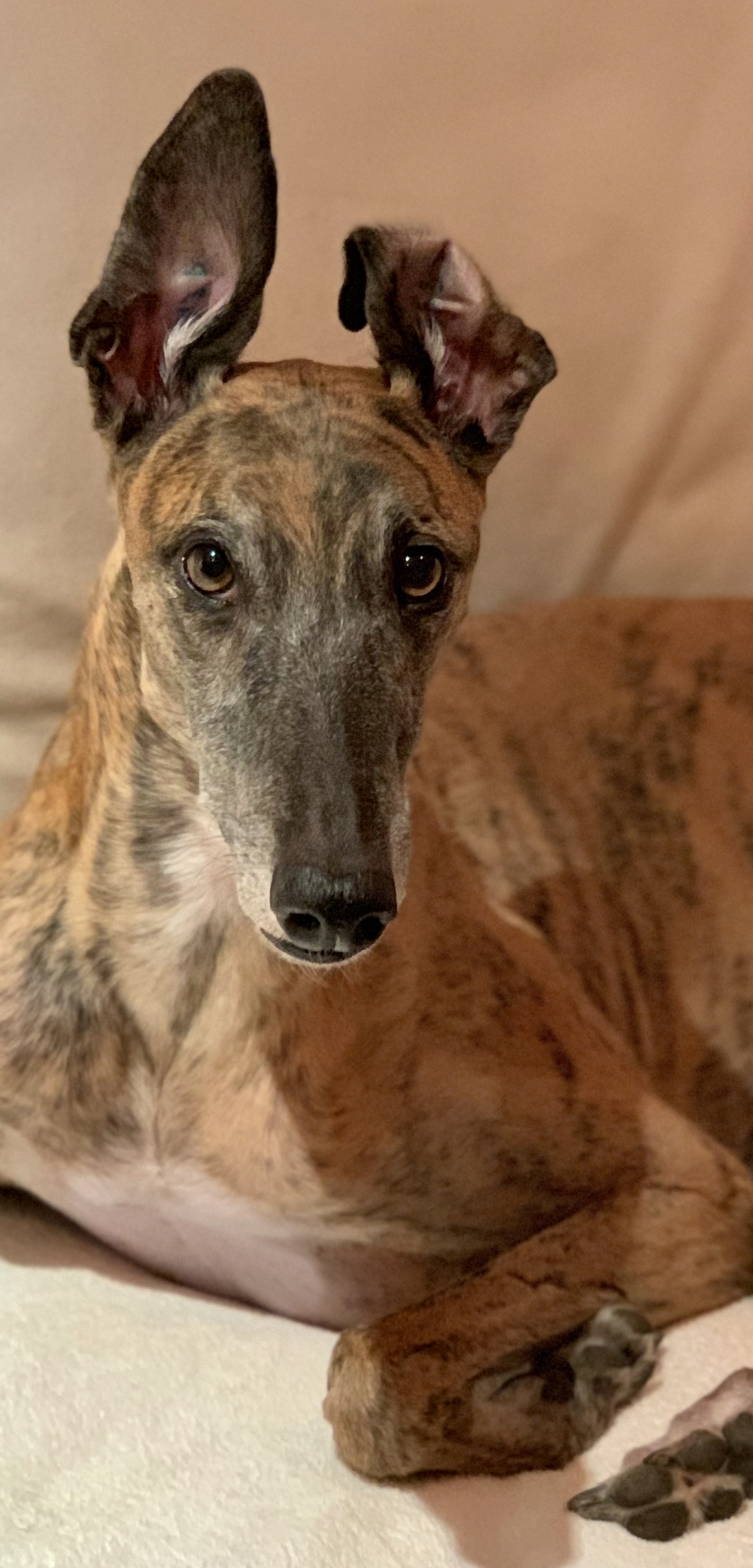
Long limbs, a deep chest and a lean body give the Greyhound its recognisable silhouette. Fine, close hair follows that outline rather than hiding it. Brindle, black, white and other permitted colours mean the breed cannot be reduced to a single coat pattern.
A calm description still leaves room for individuality
The standard's affectionate, even-tempered ideal is useful context, not a promise about every meeting or moving animal. Learn the dog's actual responses, reward attention and use secure arrangements for exercise. A dog may settle quietly indoors while retaining a strong interest in pursuit outside.
Gentle care for a close-coated dog
A short coat does not remove the need for handling practice. Introduce foot and body checks gradually, use a stable surface and keep grooming comfortable around the lean frame. Share any previous handling difficulties with the groomer and stop if the dog shows pain or distress.
Plan comfortable care
Our gentle coat-care guide and first grooming appointment guide help you prepare questions about handling, maintenance and a suitable service. This breed profile is independent of named businesses.
Photograph and sources
The photograph illustrates one Greyhound. See the linked credit for its creator, source and reusable licence. It does not establish the dog's health, age or temperament.
Read the FCI catalogue entry and FCI breed standard. General care and handling guidance is available from PDSA and Dogs Trust.