
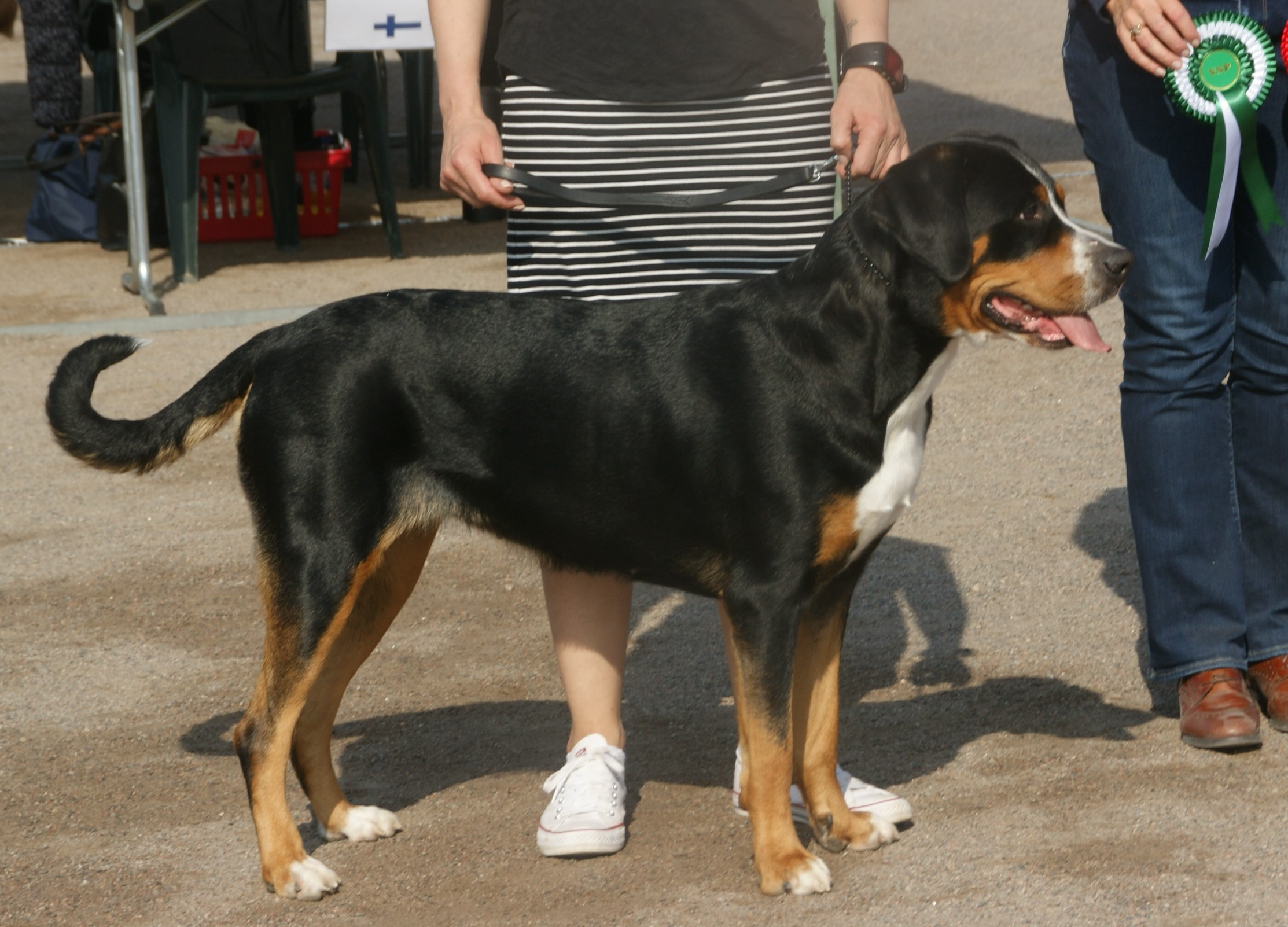
A short-coated Swiss farm dog recognised anew
The Greater Swiss Mountain Dog's modern recognition began with renewed interest in older Swiss farm dogs used for guarding, droving and draught work. At the 1908 Langenthal show, Albert Heim recognised two short-haired dogs as representatives of that larger, declining type.
The Swiss Kennel Club recognised the breed separately in 1909, and a club followed in 1912. The FCI history dates its first standard to 1939. Those events help distinguish this short-coated Swiss breed from the longer-haired Bernese Mountain Dog and the smaller Appenzeller and Entlebucher.
Three colours over two coat layers
Black forms the main coat colour, with reddish-brown and white markings arranged across the head, chest, limbs and tail. Beneath the outer hair is dense undercoat. A shorter surface jacket does not mean there is nothing to maintain underneath, especially around equipment and areas that rub.
Confidence needs thoughtful handling
The standard's confident, watchful and devoted ideal belongs to a powerful working breed. It does not prove that an individual will welcome every stranger or tolerate being moved into position. Reward comfortable cooperation and plan social introductions, professional visits and household routines around the actual dog.
Plan the practicalities before grooming
For a large dog, stable footing and enough space can matter as much as a brush. Discuss standing time, breaks and handling preferences before the appointment. Work gently through the coat and consult a vet when soreness or a sudden change in tolerance makes routine care uncomfortable.
Plan comfortable care
Our gentle coat-care guide and first grooming appointment guide help you prepare questions about handling, maintenance and a suitable service. This breed profile is independent of named businesses.
Photograph and sources
The photograph illustrates one Greater Swiss Mountain Dog. See the linked credit for its creator, source and reusable licence. It does not establish the dog's health, age or temperament.
Read the FCI catalogue entry and FCI breed standard. General care and handling guidance is available from PDSA and Dogs Trust.