
A German story behind an English name
The name Great Dane can send a reader towards Denmark, but the FCI records this breed's origin as Germany. Its official German name is Deutsche Dogge. The standard traces its background to powerful hunting dogs, including dogs used for wild boar, rather than to one neat founding cross. Older names described several large-dog types before the modern breed acquired a more consistent identity. In 1878, a Berlin committee brought those types together under the Deutsche Dogge name; a first standard followed at a Berlin show in 1880. This is a history of gradual organisation and selection, not evidence that today's companion has a working ability simply because of its ancestry. The modern outline combines considerable size with a long head, deep body and an athletic appearance. Germany is the catalogue origin here; the English common name does not establish a Danish origin or tell us where most Great Danes live today.
Living with the individual dog
Before imagining life with a Great Dane, walk through an ordinary day at its adult scale. Is there room for a comfortable resting place away from a busy doorway? How will the dog travel safely, turn in a narrow hall and get to a veterinary appointment if it needs help? Those practical questions matter even when an individual is quiet indoors. The Royal Kennel Club describes an extra-large breed with substantial exercise and space needs; its broad profile is not a daily prescription for a growing puppy, an older dog or a dog with a health problem. Agree appropriate activity with your vet and build the day around the individual. Teach manageable greetings, relaxed lead walking and comfortable handling while the dog is young, rather than relying on strength to control it later. Make introductions gradual and supervise interactions with children and other animals. A familiar breed nickname is no substitute for understanding the dog in front of you. Ask prospective breeders or rescue staff about the particular dog's experience, health records and behaviour, and about the support available after it comes home.
Plan care around the individual
Use the gentle coat-care guide to think about comfortable handling and the difference between care at home and professional help. Our appointment guide explains useful questions to agree before a visit.
About the photograph and sources
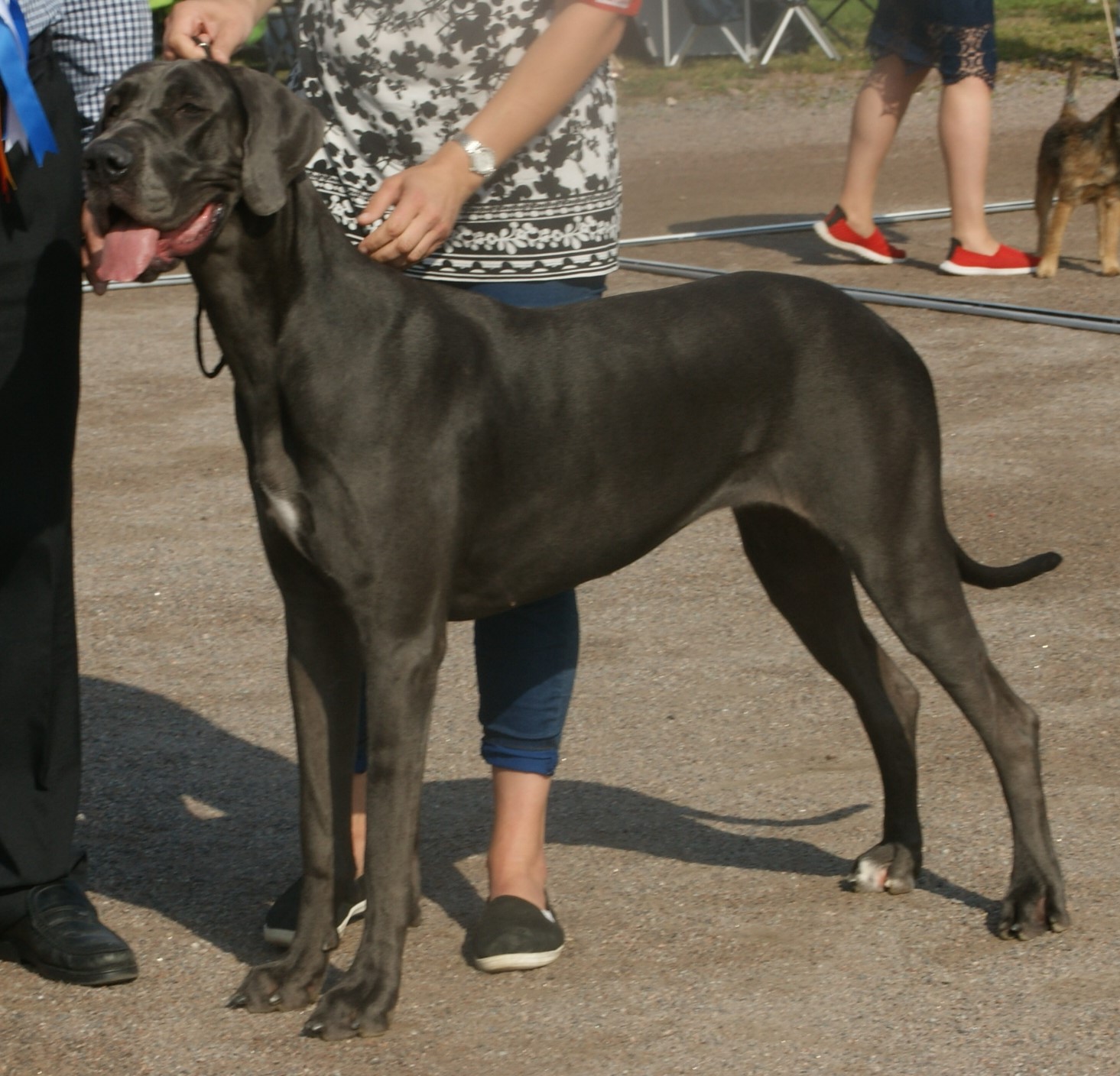
The natural photograph shows a blue-grey Great Dane standing beside handlers outdoors, with its pendant ears, short coat and long-legged outline visible. It illustrates one dog, not every accepted colour, an individual health assessment or a featured grooming business.
Further reading: Royal Kennel Club: Great Dane overview and health-screening information; American Kennel Club breed guide; PDSA grooming guidance; Dogs Trust handling guidance. Breed origins describe the catalogue history, not a count of dogs living in each country today.