
A recorded Anglo-Saintongeois connection
The FCI history describes a mid-nineteenth-century type called Anglo-Saintongeois, produced from Saintongeois and Foxhound crossing. That is the background of the Great Anglo-French White and Black Hound, FCI number 323.
It is distinct from the French White and Black Hound at number 220. Their similar translated names make careful source identification particularly useful. Population and annual-birth figures in older breed accounts are historical, not a current census.
A strong hound with familiar-looking markings
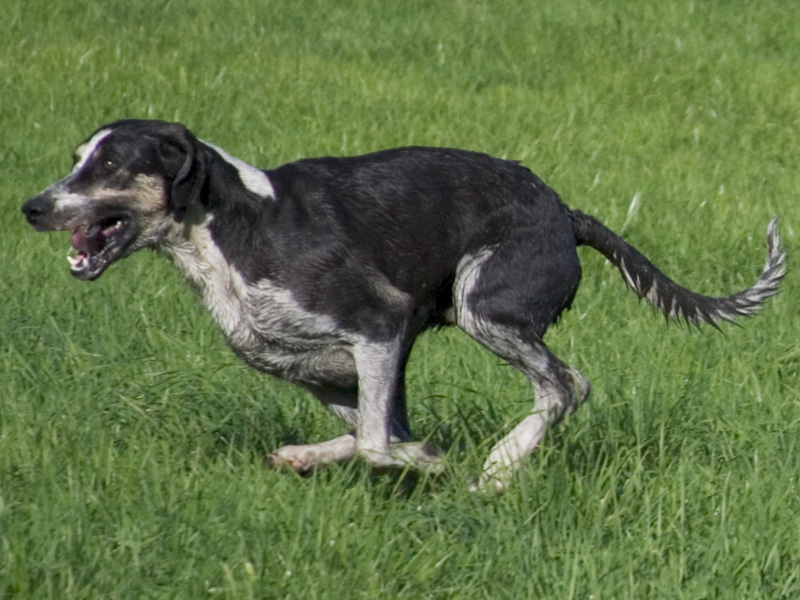
Short, dense hair follows a powerful but balanced outline. White and black dominate, with limited pale tan details and speckling described by the standard. The photographed dog is running, illustrating natural movement rather than every aspect of a standing show outline.
A pack worker in a new setting
The standard describes work in damp or brushy terrain and a close relationship with people in the kennel context. Ask about scent persistence, voice, other dogs and settling before assuming that experience transfers directly into any household. Reward calm contact and gradual learning.
A practical coat still needs observation
Check feet, ear surfaces and collar contact areas after outings. Gentle grooming can remove loose hair while revealing rubbing or small scratches. Introduce a stable standing surface and short handling sessions before professional care, allowing breaks and investigating discomfort rather than rushing through it.
Plan comfortable care
Our gentle coat-care guide and first grooming appointment guide help you prepare questions about handling, maintenance and a suitable service. This breed profile is independent of named businesses.
Photograph and sources
The photograph illustrates one Great Anglo-French White and Black Hound. See the linked credit for its creator, source and reusable licence. It does not establish the dog's health, age or temperament.
Read the FCI catalogue entry and FCI breed standard. General care and handling guidance is available from PDSA and Dogs Trust.