
From a Scottish breeding programme to a familiar companion
The Golden Retriever's story is closely associated with Lord Tweedmouth's breeding programme at Guisachan in Scotland. The Royal Kennel Club traces an important early pairing to a yellow retriever and a Tweed Water Spaniel, followed by further planned crosses. This was a working-dog project, with retrieving ability at its centre. The dogs were recognised as yellow or golden retrievers in Britain in 1913; the name Golden Retriever followed in 1920. The FCI lists Great Britain as the breed's country of origin and places it in its retriever group. That origin describes the breed's development, rather than where most Golden Retrievers live today.
Living with the individual dog
The FCI describes a cooperative, friendly dog with working ability. Retrieving history helps explain why many individuals enjoy carrying things and learning with people, but personality, experience and health still matter. Think beyond a long walk: a comfortable routine can combine movement, suitable games, learning and uninterrupted rest. Choose activities for the actual dog in front of you, with veterinary advice where age or health changes what is appropriate. A sociable reputation should never replace supervision or teaching considerate behaviour around children and other animals.
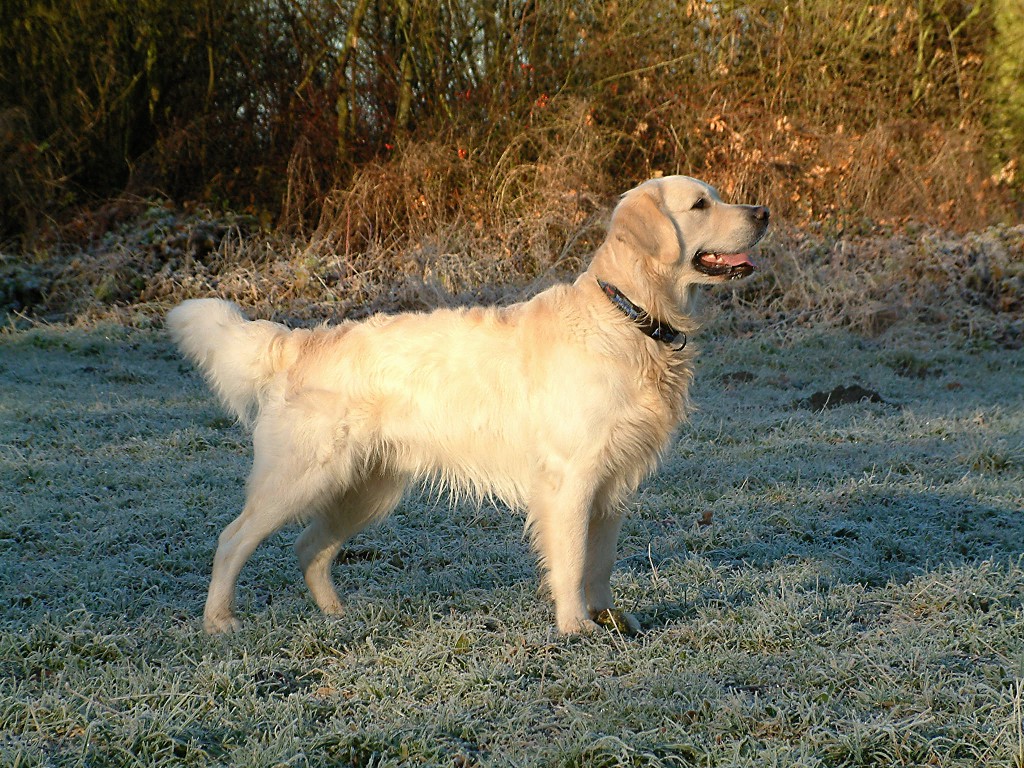
About the photograph: An adult Golden Retriever standing outdoors. Individual dogs vary in colour, size, coat and temperament.
Further reading: Royal Kennel Club Golden Retriever guide and breed history.