
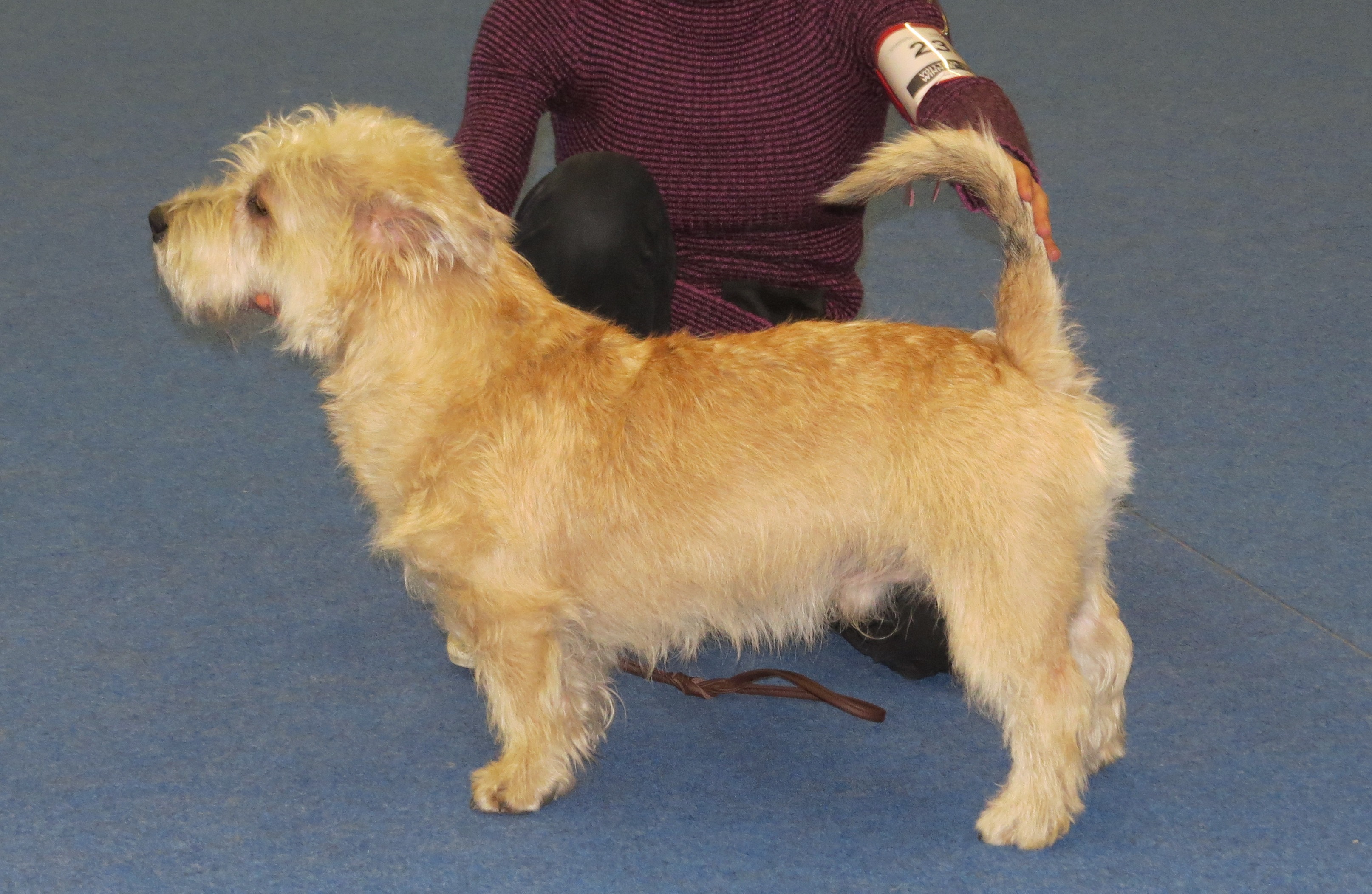
A local Irish working terrier
The Glen of Imaal Terrier developed in the Glen of Imaal in County Wicklow. The FCI describes a local dog shaped by demanding rural work rather than a recent deliberate experiment to create a fashionable appearance.
Its historical account includes difficult and sometimes cruel uses, including dog-wheel labour and fighting. These belong to the past and are not activities to recreate. The Irish Kennel Club recognised the breed in 1934, giving a clear modern milestone for the terrier recorded as FCI number 302.
A sturdy outline and changing young coat
A medium-length harsh jacket covers softer undercoat. Wheaten and blue-brindle are the standard colours, while young dogs may carry darker markings that change with maturity. A photograph of one adult cannot define how every puppy will look or how its coat should be maintained.
A terrier beneath the calmer reputation
The standard combines courage and activity with a gentle, affectionate household ideal. It also recognises an interest in chase. That means secure exploration, rewarding attention and sensible introductions remain important, even when a particular dog appears relaxed or is described as less excitable than other terriers.
Comfort before cosmetic outline
Introduce feet, body and coat checks in short cooperative sessions. Stable footing and a position the dog finds comfortable are useful priorities. A groomer can explain maintenance for the actual harsh coat; pain or changed movement should be assessed rather than worked around to achieve a particular show shape.
Plan comfortable care
Our gentle coat-care guide and first grooming appointment guide help you prepare questions about handling, maintenance and a suitable service. This breed profile is independent of named businesses.
Photograph and sources
The photograph illustrates one Glen of Imaal Terrier. See the linked credit for its creator, source and reusable licence. It does not establish the dog's health, age or temperament.
Read the FCI catalogue entry and FCI breed standard. General care and handling guidance is available from PDSA and Dogs Trust.