
From cattle driving to a modern working breed
The Giant Schnauzer developed in southern Germany, where its earlier role involved driving cattle. Around the turn of the twentieth century, organised breeders increasingly recognised its broader working capabilities. The FCI records stud-book registration from 1913 and formal recognition as a working dog in 1925.
That background helps explain a substantial, attentive dog rather than merely a larger decorative Schnauzer. The modern Giant, Standard and Miniature Schnauzers have separate identities. Similar beards and eyebrows should not lead readers to assume identical size, exercise, handling or maintenance needs across the three.
A harsh jacket with recognisable furnishings
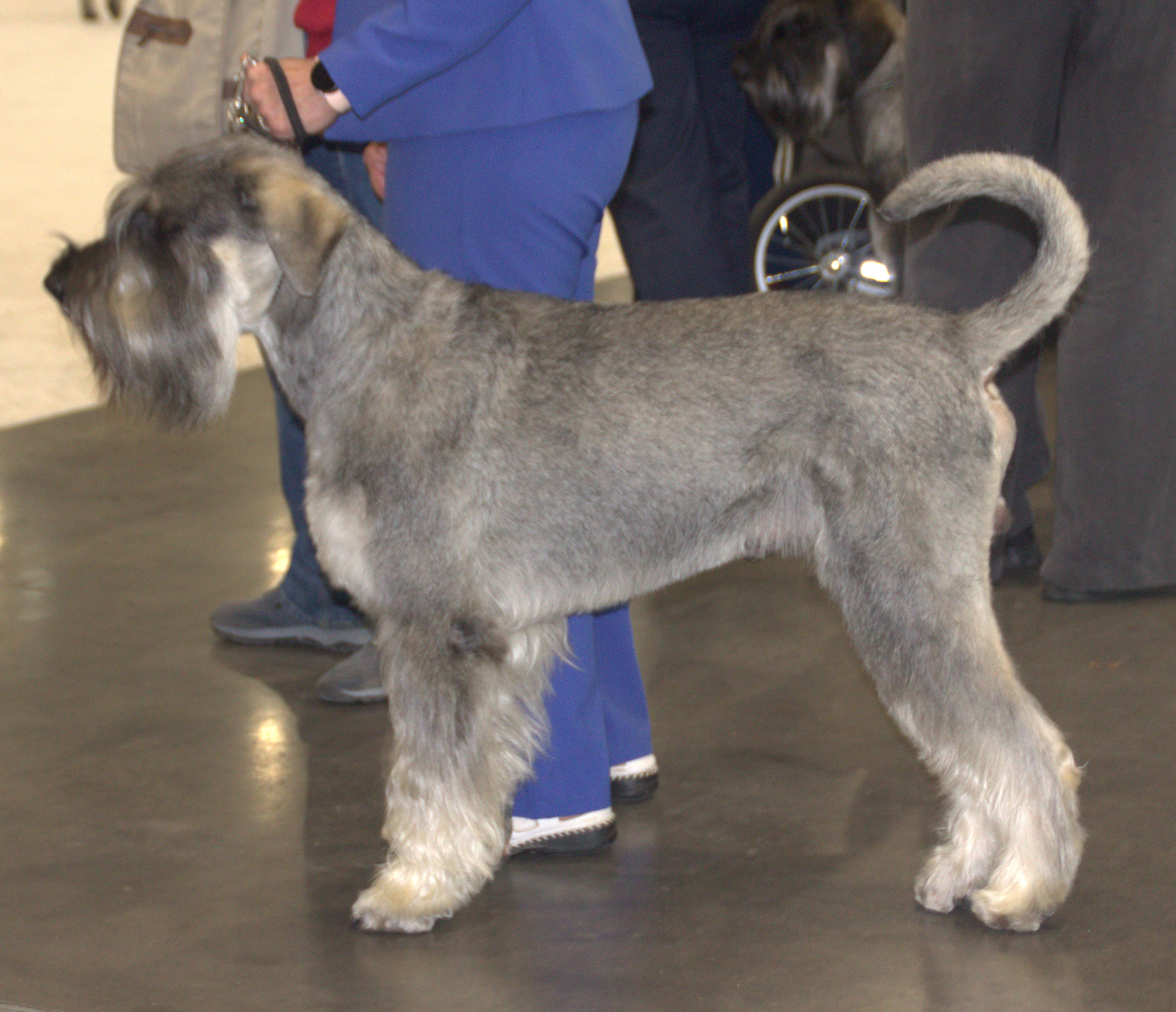
The outer hair is wiry, harsh and dense over an undercoat, with a beard and eyebrows framing the head. The current standard includes black, pepper-and-salt and black-and-silver. The pepper-and-salt photograph illustrates one recognised colour and should not be mistaken for a different breed.
Strength needs cooperative routines
The standard's intelligent and self-confident ideal is a useful aim, not proof that every individual will be easy to handle or welcome unfamiliar people. Rewarding learning, suitable activity and time to settle help owners plan for a strong working dog with its own preferences and experiences.
Care beneath the prepared outline
Check beard hair, eyebrows and equipment contact areas before debris or loose undercoat compacts. Discuss texture maintenance with an experienced groomer without making a sharp show outline the overriding goal. Painful knots, skin changes or sudden reluctance to be touched need assessment rather than firmer restraint.
Plan comfortable care
Our gentle coat-care guide and first grooming appointment guide help you prepare questions about handling, maintenance and a suitable service. This breed profile is independent of named businesses.
Photograph and sources
The photograph illustrates one Giant Schnauzer. See the linked credit for its creator, source and reusable licence. It does not establish the dog's health, age or temperament.
Read the FCI catalogue entry and FCI breed standard. General care and handling guidance is available from PDSA and Dogs Trust.