
One FCI entry, several varieties
FCI number 97 covers the German Spitz varieties, including Wolfsspitz or Keeshond, Giant, Medium, Miniature and Toy Spitz or Pomeranian. The standard is organised into separate sections, so details from one variety should not be applied indiscriminately to all the others.
The historical introduction discusses older Central European spitz types. Its archaeological ancestry account is a traditional breed-history interpretation, not a traceable pedigree from a prehistoric dog. Germany remains the catalogue origin for this entry.
A recognisable spitz silhouette
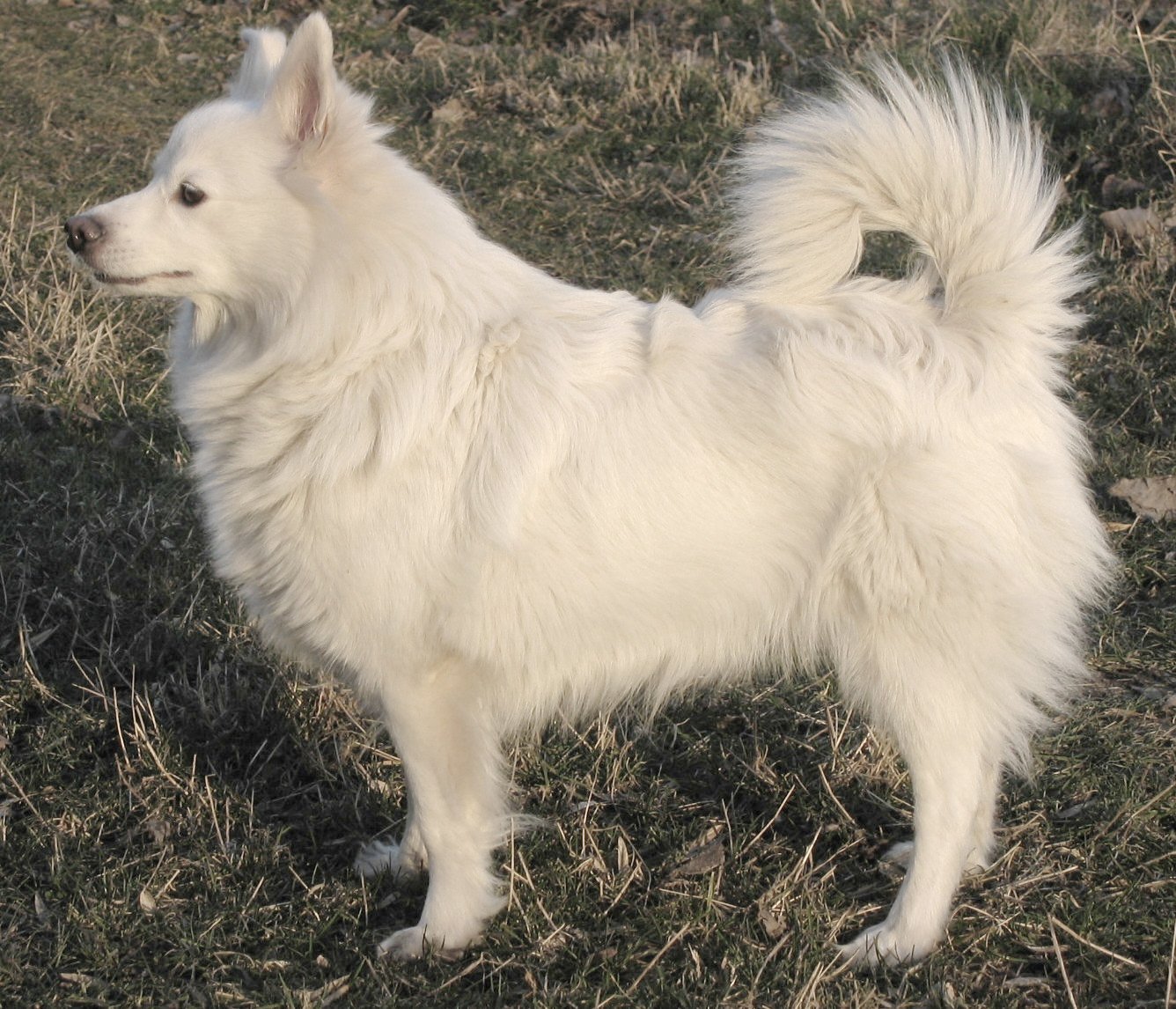
Upright ears, a wedge-shaped head, a mane-like ruff and a tail carried over the back unite the varieties. Size and permitted colours differ between sections. The photograph shows a white Giant Spitz, clearly identified in the source, rather than an unnamed example used to represent every variety.
Attention can become useful learning
The FCI describes dogs that are lively, teachable and attached to their people, with natural reserve towards strangers. Reward calm noticing, practise settling and manage exciting arrivals. Neither the standard nor size alone predicts how much an individual will bark or enjoy handling.
Care in daily life
A full surface can hide loose undercoat and friction tangles. Check small sections gently, including behind ears and beneath a harness, rather than repeatedly sweeping only the outer hair. A groomer can help set a realistic routine that keeps skin accessible and the dog comfortable without an exaggerated cosmetic outline.
Plan comfortable care
Our gentle coat-care guide and first grooming appointment guide help you prepare questions about handling, maintenance and a suitable service. This breed profile is independent of named businesses.
Photograph and sources
The photograph illustrates one German Spitz. See the linked credit for its creator, source and reusable licence. It does not establish the dog's health, age or temperament.
Read the FCI catalogue entry and FCI breed standard. General care and handling guidance is available from PDSA and Dogs Trust.