
From pointing dogs to a versatile gundog
The FCI history traces the German Shorthaired Pointer through European bird dogs used with nets and falconry, followed by changing hunting methods. Selection developed a dog able to do more than indicate the presence of game.
A firmer documentary landmark is the Deutsch-Kurzhaar studbook, published from 1897. The standard credits Prince Albrecht zu Solms-Braunfels with work on breed characteristics, conformation judging and early hunting-test regulations. The German name Deutsch Kurzhaar appears under FCI number 119.
An athletic dog beneath a sleek coat
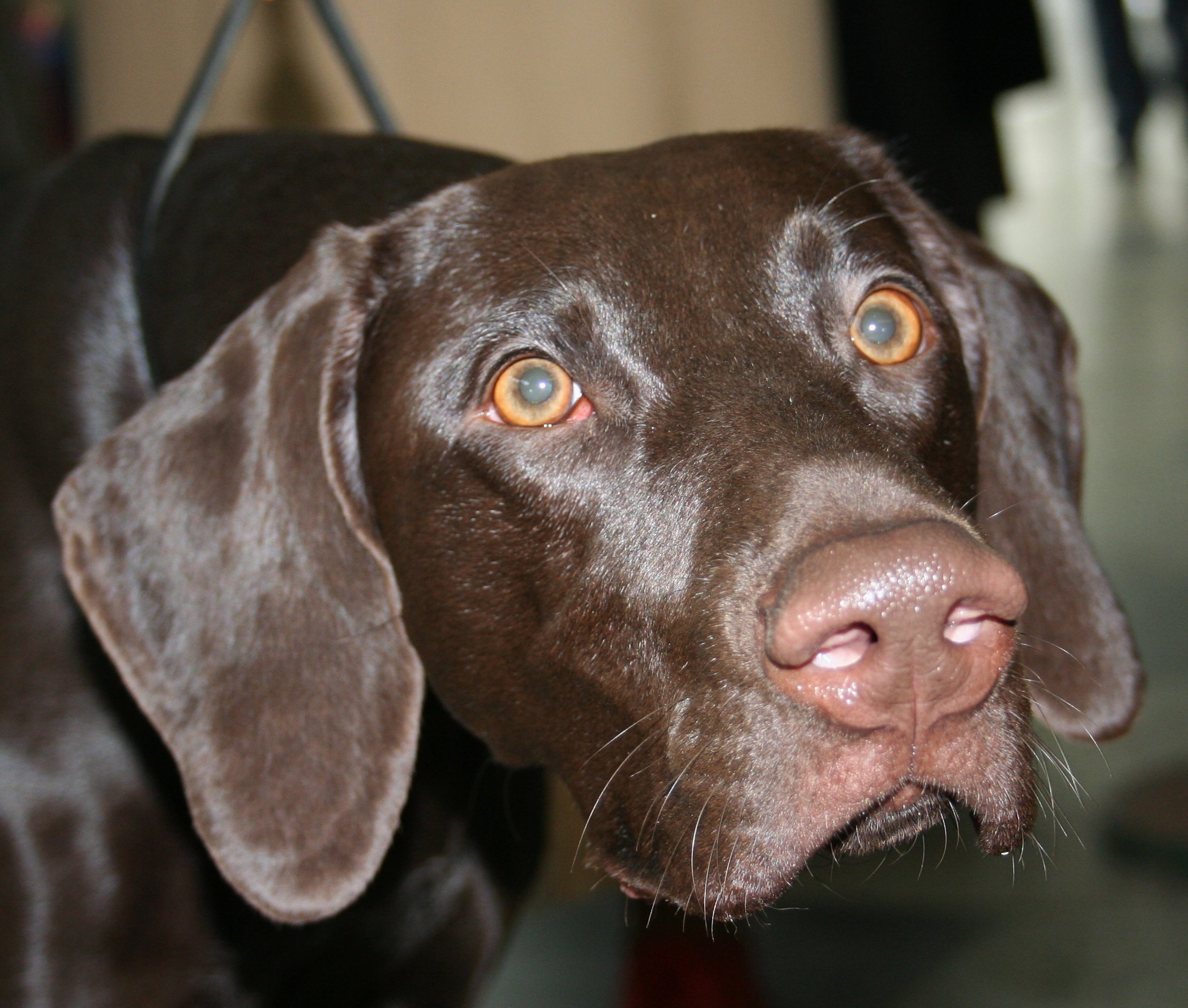
The short, dense coat follows the body closely, while the head and ears carry shorter hair. Roan, patched and solid patterns are described in the standard. The pictured brown head is one example, not the only recognised appearance.
Work together, rather than simply wear out
The breed's background combines searching, pointing and retrieving. Rewarding training, scent-based activities and safe exploration can provide useful outlets alongside rest. Avoid assuming that a long walk alone will teach recall or calm behaviour around wildlife.
Care in daily life
A short coat makes gentle skin checks accessible, including areas beneath the collar and harness. Check feet after rough ground and allow time to dry comfortably after wet activity. Familiarise the dog with standing on a stable surface, soft grooming tools and brief foot handling before those skills are needed professionally.
Plan comfortable care
Our gentle coat-care guide and first grooming appointment guide help you prepare questions about handling, maintenance and a suitable service. This breed profile is independent of named businesses.
Photograph and sources
The photograph illustrates one German Shorthaired Pointer. See the linked credit for its creator, source and reusable licence. It does not establish the dog's health, age or temperament.
Read the FCI catalogue entry and FCI breed standard. General care and handling guidance is available from PDSA and Dogs Trust.