
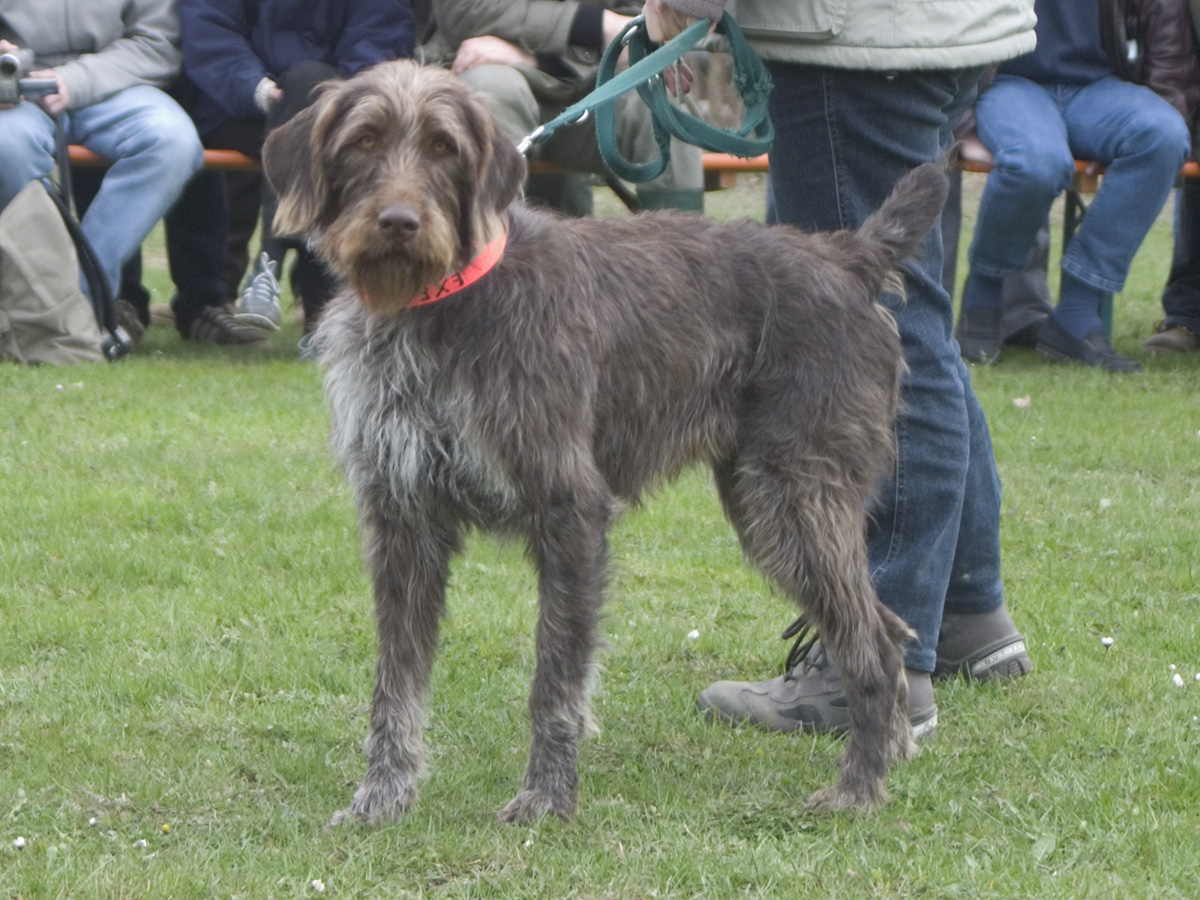
A different rough-coated pointer
The FCI records Deutsch Stichelhaar as number 232. Its historical account describes an effort to preserve and redevelop an existing rough-coated German pointing type, rather than create another variety of the short-haired pointer.
Hans von Kadisch's 1888 work is cited in that account. Club Stichelhaar followed in 1892 and was renamed Verein Deutsch Stichelhaar in 1976. This separate history is a useful distinction when photographs or informal names make German wire-coated breeds appear interchangeable.
Stiff hair and a moderate beard
A strong body, harsh bristly hair and prominent eyebrows define the outline. The head should not be softened by a long silky coat. The standard describes a moderate beard and a body coat that follows a consistent direction, with a little more length underneath.
A steady ideal within a working breed
The FCI describes calmness, courage and self-control. These are breeding ideals, not a prediction of an individual dog's response to a new dog or a busy salon. Build rewarding contact with the handler and introduce unfamiliar situations in manageable steps.
Care in daily life
Check the beard, feet and underside after outdoor activity, feeling gently for seeds and burrs. Explain the breed and coat texture when booking grooming so it is not treated as a generic long-haired dog. Stop if a tool catches on a knot or causes discomfort and seek help rather than repeatedly pulling.
Plan comfortable care
Our gentle coat-care guide and first grooming appointment guide help you prepare questions about handling, maintenance and a suitable service. This breed profile is independent of named businesses.
Photograph and sources
The photograph illustrates one German Roughhaired Pointer. See the linked credit for its creator, source and reusable licence. It does not establish the dog's health, age or temperament.
Read the FCI catalogue entry and FCI breed standard. General care and handling guidance is available from PDSA and Dogs Trust.