
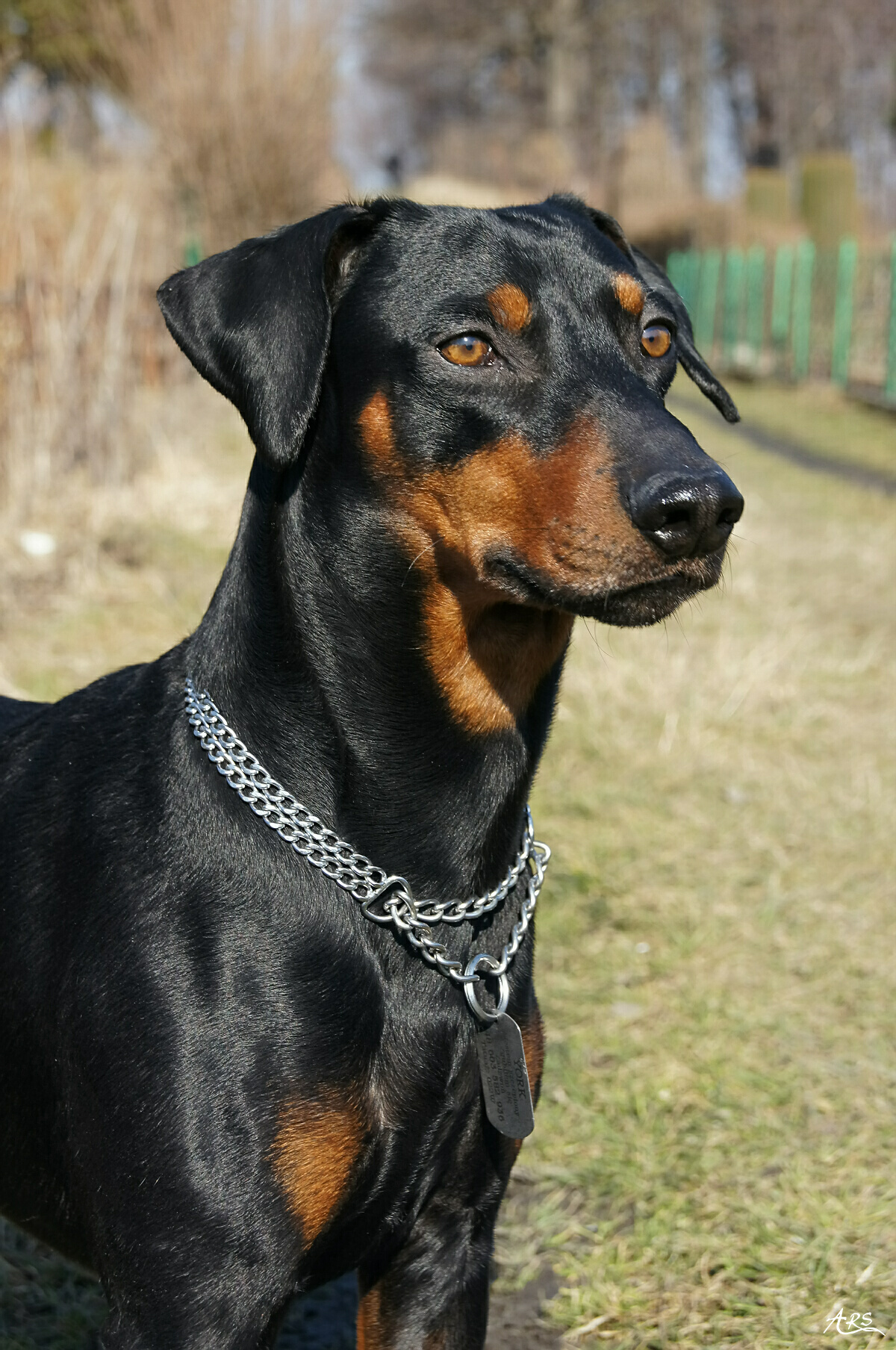
The smooth side of an old German pairing
The FCI records smooth-haired pinschers in the German dog studbook by 1880. Its history describes shared ancestry with rough-coated pinschers, later known as Schnauzers, while noting differences in coat and historical colour patterns.
The modern German Pinscher is FCI number 184. The name does not make it simply a large Miniature Pinscher or a small Dobermann; those are separate breed entries with their own histories.
A clear, muscular outline
A medium-sized, square body and close smooth coat leave the musculature visible. The standard describes an elegant, flowing outline rather than a heavy or exaggerated build. Red-to-brown and black-and-tan are recognised modern colour patterns.
Lively and alert in a household
Spirited self-confidence and watchfulness are part of the breed ideal. Build everyday skills such as waiting at doors, greeting calmly and relaxing while visitors arrive. A label such as watchdog does not tell you how an individual will cope with noise, separation or a grooming salon.
Care in daily life
A soft brush or suitable gentle grooming tool can remove loose hair and help you notice rubbing or skin changes. Avoid harsh scraping on a short coat. Introduce foot, mouth and body checks gradually and explain the dog's handling preferences before professional grooming, so a quick-looking coat does not lead to rushed care.
Plan comfortable care
Our gentle coat-care guide and first grooming appointment guide help you prepare questions about handling, maintenance and a suitable service. This breed profile is independent of named businesses.
Photograph and sources
The photograph illustrates one German Pinscher. See the linked credit for its creator, source and reusable licence. It does not establish the dog's health, age or temperament.
Read the FCI catalogue entry and FCI breed standard. General care and handling guidance is available from PDSA and Dogs Trust.