
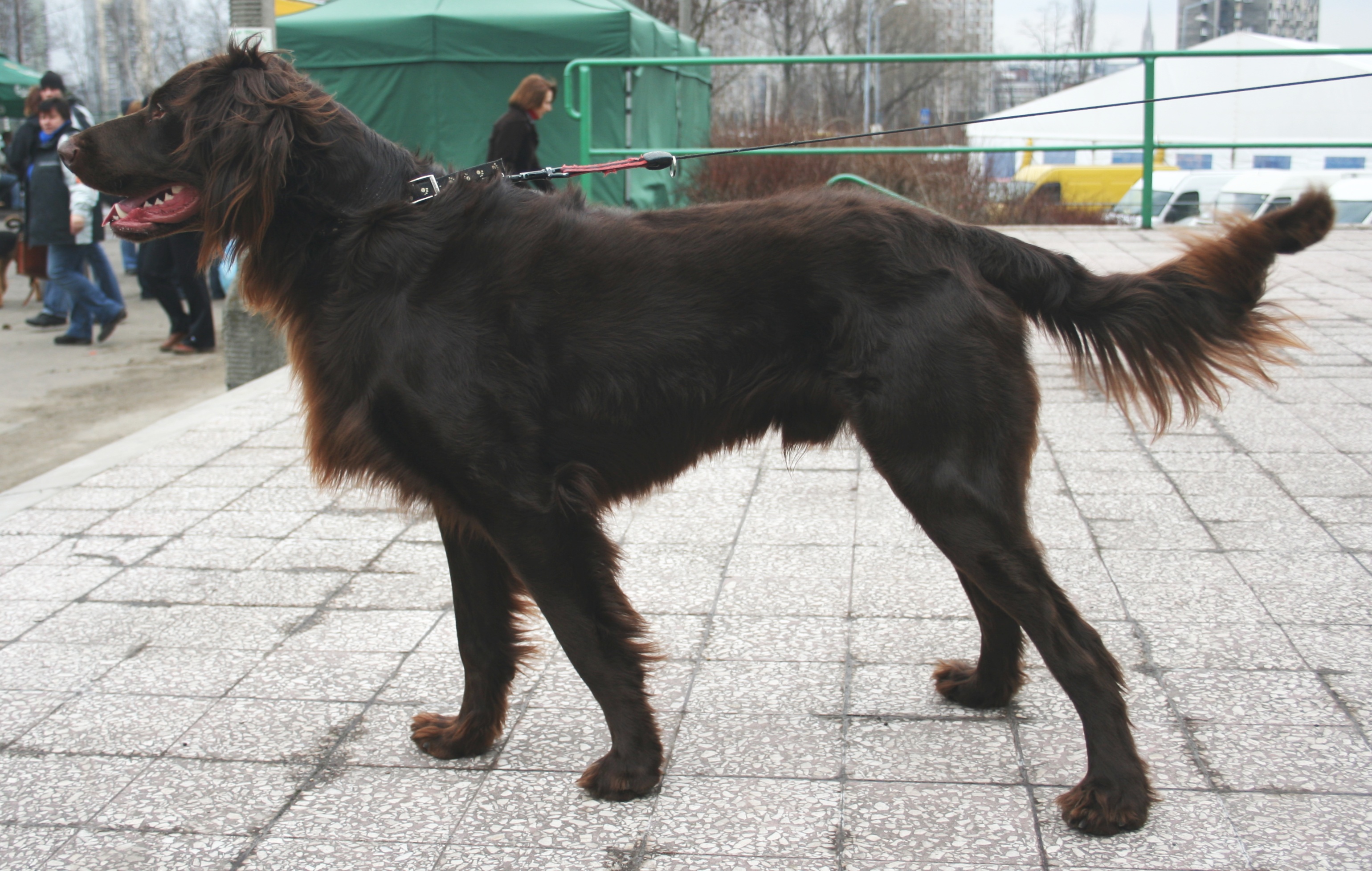
A recorded German breeding history
The FCI account describes bird-dog, water-dog and scenthound influences in the German Longhaired Pointer. It records systematic breeding from 1879 and a standard written by Baron von Schorlemer in 1897.
Those dates describe the development of a defined breed rather than proof that every earlier long-haired hunting dog belonged to it. Deutsch Langhaar is the German name used for FCI entry 117, separate from the German short- and wirehaired pointers.
Feathering without excess
The body coat follows strong, flowing lines. Longer hair appears on the chest, ears, tail and backs of the legs, while the head remains more neatly coated. The standard gives importance to an appropriate texture and length rather than an exceptionally abundant ornamental coat.
Versatility needs a relationship
The calm, good-natured breed ideal sits within a working gundog background. Offer rewarding tasks, safe exploration and opportunities to settle. Meet the individual dog and discuss its experience instead of using trainability as a promise of immediate recall or easy handling.
Care in daily life
Run gentle checks through the softer furnishings after wet or brushy walks. Pay particular attention behind ears and where the harness meets the chest. Keep sessions short, reward cooperation and ask for help with compacted tangles. A comfortable practical finish can be discussed with a groomer before the coat becomes difficult to manage.
Plan comfortable care
Our gentle coat-care guide and first grooming appointment guide help you prepare questions about handling, maintenance and a suitable service. This breed profile is independent of named businesses.
Photograph and sources
The photograph illustrates one German Longhaired Pointer. See the linked credit for its creator, source and reusable licence. It does not establish the dog's health, age or temperament.
Read the FCI catalogue entry and FCI breed standard. General care and handling guidance is available from PDSA and Dogs Trust.