
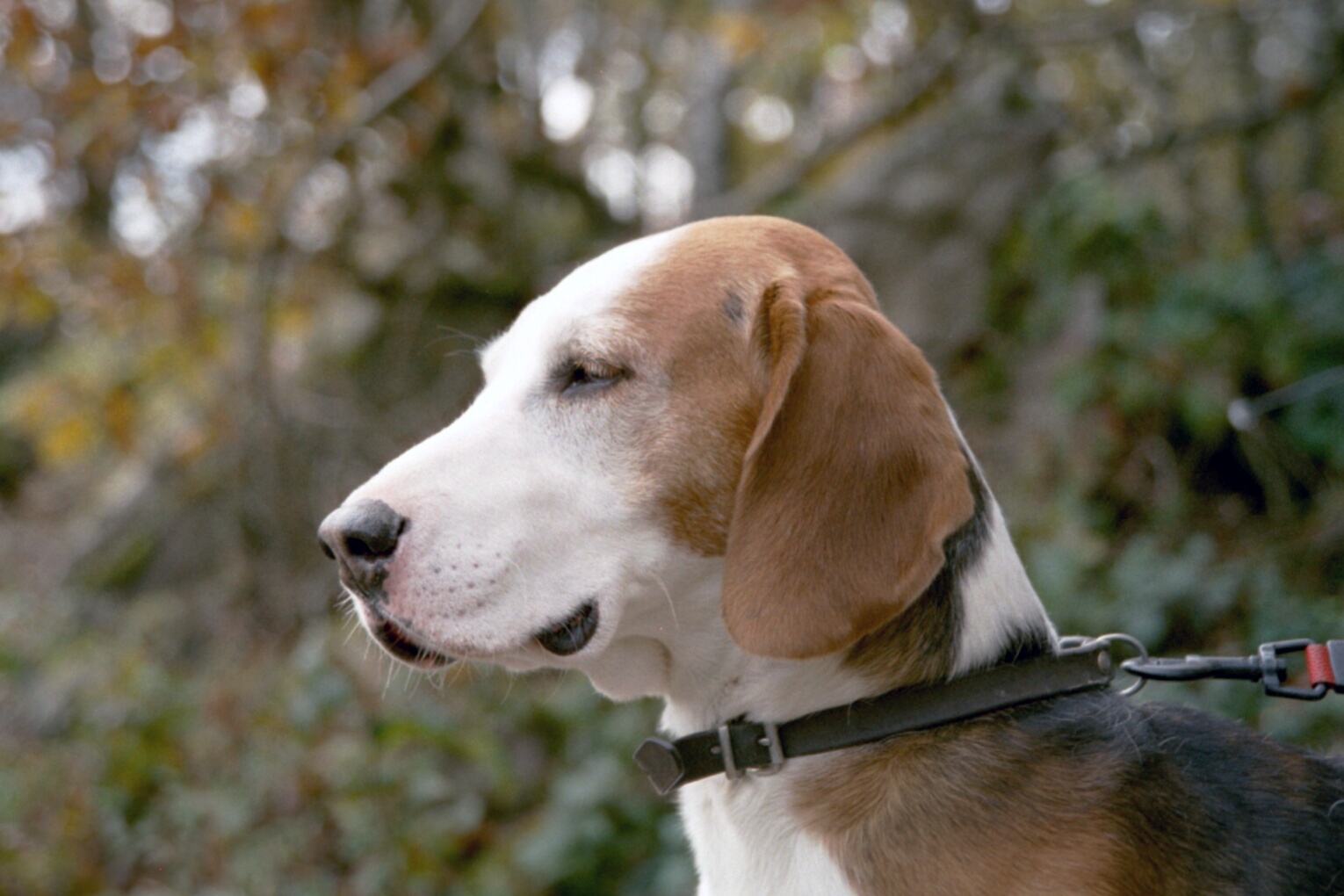
A German hound type brought together
The FCI history describes the Deutsche Bracke as emerging from Westphalian hounds, particularly the Sauerland Holzbracke, combined with local Steinbracke types. The name Deutsche Bracke was used for the resulting type from 1900.
German Hound is the common English name for this FCI entry, number 299. It should not be read as a collective profile for every hound developed in Germany, including the shorter-legged Westphalian Dachsbracke.
Light, high-standing and well coated
The standard calls for a comparatively light, elegant but strong hunting dog. Long ears and a notably substantial tail contribute to the outline. The coat is denser and firmer than the phrase short-haired might suggest, with the familiar red or yellow, black and white pattern.
Let the individual fill in the picture
The standard concentrates on hunting type and physical characteristics rather than a detailed domestic temperament description. Ask about the dog's response to scent, noise, other animals and being left to rest. Do not replace those observations with a blanket claim that all pack hounds are easy companions.
Care in daily life
A gentle grooming routine can remove loose hair while providing time to notice skin changes. Check feet and the outside of ears after walks without inserting tools into the ear canal. Reward cooperation with body and collar handling, and tell a groomer about the dog's experience of unfamiliar environments.
Plan comfortable care
Our gentle coat-care guide and first grooming appointment guide help you prepare questions about handling, maintenance and a suitable service. This breed profile is independent of named businesses.
Photograph and sources
The photograph illustrates one German Hound. See the linked credit for its creator, source and reusable licence. It does not establish the dog's health, age or temperament.
Read the FCI catalogue entry and FCI breed standard. General care and handling guidance is available from PDSA and Dogs Trust.