
A distinct French scent-hound entry
The French White and Orange Hound is recorded as Francais Blanc et Orange under FCI number 316. Its official entry identifies France and a scent-hound working role, with definitive recognition in 1982. The United Kennel Club records recognition in 1996. These are modern register milestones rather than proof that the breed first appeared in either year.
The available primary standard does not establish a detailed founding pedigree or a named creator. It is better to make that limit clear than repeat an attractive but unsupported ancestry story. The breed is separate from number 324, the Great Anglo-French White and Orange Hound, despite the closely similar names and colour description.
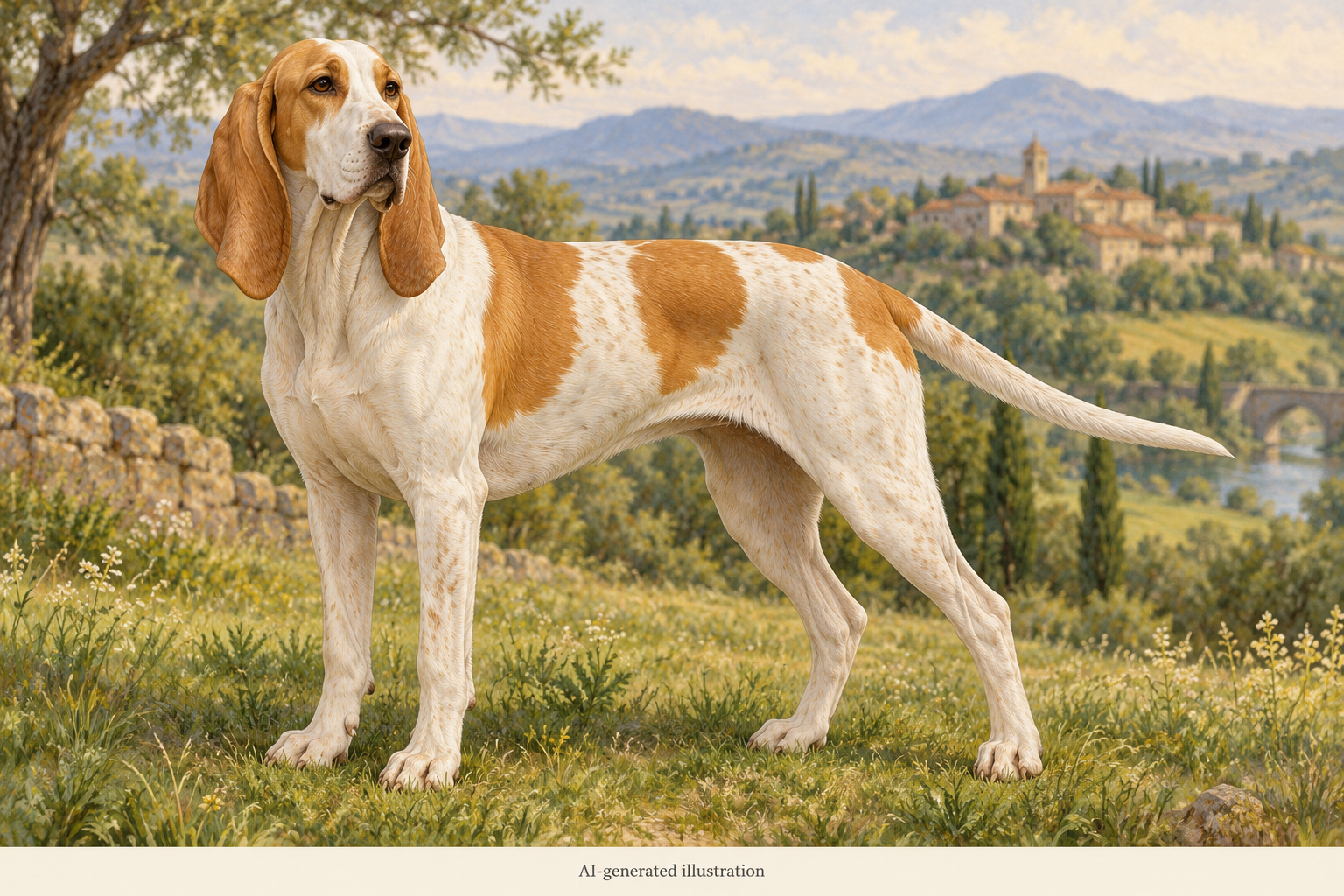
White with lemon or orange
A broad working frame, hanging ears and a relatively long head accompany a short fine jacket. The specified white-and-lemon or white-and-orange appearance must not become dark red. Colour alone cannot establish identity, health or pedigree, and an image of the Anglo-French breed is not a suitable substitute merely because its markings match the words.
Individual behaviour rather than a stereotype
The primary sources establish scent-hound work without providing a detailed standalone temperament section. They do not justify invented promises of quietness, easy recall or universal friendliness. Secure exploration, rewarding cooperation and thoughtful introductions should respond to the actual dog's learning history, confidence and needs.
Gentle practical maintenance
Use gentle checks and individual advice rather than a fixed grooming schedule based only on the breed name. Introduce checks gradually and stop if your dog becomes worried or uncomfortable. Discuss suitable tools and comfortable maintenance with a reputable groomer or vet. Seek veterinary advice for pain, irritation or an unexplained change in tolerance of touch. Ask your vet before cleaning ears, especially if they look sore or abnormal.
These handling and ear-care recommendations are general welfare guidance from Dogs Trust and PDSA, rather than additional temperament or health claims in the breed standard.
About the illustration
The cover is an AI-generated interpretation of written breed characteristics. It does not show an identified real dog and should not be used to establish breed identity or pedigree. The cited standards describe the breed; they have not approved this illustration.