
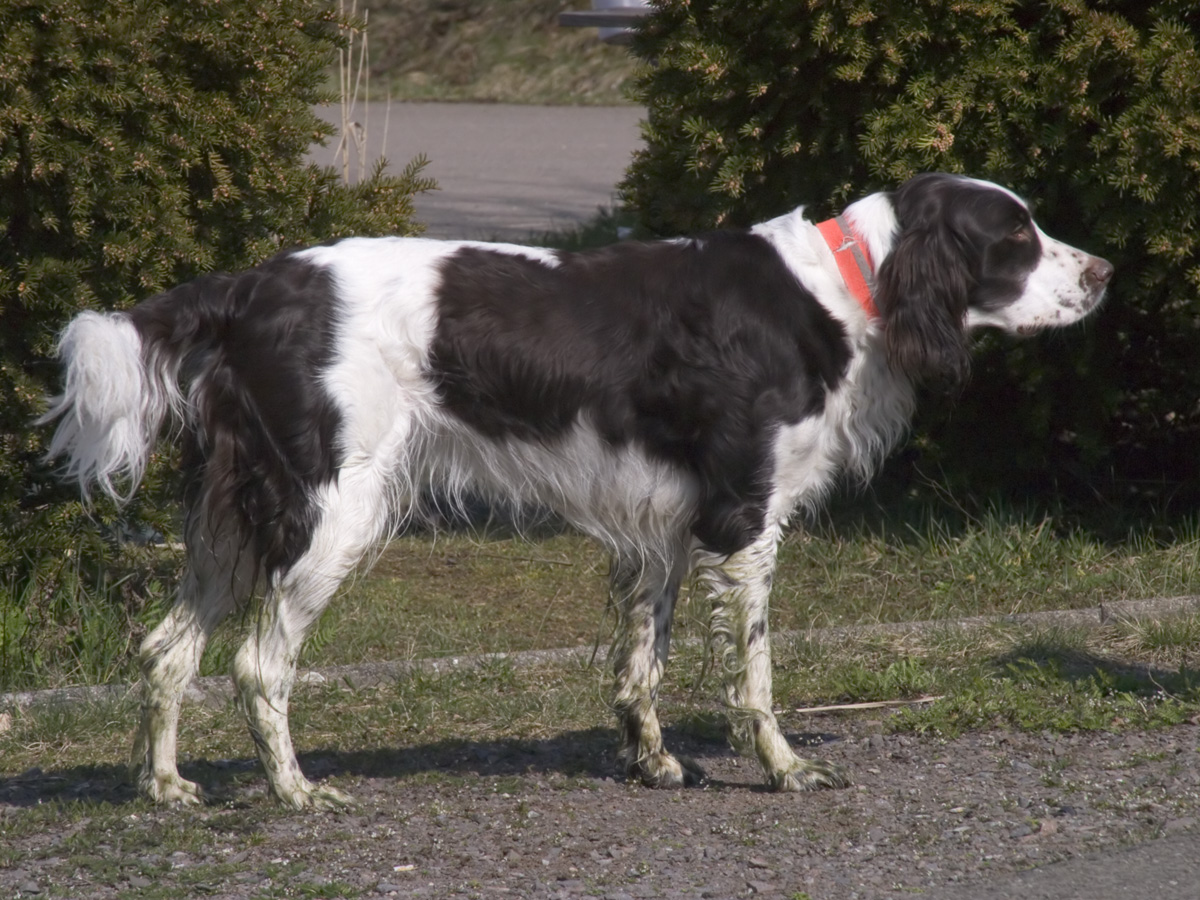
A French bird-dog tradition
The FCI history connects the French Spaniel with bird dogs described in medieval hunting accounts, including those of Gaston Febus. Such historical descriptions give context, but they are not a complete documented pedigree for a modern breed.
A more specific milestone is the first standard drawn up by James de Connick in 1891. Subsequent revisions followed changes in the breed. The Epagneul Francais is now FCI number 175, classified as a continental pointing dog rather than a generic spaniel category.
Silky furnishings on an athletic frame
Longer hair waves along the ears, tail and backs of the legs, while the head stays more closely coated. The body coat is flat and silky with some local waves. Brown-and-white markings vary, including differences in the depth of brown and the distribution of patches.
A partnership beyond appearance
The standard combines a calm, sociable ideal with enthusiasm for hunting and retrieving. Teach rewarding contact and everyday calm skills alongside safe exploration. A graceful photograph cannot tell you how an individual responds to wildlife, noise or an unfamiliar grooming appointment.
Prevent small knots becoming difficult care
Part the furnishings around ears, chest and legs after wet or brushy outings. Remove loose plant material carefully and ask for help with compacted knots. Comfortable positioning, brief sessions and a realistic maintenance routine matter more than preserving an impractically elaborate coat.
Plan comfortable care
Our gentle coat-care guide and first grooming appointment guide help you prepare questions about handling, maintenance and a suitable service. This breed profile is independent of named businesses.
Photograph and sources
The photograph illustrates one French Spaniel. See the linked credit for its creator, source and reusable licence. It does not establish the dog's health, age or temperament.
Read the FCI catalogue entry and FCI breed standard. General care and handling guidance is available from PDSA and Dogs Trust.