
From wavy-coated dogs to the Flatcoat
The Royal Kennel Club recalls the earlier name Wavy Coated Retriever and the breed's popularity on large shooting estates in the late nineteenth century. Sewallis Evelyn Shirley, the organisation's founder, was an enthusiast who helped stabilise breed type.
Accounts of Setter, Spaniel and Retriever ancestry describe influences rather than a complete surviving pedigree for every early dog. The modern Flat-Coated Retriever is FCI number 121, separate from the Curly-Coated and other British retrieving breeds.
Flat hair, flowing furnishings
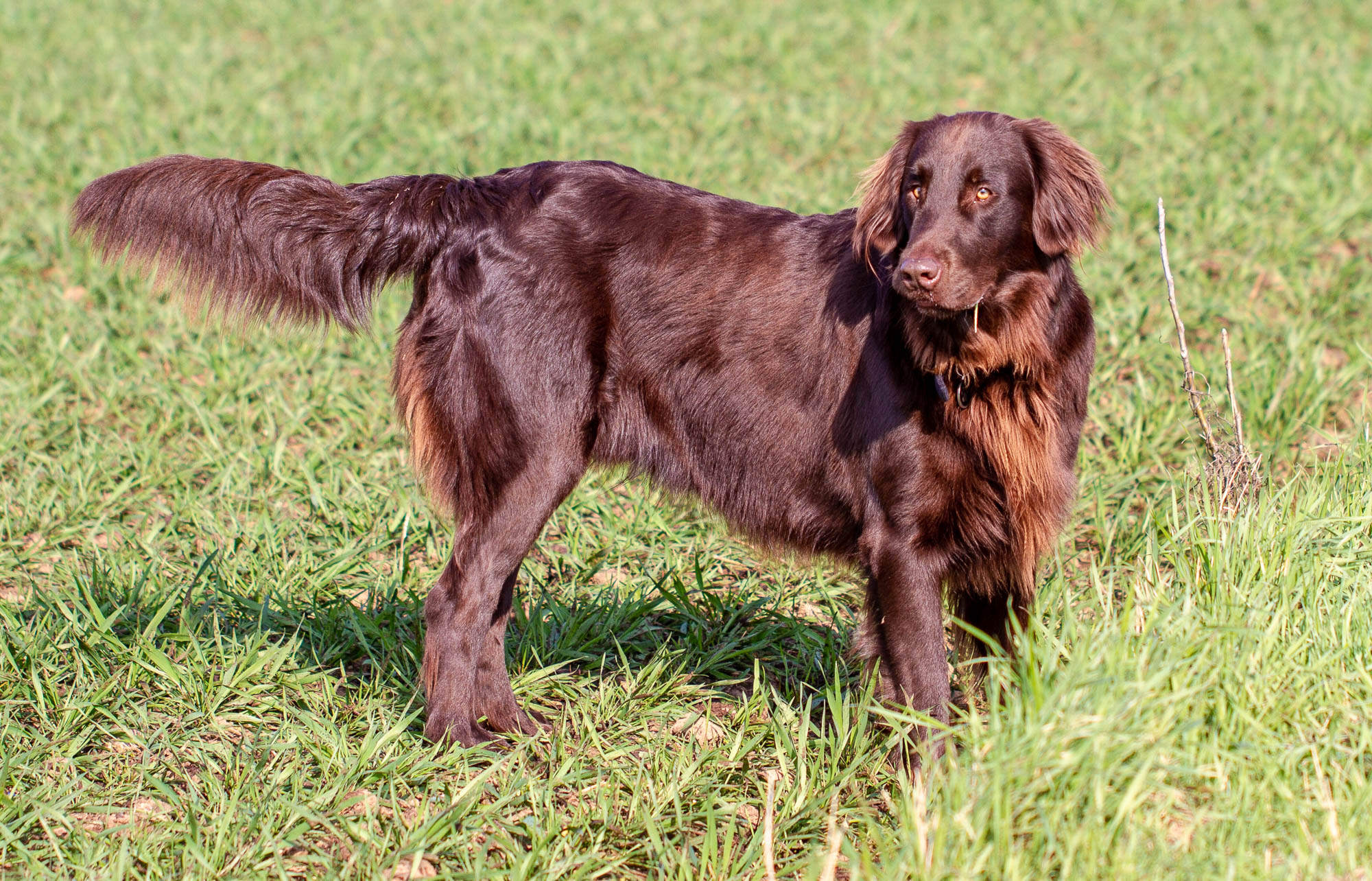
A dense, close body coat contrasts with fuller hair on the legs and tail. The standard describes fine-to-medium texture and a natural flat appearance. The photographed liver dog illustrates one recognised colour; black is also described, without either colour establishing health or temperament.
Enthusiasm needs everyday skills
The FCI character ideal includes friendliness, confidence and obvious enthusiasm. Teach calm greetings and a comfortable place to settle alongside retrieving games and exploration. Activity should suit the individual dog's age and condition rather than a breed's cheerful reputation.
A practical routine for feathering
Feel through ear, leg and tail furnishings after outings, especially when wet hair has collected seeds or grit. Keep handling short and positive and ask for help with compacted tangles. A groomer can help maintain a comfortable outline without turning normal care into an elaborate cosmetic exercise.
Plan comfortable care
Our gentle coat-care guide and first grooming appointment guide help you prepare questions about handling, maintenance and a suitable service. This breed profile is independent of named businesses.
Photograph and sources
The photograph illustrates one Flat-Coated Retriever. See the linked credit for its creator, source and reusable licence. It does not establish the dog's health, age or temperament.
Read the FCI catalogue entry and FCI breed standard. General care and handling guidance is available from PDSA and Dogs Trust.
Additional primary reading: Royal Kennel Club: Flat-Coated Retriever history.