
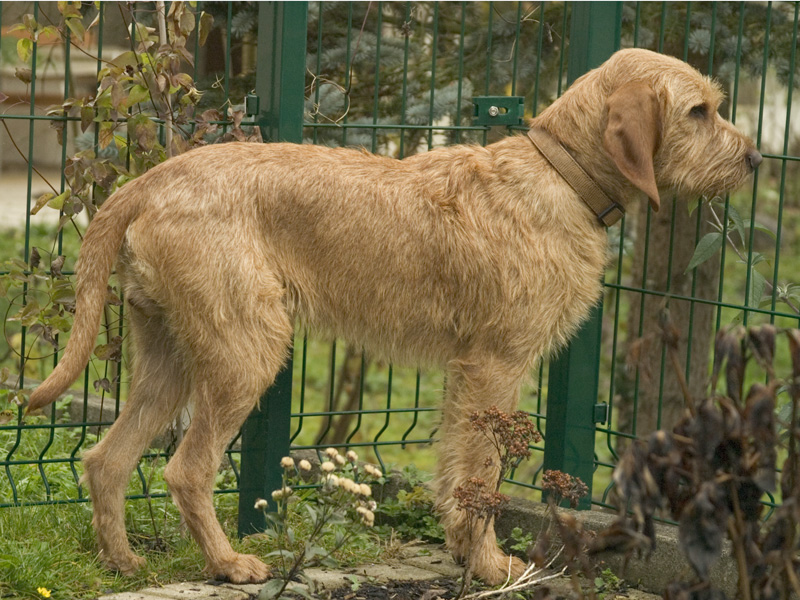
A Brittany hound through changing times
The FCI traces the Griffon Fauve de Bretagne through Brittany's older scent-hound tradition, including a fourteenth-century account of a pack associated with Huet des Ventes. Such references describe historical hounds, not complete pedigrees for individual dogs alive today.
The breed was used for wolf hunting and declined as that work diminished. Marcel Pambrun founded its club in 1949, and later club efforts supported its place among French scent hounds. The lower-legged Basset Fauve de Bretagne is a related but separate breed, rather than another name for this griffon.
Fawn colour and a harsh jacket
The standard describes a very rough, fairly short coat in fawn shades from wheaten to brick red. The face should not disappear beneath excessive bushiness. Texture matters as much as colour when distinguishing the practical jacket from a soft, overgrown or heavily styled appearance.
Purposeful scent work and household individuality
Persistence, initiative and hunting enthusiasm are central to the working description. The affectionate ideal towards people does not remove the need to learn a dog's actual responses to animals, strangers and handling. Reward attention and offer secure, appropriate exploration rather than assuming recall from the breed name.
A straightforward but thoughtful care routine
Short rough hair can still hold burrs and debris around equipment or furnishings. Check gently after outdoor activity and introduce comfortable standing and foot handling before appointments. Ask a groomer about the actual coat and seek veterinary advice when soreness or skin changes persist.
Plan comfortable care
Our gentle coat-care guide and first grooming appointment guide help you prepare questions about handling, maintenance and a suitable service. This breed profile is independent of named businesses.
Photograph and sources
The photograph illustrates one Fawn Brittany Griffon. See the linked credit for its creator, source and reusable licence. It does not establish the dog's health, age or temperament.
Read the FCI catalogue entry and FCI breed standard. General care and handling guidance is available from PDSA and Dogs Trust.