
What springing meant before the modern breed name
The English Springer Spaniel's name preserves an old working task: finding birds and flushing them from cover. The FCI history traces that role to work with nets, falcons or greyhounds before later use as a gundog. The name therefore describes a way of working, rather than simply the lively movement people notice on a walk.
Britain's land spaniels share a long and intertwined background. Dogs described as cockers and springers were not always divided into the distinct breeds familiar today. Selective breeding and formal recognition gradually clarified those identities. AKC records the Kennel Club's separate recognition of English and Welsh Springers in 1902. Modern English Springer and English Cocker Spaniels should likewise be read as separate profiles, not as interchangeable names for a coat style.
FCI standard 125 places the English Springer in Group 8, with retrievers, flushing dogs and water dogs. Great Britain is the recorded origin. That describes the breed's historical development, not a survey of where most Springers are kept or a requirement that a pet must take part in field work.
Living with the individual dog
A working background helps explain why a Springer may enjoy investigating the world through its nose. Breed descriptions emphasise energy, willingness and a friendly disposition. Those are starting points for questions, rather than guarantees about every dog's recall, sociability or ability to relax indoors.
Ask a breeder or rescue about the particular dog's experience and the activities it has known. Build a day that includes suitable movement, rewarding learning and time to settle. Practise checking in and calm handling while distractions are manageable. A busy spaniel still benefits from rest, and the needs of a puppy, an older dog and an experienced working dog will not be identical.
After the walk, look through the feathering
The long hair around the ears, legs and underside can hold things the smooth top of the coat does not reveal. Make a gentle check part of coming home, rather than waiting until the next bath to discover a tangle. A groomer can show how to support the hair and use an appropriate comb without tugging at the skin.
Discuss a practical finish around the feet and feathering, based on the coat and the home routine. Explain how the dog responds to water, drying and foot handling before agreeing a service. A shorter trim does not remove the need to notice dirt or discomfort. If the coat is already tightly matted, ask for professional help rather than trying to cut close to the skin.
Read our gentle coat-care guide for help with home maintenance, and our first grooming appointment guide for questions to ask before a visit.
About the photograph and sources
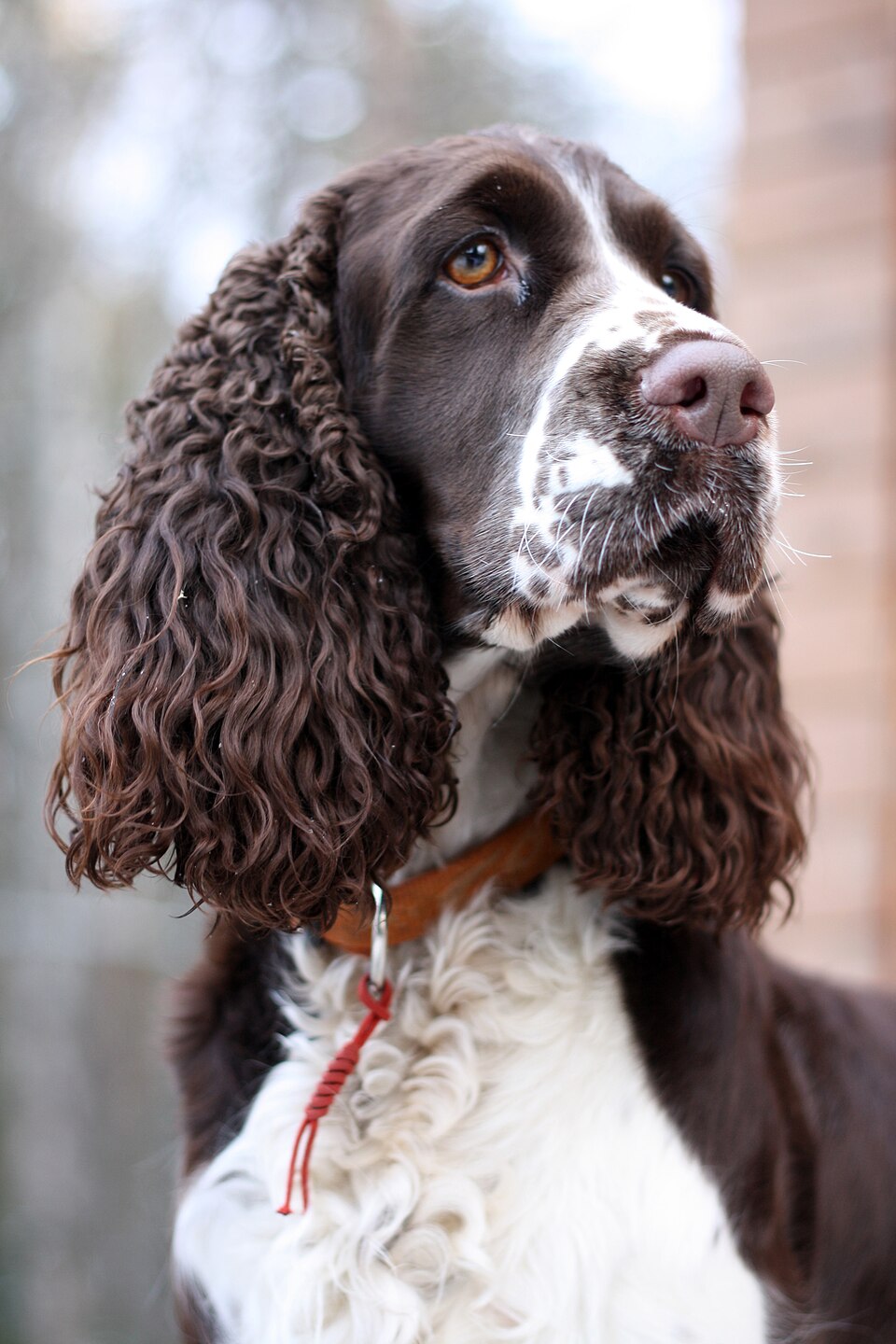
This natural portrait shows the head, long ears and liver-and-white coat of an English Springer Spaniel. The source identifies the dog as Vejka, aged two. It does not show the feet, tail or all of the feathering, so it should not be used as a complete trimming template.
Further reading: Royal Kennel Club breed guide; American Kennel Club breed guide; PDSA grooming guidance; Dogs Trust handling guidance.