
The still moment that gave the Pointer its name
A Pointer's most memorable working moment is a pause: after searching for the scent of game, the dog holds its position to show the handler where to look. The Royal Kennel Club describes the breed's popularity with sporting households in the eighteenth and nineteenth centuries. Its shape and movement belong to that outdoor purpose, rather than being decoration alone. The FCI records Great Britain as the breed's origin and lists it as English Pointer, while many British readers know it simply as the Pointer. It is one particular breed, not a name for every dog that points. That origin label describes development; it does not tell us where most Pointers live today.
Living with the individual dog
A short coat does not mean a small daily commitment. An individual Pointer may need plenty of suitable activity, patient teaching and opportunities to investigate scents, alongside a comfortable place to switch off. Plan walks around age, health and experience instead of treating a breed's historical stamina as a fixed exercise prescription. Practise coming back in easy settings before adding distractions. Secure spaces and a long line can make learning around wildlife more manageable without relying on an untested recall.
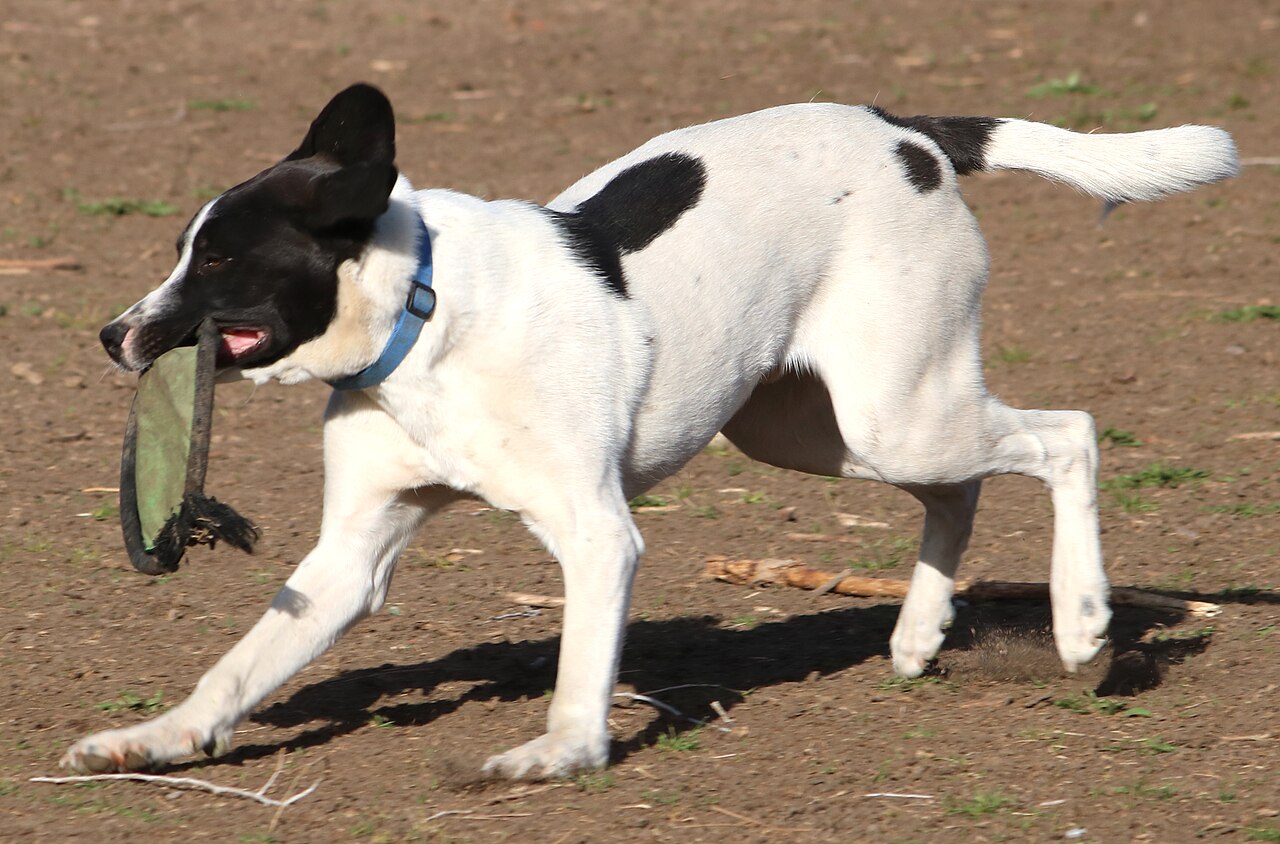
About the photograph: A naturally photographed English Pointer moving outdoors with a toy. This is one individual's appearance and activity, not an instruction about handling or an example of every coat colour.
Further reading: Royal Kennel Club Pointer guide and working history.