
A history recorded in working lines
The English Foxhound's FCI account highlights careful breeding and studbooks maintained by the Masters of Foxhounds Association, with records dating from before 1800. These working records are central to the breed's history in England.
The FCI accepted the breed in 1964 under number 159. Older accounts also give figures for British packs, but these should not be repeated as a current count. Historic hunting use describes development, not a recommendation about present-day activities or law.
Strength beneath a simple coat
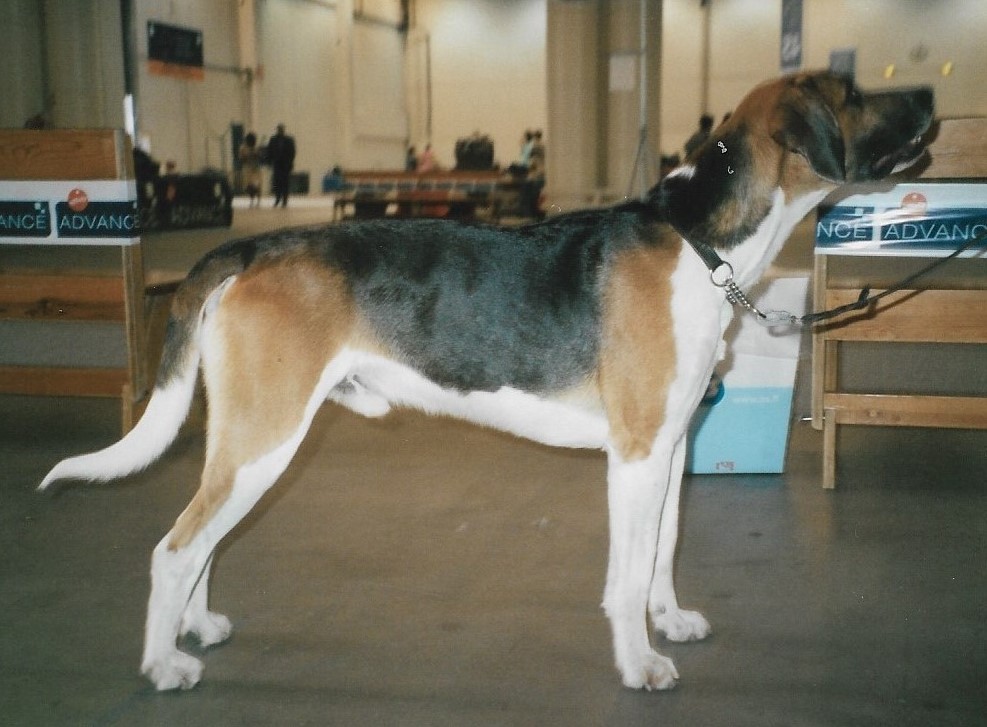
A balanced, powerful hound outline sits beneath short, dense hair. The coat is practical rather than decorative, and a range of recognised hound markings occurs. A photograph illustrates one example; colour is not enough to distinguish every related British and French hound.
Make scent work part of the conversation
Endurance and hunting ability are explicit in the standard. When researching the breed, ask about the dog's response to scent, separation, other dogs and quiet household routines. Friendly ideals should sit beside those practical observations rather than replace them.
Grooming as a calm routine
Gentle grooming can remove loose hair and reveal small scratches or equipment rubbing. Check feet after rough ground and inspect ears externally without probing. Introduce a comfortable standing position and reward cooperation, allowing breaks instead of expecting a short coat to make every appointment effortless.
Plan comfortable care
Our gentle coat-care guide and first grooming appointment guide help you prepare questions about handling, maintenance and a suitable service. This breed profile is independent of named businesses.
Photograph and sources
The photograph illustrates one English Foxhound. See the linked credit for its creator, source and reusable licence. It does not establish the dog's health, age or temperament.
Read the FCI catalogue entry and FCI breed standard. General care and handling guidance is available from PDSA and Dogs Trust.