A name carried from the woodcock
The English Cocker Spaniel's name reflects its work flushing woodcock. Cockers became a distinct breed from Field and Springer Spaniels after the Kennel Club formed in 1873. The FCI history also notes differences between working and show types, with show dogs generally more substantial. Those backgrounds help explain why one Cocker can look and live rather differently from another.
Living with the individual dog
Watch a Cocker following a scent and the sporting background becomes easy to imagine. Sniffing walks, cooperative training and a chance to rest can form a satisfying routine. Ask about the particular dog's background and daily needs rather than choosing by colour or assuming all spaniels need exactly the same household.
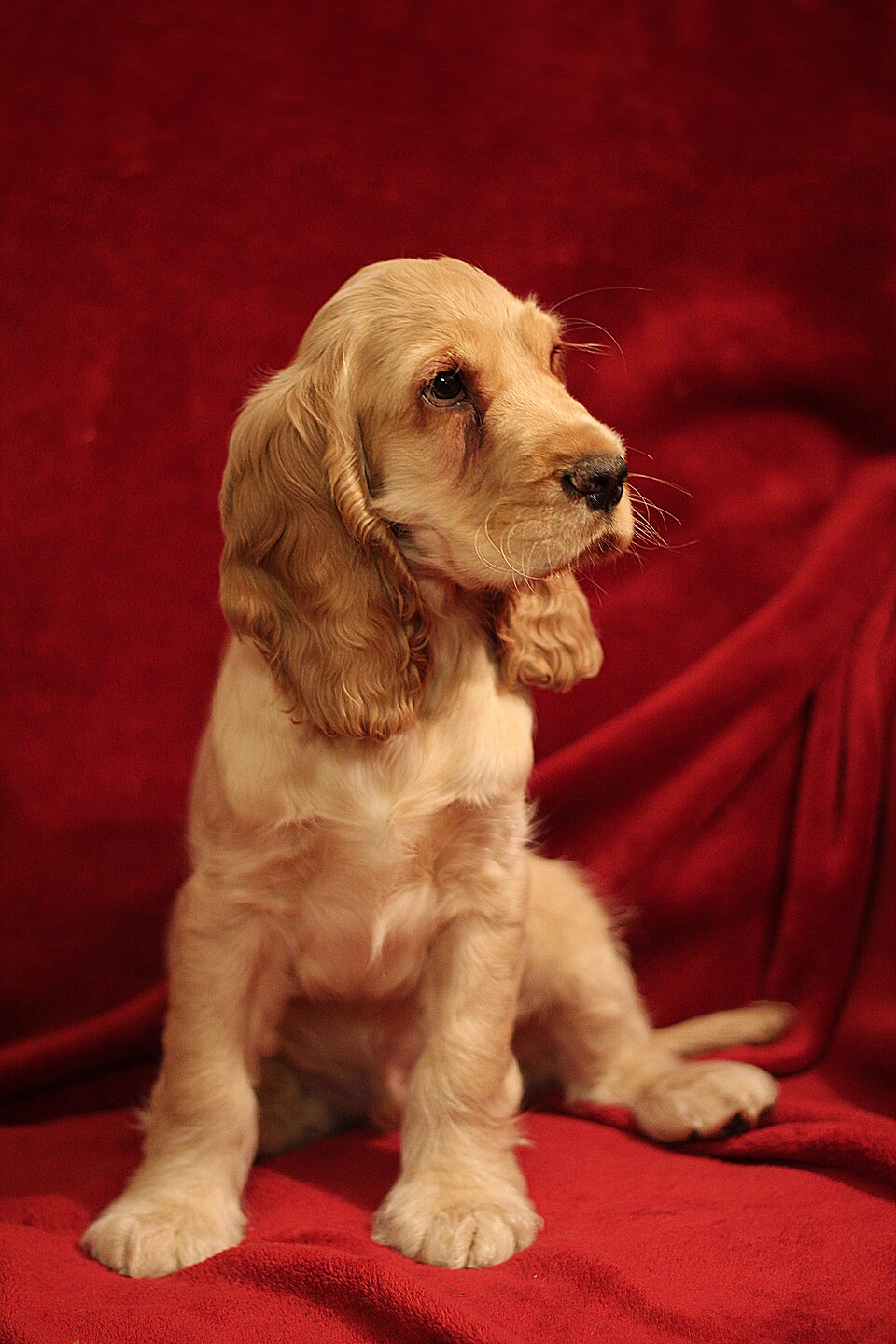
About the photograph: The photograph shows a four-month-old English Cocker Spaniel puppy, rather than an adult coat.
Character and behaviour
The breed standard describes an affectionate, energetic spaniel with enthusiasm for scent and cover. Individual dogs vary; kind training and thoughtful introductions remain necessary.
Breed descriptions are broad tendencies. An individual dog's behaviour also reflects experience, training and circumstances.
Care in daily life
Gently comb the feathering and check behind the ears and where the legs meet the body. After muddy walks, remove debris without pulling at knots. Discuss a manageable pet trim and a realistic home-care routine with a groomer familiar with spaniel coats.
Care depends on the individual dog. If you notice a skin or health problem, speak to a vet.
Sources and review
These sources informed GroomNear's original summary. Place of origin does not describe where most dogs of this breed live today; reliable worldwide breed counts are not available for every breed.