
A Swedish development from German hounds
Westphalian Dachsbracke dogs were imported to Sweden in 1910, according to the FCI history, with registrations beginning in 1913. Their tracking abilities attracted interest as deer became more widespread.
The slightly larger Swedish variety received the name Drever in 1947 and was recognised as a Swedish breed in 1953. Those dates explain the German foundation and Swedish catalogue origin without treating the two breeds as interchangeable. Drever is FCI number 130.
Built low for purposeful work
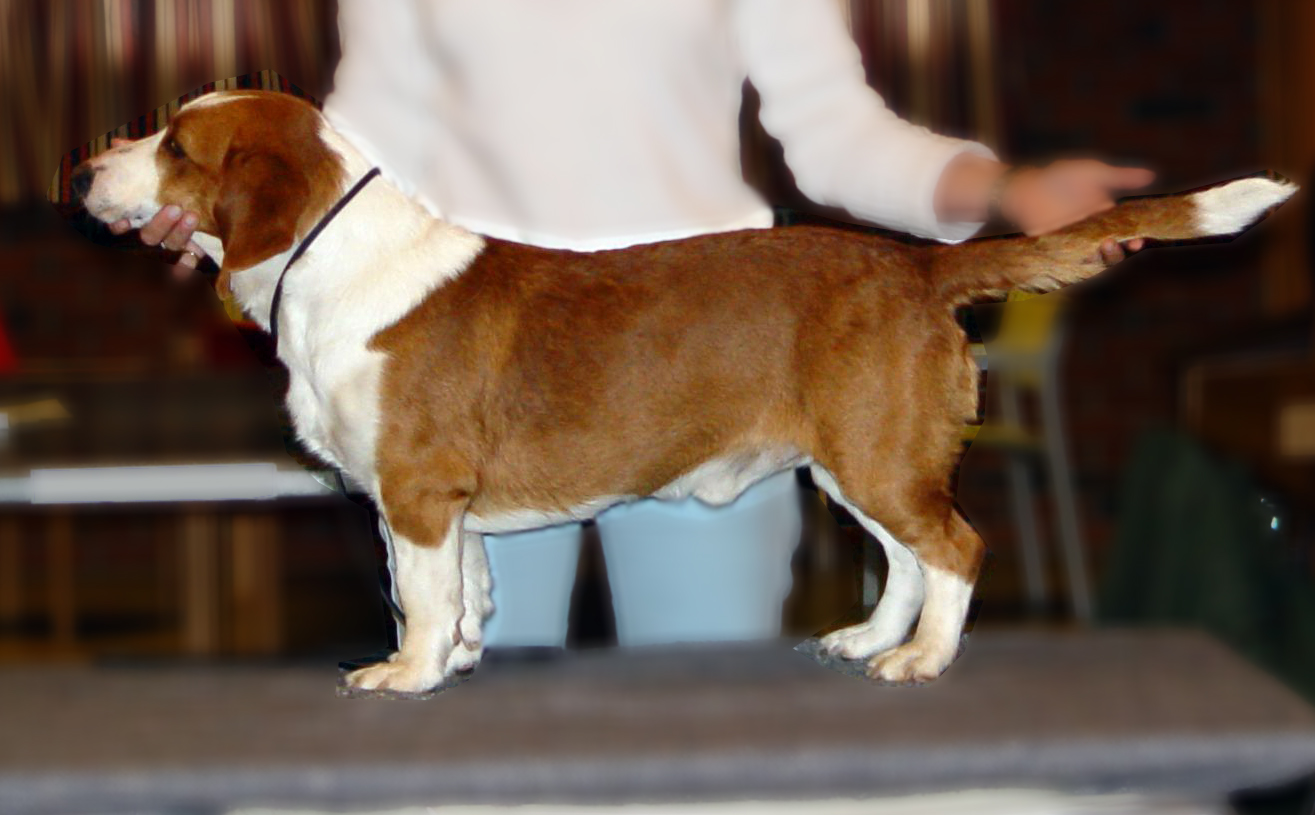
A long, sturdy body on short legs makes the Drever's outline distinctive. The harsh, straight coat lies close but has somewhat fuller areas around the neck, thighs and tail. Clear white markings accompany the permitted colour patterns.
Follow the nose, keep the partnership
The FCI account is strongly hunting-focused, rather than a description of a purely ornamental companion. Provide secure, suitable outlets for exploration and build rewarding attention to the handler. Ask about scent persistence and vocal behaviour instead of assuming low stature means low activity.
Care in daily life
Check the underside and feet after wet ground or vegetation, where a low dog may collect debris. Use gentle tools and a stable grooming position with breaks. Explain the dog's handling preferences to a groomer, and investigate discomfort rather than trying to make the dog tolerate an awkward stance.
Plan comfortable care
Our gentle coat-care guide and first grooming appointment guide help you prepare questions about handling, maintenance and a suitable service. This breed profile is independent of named businesses.
Photograph and sources
The photograph illustrates one Drever. See the linked credit for its creator, source and reusable licence. It does not establish the dog's health, age or temperament.
Read the FCI catalogue entry and FCI breed standard. General care and handling guidance is available from PDSA and Dogs Trust.