
Drenthe in the Dutch breed story
The FCI connects this breed with partridge dogs kept in the eastern Netherlands, especially the province of Drenthe. Its historical account discusses earlier pointing dogs arriving from Spain through France, but the local Dutch identity is central to the modern breed.
The Dutch kennel organisation recognised the breed on 15 May 1943, followed by a breed club in 1948. The FCI entry is number 224, with the Dutch name Drentsche Patrijshond retained alongside the understandable English common name.
Brown, white and useful furnishings
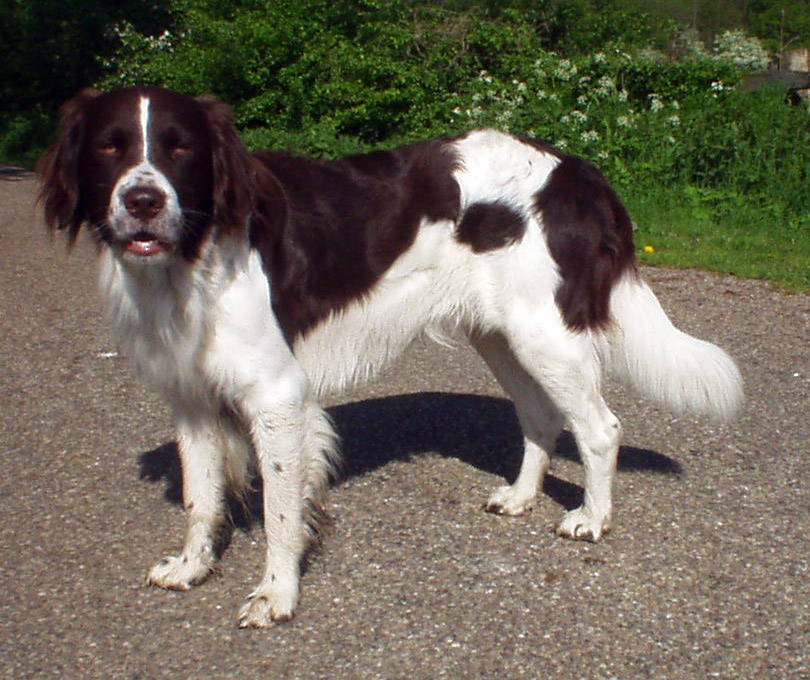
The coat is dense rather than extravagantly long. Fuller hair on the ears, chest, tail and backs of limbs creates a furnished outline. The standard describes brown markings on white, with possible spots or ticking, and explicitly separates this from an all-over roan pattern.
A relationship with the handler
The breed account emphasises keeping contact during hunting and warns against forceful training. Reward cooperation, introduce unfamiliar situations gradually and ask how the individual dog responds to pressure. A cooperative hunting ideal does not mean every companion arrives with recall already learned.
Care in daily life
Check the furnishings after wet or brushy walks and remove loose debris gently. Pay attention around ears and between toes, where hair can hide a small tangle. Keep sessions predictable and reward standing comfortably. A groomer can help balance the natural outline with the amount of maintenance a household can realistically provide.
Plan comfortable care
Our gentle coat-care guide and first grooming appointment guide help you prepare questions about handling, maintenance and a suitable service. This breed profile is independent of named businesses.
Photograph and sources
The photograph illustrates one Drentsche Partridge Dog. See the linked credit for its creator, source and reusable licence. It does not establish the dog's health, age or temperament.
Read the FCI catalogue entry and FCI breed standard. General care and handling guidance is available from PDSA and Dogs Trust.