
A defined Cordoba development
The FCI history credits Antonio Nores Martinez with developing the Dogo Argentino in Cordoba, Argentina, from a carefully selected combination of dogs based on the old Cordoba fighting type. His objective became a powerful, purposeful big-game hunting dog.
The account records a standard presented in Buenos Aires in 1947, Argentine recognition in 1964 and FCI acceptance in 1973, supported by his brother Agustin. Those are recorded milestones, rather than a reason to romanticise fighting or treat working courage as universal behaviour.
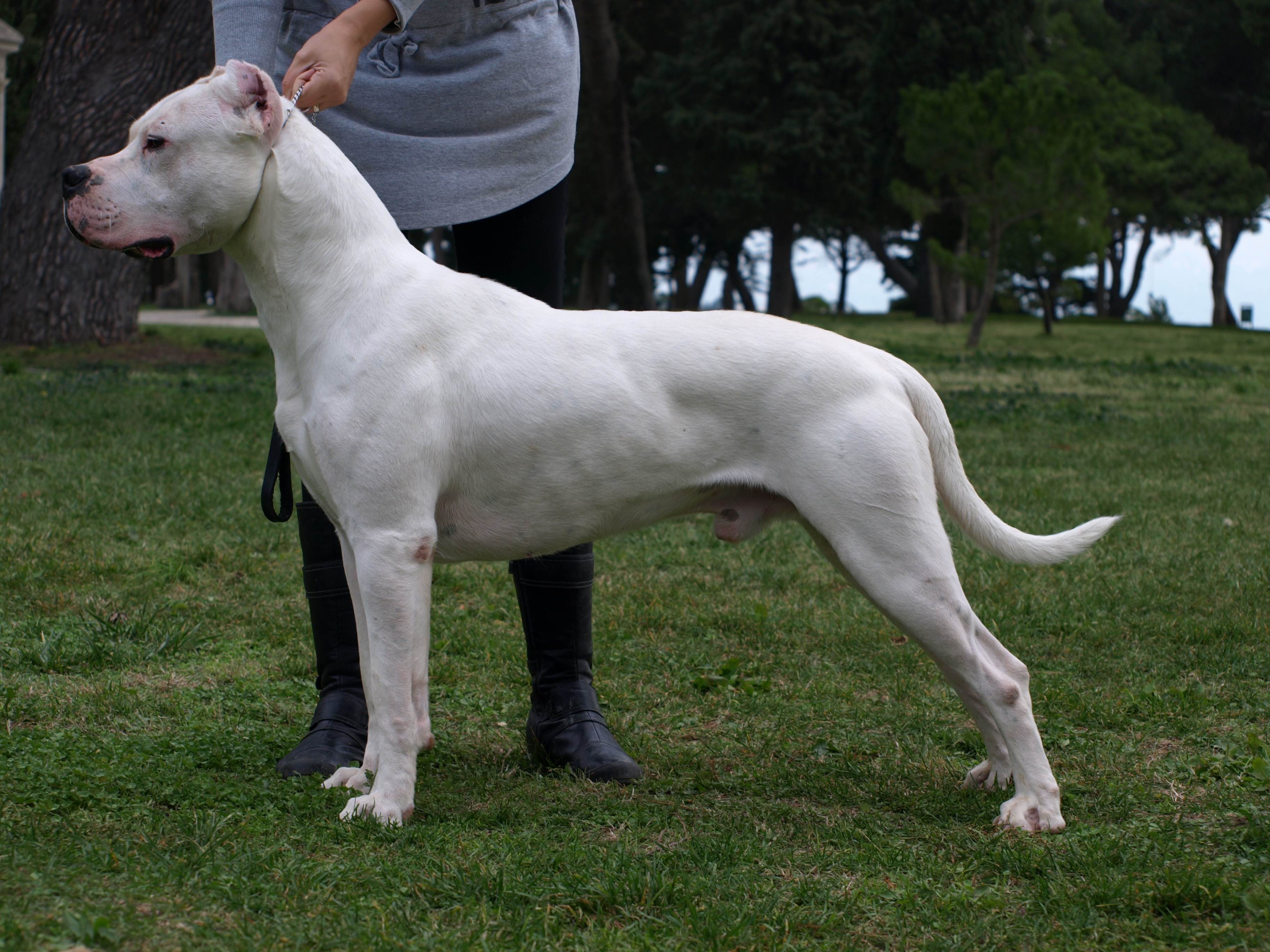
Athletic substance and a short coat
The standard describes muscular power combined with agility and balanced proportions. Short white hair reveals the body outline. Natural ears and comfortable function should not be treated as defects to correct through cosmetic procedures; this profile provides no cropping or docking instructions.
Character and legal context are different questions
The FCI's temperament ideal does not decide whether a particular dog is safe or lawful to own. GOV.UK lists Dogo Argentino among prohibited types and explains that legal type depends on appearance rather than a breed name alone. Check the linked current guidance for the relevant situation.
Considerate routine care
Gentle grooming can help reveal rubbing or skin irritation beneath short hair. Practise calm handling and use secure arrangements when visiting a professional. A photograph, pedigree or affectionate relationship should never replace an individual welfare assessment or appropriate legal advice.
Plan comfortable care
Our gentle coat-care guide and first grooming appointment guide help you prepare questions about handling, maintenance and a suitable service. This breed profile is independent of named businesses.
Photograph and sources
The photograph illustrates one Dogo Argentino. See the linked credit for its creator, source and reusable licence. It does not establish the dog's health, age or temperament.
Read the FCI catalogue entry and FCI breed standard. General care and handling guidance is available from PDSA and Dogs Trust.
Additional primary reading: GOV.UK: current prohibited-dog-type guidance.