
The working dog behind the elegant outline
The Dobermann carries the name of Friedrich Louis Dobermann, whose nineteenth-century breeding work in Germany helped establish the breed. Accounts associate him with Apolda and the need for an alert dog to accompany his work. The FCI history describes breeding during the 1870s and the later use of these dogs in guarding and police work. The Royal Kennel Club and American Kennel Club also describe a combination of working-dog ancestry. The exact contribution of every ancestral breed is less certain than a modern pedigree chart might make it sound, so there is no single definitive recipe here.
That history is useful context for a dog selected to notice its surroundings and work closely with people. It is not a reason to expect a family dog to perform protection work, or to encourage threatening behaviour. The FCI catalogue lists Germany and places the breed in Group 2, within the Pinscher and Schnauzer section. American readers may know the name Doberman Pinscher; this atlas uses the FCI name Dobermann. Origin describes breed development, not where most of the breed lives now.
Living with the individual dog
The smooth outline can hide how much daily involvement a working breed needs. Think about time for suitable walks, reward-based learning, rest and company before choosing an individual. Ask about the dog's previous routines and comfort around visitors, unfamiliar dogs and busy places. An adult dog with known habits may need a different introduction from a puppy. Work with a qualified reward-based professional if you need help making a safe, manageable plan.
Build handling into ordinary life instead of waiting until a full grooming appointment. Let the dog investigate a brush, reward a moment of relaxed contact and practise showing one foot briefly. A strong dog still needs choice, patience and a comfortable place to stand. Tell the groomer about mobility problems, sensitive areas and any veterinary restrictions. Agree what can be completed calmly and what should wait for another visit; physical strength is not a reason to force the dog through fear.
Plan a comfortable care routine
Our gentle coat-care guide explains home care and when to ask for professional help. Use the first appointment guide to prepare questions about handling, coat condition and a suitable visit.
About the photograph and sources
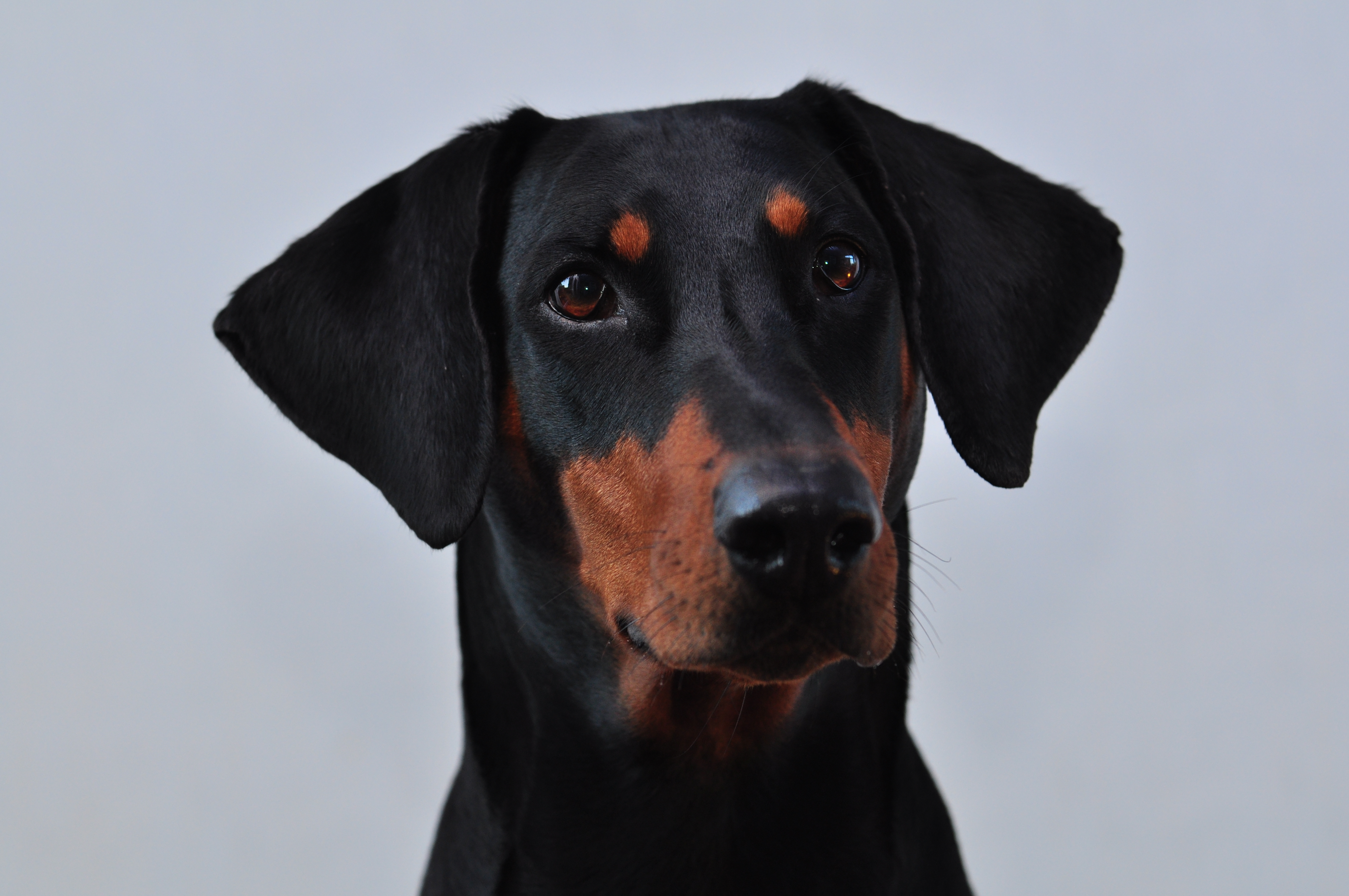
Jack Berry's natural portrait shows a black-and-tan Dobermann with uncropped ears. The frame illustrates the head, expression and short coat; it does not show the tail or assess health, training or behaviour. No cosmetic alteration is recommended by this profile.
Further reading: Royal Kennel Club Dobermann guide; American Kennel Club breed guide; PDSA grooming guidance; Dogs Trust handling guidance.