
A shared Scandinavian farm dog
The Danish-Swedish Farmdog was recognised jointly in Denmark and Sweden in 1987 under its present name. The FCI account describes a much longer presence on farms in both countries, working as a watchdog, ratter and companion.
Its FCI entry is number 356 and retains both countries as origin. That shared identity is more accurate than presenting the breed as exclusively Danish or as a small version of an unrelated terrier.
Small working outline, short coat
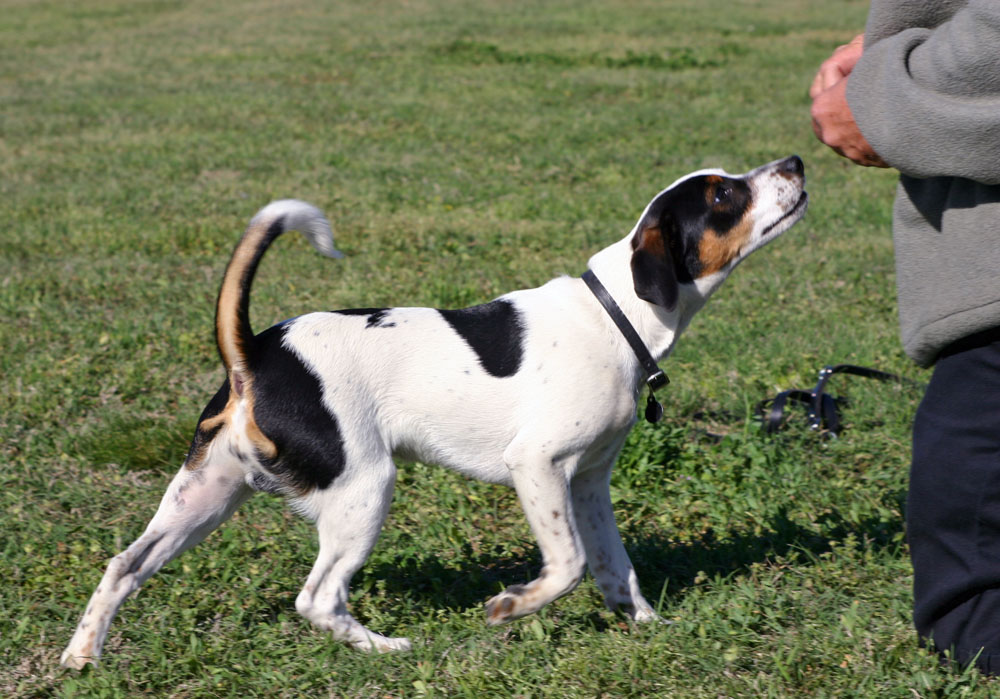
The short, white-based coat with coloured patches is an immediately recognisable feature. The photographed dog is identified by its source as a six-month-old puppy, so it should not be used as a precise guide to adult proportions. Meet adult dogs and discuss the individual line when considering the breed.
Attentive does not mean constantly busy
The breed ideal is lively and alert. Everyday life can offer rewarding training, exploration and play while also teaching a calm place to rest. Historical ratting work is a reason to manage contact with small animals thoughtfully, not to assume every dog will behave identically.
Care in daily life
Use gentle grooming to check for skin changes and loose hair. Practise foot and mouth checks in brief, rewarded steps rather than waiting for an appointment to become the first handling experience. Even a short-coated dog benefits from a comfortable surface and breaks during professional care.
Plan comfortable care
Our gentle coat-care guide and first grooming appointment guide help you prepare questions about handling, maintenance and a suitable service. This breed profile is independent of named businesses.
Photograph and sources
The photograph illustrates one Danish-Swedish Farmdog. See the linked credit for its creator, source and reusable licence. It does not establish the dog's health, age or temperament.
Read the FCI catalogue entry and FCI breed standard. General care and handling guidance is available from PDSA and Dogs Trust.