
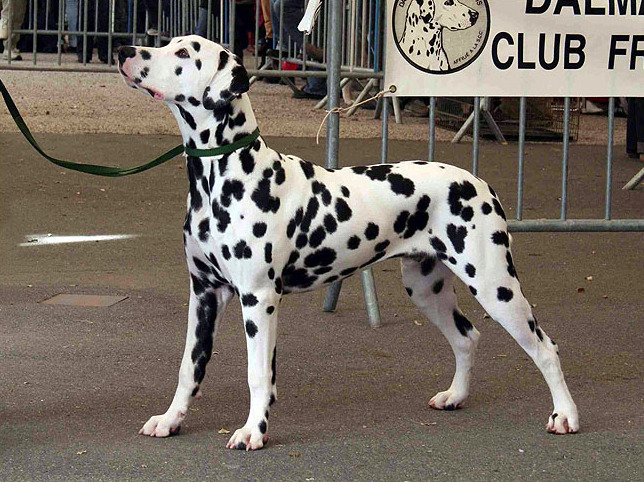
The spotted dog beside the carriage
The Dalmatian's earliest geographical story is not universally agreed. The FCI records Croatia as its origin and points to historic paintings and church chronicles; the Royal Kennel Club is more cautious about proving a Dalmatian coastal origin. The coach-dog connection is a clearer part of its later history: spotted dogs accompanied horse-drawn carriages and guarded their contents, becoming fashionable in Britain's Regency period. They also worked alongside horse-drawn fire engines. This profile follows the FCI catalogue's Croatian origin label while keeping the historical uncertainty visible. Dalmatinski Pas is the FCI name for the breed introduced here as the Dalmatian.
Living with the individual dog
Behind the striking pattern is a dog whose breed description includes energy, independence and interest in outdoor activity. Plan around the individual dog's age, health and experience instead of expecting every Dalmatian to enjoy the same routine. Suitable movement, sniffing, positive learning and rest can all contribute to a varied day. Historical stamina is not a prescription to begin strenuous exercise without preparation or individual advice.
About the photograph: A black-spotted Dalmatian photographed at a dog show. The original setting is retained; one show photograph cannot represent every dog's shape, behaviour or health.
Further reading: Royal Kennel Club Dalmatian guide and coach-dog history.